 Analysis
Read Next
Abortion Pill
Without Guardrails: An alarming 6,000 pharmacies (and likely more) distribute abortion pills
Carole Novielli
·

Two women sue Oklahoma over pro-life law after prenatal diagnoses
Two women have filed a lawsuit against Oklahoma officials and health advisors, arguing that they were wrongly denied abortions after their preborn children were diagnosed with health conditions.
Two women both left Oklahoma to have abortions after their preborn babies were diagnosed with potentially life-limiting diagnoses.
They, along with a pro-abortion group and two doctors, are suing the state of Oklahoma.
The lawsuit claims Oklahoma's pro-life law violated their right to "life and liberty."
According to reports, Magon Hoffman and Sheena Hamlin each chose to leave Oklahoma to undergo abortions after their preborn children received serious health diagnoses. Doctors told each of them that their babies would either be stillborn or die "an agonizing death," according to the Missouri Independent.
Joining Hoffman and Hamlin as plaintiffs are two physicians, Dr. Elizabeth Pinard and Dr. Sarah Mashburn, as well as the Oklahoma Call for Reproductive Justice, a political activist group. The lawsuit claims that the state's pro-life law violates their right to "life and liberty, their substantive due process rights, and their rights to equal protection," and asks that the same "'right to life-saving abortion care' that the state Supreme Court gave in 2023 to women facing a medical diagnosis of their own be given to women who receive a 'fatal fetal diagnosis."
Oklahoma defines abortion as:
the use or prescription of any instrument, medicine, drug, or any other substance or device intentionally to terminate the pregnancy of a female known to be pregnant with an intention other than to increase the probability of a live birth, to preserve the life or health of the child after live birth, to remove an ectopic pregnancy, or to remove a dead unborn child who died as the result of a spontaneous miscarriage, accidental trauma, or a criminal assault on the pregnant female or her unborn child.
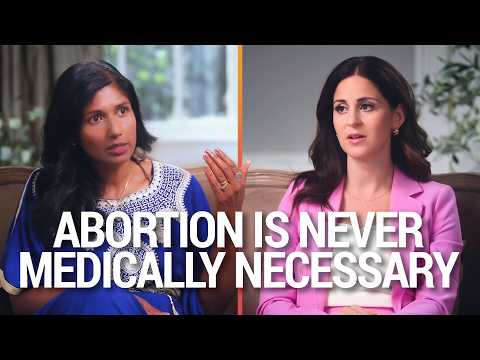
Induced abortion — the direct and intentional killing of a preborn child — is allowed in the state to save the life of the mother, though many medical experts have stated that it is not medically necessary to intentionally kill a preborn child.
Oklahoma statute states:
No abortion of a viable unborn child shall be performed or induced except after written certification by the attending physician that in his best medical judgment the abortion is necessary to prevent the death of the pregnant woman or to prevent an impairment to her health. The physician shall further certify in writing the medical indications for such abortion and the probable health consequences if the abortion is not performed or induced.
There is no exception to allow abortion on children who receive a prenatal diagnosis.
According to the Oklahoma Voice, Hoffman began suffering from heavy bleeding in 2022 when she was 14 weeks pregnant. She was told she had a "huge blood clot," and was placed on light bed rest. She later learned she had placenta previa, a condition in which the placenta covers the opening of the cervix.
At 19 weeks, she underwent an anatomy scan with a maternal-fetal medicine specialist (MFM). The baby's head was measuring smaller than expected, compared to the body, and the baby was diagnosed with anencephaly, a neural tube defect in which the skull does not form properly and the baby's brain is exposed to amniotic fluid. The Centers for Disease Control and Prevention notes that "There is no known cure or standard treatment for anencephaly. Pregnancy loss is high. Almost all babies born with anencephaly will die shortly after birth."
Angela and Gabriel, born with anencephaly, show why every child deserves protection
The doctor gave her two options. As the lawsuit notes, Hoffman could:
"leave Oklahoma and terminate the pregnancy"
"stay in Oklahoma and continue the pregnancy to term, while seeing the MFM for close monitoring up to 37 weeks, when she could be induced."
If she chose to carry to term, the doctor told her that her baby would live for a few hours to a few days, but that she would be "blind and dying." He said that at birth they would provide the baby with "comfort care." The lawsuit notes:
He then tried to convince Ms. Hoffman to carry to term. He gave Ms. Hoffman his card. He told her she didn't need to worry about contacting her obstetrician about the diagnosis; he would handle that. Ms. Hoffman was distraught. She knew there was no way she could continue the pregnancy. When she got home, she started to make plans to travel out of state. She tried calling the MFM repeatedly, but he would not return her calls. She started to feel more and more alone, isolated even from her family. She wished someone - anyone - would speak to her about her pregnancу.
She decided to travel to New Mexico for an abortion, and paid about $3,000 between travel, lodging, childcare, and the procedure, which took two days. According to the lawsuit:
Ms. Hoffman was dilated on the first day and her pregnancy was evacuated on the second.
The lawsuit makes no mention of how the baby died, whether by lethal injection (induction abortion) or by dismemberment (D&E), before she was "evacuated."
Hoffman reportedly later suffered anxiety and depression, and was afraid to have another baby. She did ultimately get pregnant again; her baby was not diagnosed with any conditions. .
In 2024, at 21 weeks, Hamlin underwent an anatomy ultrasound and, according to the lawsuit, her doctor "discovered multiple unusual findings." She was sent to a high-risk doctor for a more detailed ultrasound, and was ultimately told that her preborn baby girl, named Ellie, was "not compatible with life." The lawsuit explained:
The MFM suspected that Ellie had Meckel-Gruber syndrome, a lethal condition characterized by occipital encephalocele, kidney cysts, scar tissue in the liver, and the presence of extra fingers and toes.
An occipital encephalocele is a condition in which the brain protrudes through an opening at the back of the skull. The doctor expected Ellie to die in the womb, but said she might survive to birth. If she did, her "lungs were so severely underdeveloped that she would suffocate almost as soon as the umbilical cord was cut," states the lawsuit.
Hamlin and her husband thought abortion was the best answer, and spent $4,000 to abort the baby in Illinois.
After her death, it was confirmed that Ellie did have Meckel-Gruber syndrome, and genetic testing showed that Hamlin and her husband are both carriers for the condition. This would mean that there is a 25% chance that any child they conceive would have Meckel-Gruber syndrome.
In preparation for future pregnancies, they underwent IVF and tested each embryo so as not to implant any who test positive for the condition.
Palliative care is provided to children born with life-limiting conditions and those who will likely not survive. That care includes oxygen and efforts to provide comfort and manage pain. Pain relievers, massage, swaddling, feeding tubes when necessary, and skin-to-skin contact with the parents are all ways to comfort the baby.
Dying by dismemberment, as most often happens in a second-trimester D&E abortion, offers no such comfort. The baby's arms and legs are torn from her body before her head is crushed.
The suit argues that, because "definitive diagnostic testing is generally only available in the second trimester" and "certain structural conditions cannot be visualized on ultrasound in early pregnancy," later abortions are necessary. It states:
Fatal fetal conditions are a narrow subset of diagnoses that are sufficiently severe that a pregnancy is unlikely to result in a surviving baby. These are conditions where the pregnancy is likely to end in miscarriage or stillbirth or, in the event of a live birth, the infant's survival will not be sustained-with or without medical support.
It claims that these conditions, including Trisomy 18, Trisomy 13, and bilateral renal agenesis, are "fatal," though there are children with these conditions who have survived and thrived. In fact, Trisomy 18 is no longer classified as "incompatible with life."
Mom fights for baby with life-limiting diagnosis, who is now thriving: ‘I didn’t think twice’
The lawsuit also claims it is "traumatizing to force patients to continue a pregnancy with a fatal fetal diagnosis ... Feelings of powerlessness and overwhelm come not just from the diagnosis, but also from having no meaningful choice about medical decisions or what happens to one's body."
It also argues:
The Bans prevent some families from having even a few hours with their baby, as inducing early delivery may be considered an abortion.
Because the Bans create a risk of criminal prosecution for early inductions, patients and their families may be forced to continue the pregnancy to full term, even when that delay increases the risk of fetal demise or stillbirth and means that the baby will not be born alive.
This cruelly deprives Oklahoma families of the opportunity to have any time-even a short time-with their living child.
An induced early delivery with the express intent of leaving the baby to die can be considered an abortion, because the goal is the baby's death. Birthing a baby with the intention of letting that baby die might avoid a stillbirth, but ultimately shortens the time the parents have with the baby.
However, an induced early delivery when the mother's health or life is at risk is not an abortion, because the goal is to save the mother and, when possible, save the baby.
The lawsuit goes on to cite faulty data that claims the risk of death during childbirth is 14 times higher than that of abortion. This is a debunked claim. These study results have never been replicated, and an analysis by the Equal Rights Institute revealed that the researchers manipulated the data.
Another false claim in the lawsuit is that abortion is "health care." Health care is meant to heal, not harm or kill.
If either Hoffman or Hamlin had needed to end their pregnancies to save their lives, it would have been legal for their doctors to deliver their babies, even if their babies were too young to survive outside the womb, and despite the babies' health diagnoses.
The fact that the doctors did not deliver the babies seems to indicate a likelihood that the mothers' lives were not in immediate danger.
The lawsuit argues:
Every year, many pregnant Oklahomans receive a diagnosis that means their pregnancy will end in miscarriage, stillbirth, or the death of an infant shortly after birth. Pregnant people should have the freedom to discuss these circumstances with doctors and loved ones, decide on the best course of action, and effectuate their decision, free from stigma or discrimination. But that is not the reality that Oklahomans face.
It continues:
... [T]he Bans take away pregnant Oklahomans' ability to act on their own decisions. Instead, every patient who receives a fatal fetal diagnosis is forced into the State's idea of the best way forward: continuing the pregnancy and giving birth, despite the likelihood of miscarriage, stillbirth, or watching a newborn die shortly after birth. The Bans require these Oklahomans to continue to carry a pregnancy that will not result in a child they can take home, which can traumatize both pregnant people and their families.
The lawsuit argues that delivering the baby early so that the parents can hold the baby as the baby dies should be allowed, but isn't, because it is considered an abortion. However, the lawsuit also claims that the parents should be able to abort the baby to avoid "watching a newborn die shortly after birth." Which is it that they want: to hold the baby as she dies, or to abort her to avoid holding her as she dies?
Killing a child, even a child in the womb, is never the right course of action. It isn't compassionate or respectful to dismember a child or inject them with a drug to cause cardiac arrest. And research shows it is beneficial to the mother to carry her child to term following a prenatal diagnosis.
In a study of 267 parents who lost a child due to a diagnosis of anencephaly, women who had an abortion reported significantly more despair and depression than women who carried to term. Additional research on infant loss found that the “[r]isk of complicated grief was found to be especially high after termination of a pregnancy due to fetal abnormality.”
Furthermore, in a study of 405 parents who carried to term following the prenatal diagnosis of a life-limiting condition, 97.5% of participants reported an absence of regret in carrying to term. Another study determined that “[c]ouples experienced selective termination as traumatic … [T]he women ultimately felt as if they were betraying themselves and their babies.”
Further research shared by the organization Be Not Afraid supports this; it says that parents who carry to term report being emotionally prepared for their child’s birth and death, and that they felt “a sense of gratitude and peace surrounding the brief life of their child.”
The lawsuit goes on to state that the state's pro-life laws "violate pregnant Oklahomans' fundamental rights to life and liberty, their substantive due process rights, and their rights to equal protection," and that the state "has no interest whatsoever in forcing these patients to continue their pregnancies and give birth, and it therefore cannot justify this interference with fundamental rights." It claims, "The Bans are unconstitutional as applied to people whose pregnancies have been diagnosed with a fatal fetal condition."
However, this ignores completely the fact that abortion deprives an innocent human being of his or her inherent right to life, violating that foundational right for children because of their health status.
It is not "rational" to abort a baby because she is sick or disabled. Implying that it is "rational" is coercive, and sends the message that parents are expected to abort their babies following a diagnosis. It is not rational to end the life of one's own innocent child, and it is not rational to expect a mother to end her baby's life.
The lawsuit seeks to see, at minimum, an exception added to the law that allows abortions on babies with a diagnosis, but insists parents must be able to choose abortion when they feel it is in the best interest of their families. This could open the door to abortion at any time for any reason, robbing a human being of his or her right to life based on the parents' feelings.
Live Action News is pro-life news and commentary from a pro-life perspective.
Our work is possible because of our donors. Please consider giving to further our work of changing hearts and minds on issues of life and human dignity.
Contact editor@liveaction.org for questions, corrections, or if you are seeking permission to reprint any Live Action News content.
Guest Articles: To submit a guest article to Live Action News, email editor@liveaction.org with an attached Word document of 800-1000 words. Please also attach any photos relevant to your submission if applicable. If your submission is accepted for publication, you will be notified within three weeks. Guest articles are not compensated (see our Open License Agreement). Thank you for your interest in Live Action News!
Carole Novielli
·
Analysis
Nancy Flanders
·
Issues
Nancy Flanders
·
Analysis
Newsroom
·
Analysis
Cassy Cooke
·
Analysis
Bridget Sielicki
·
Pop Culture
Nancy Flanders
·Analysis
Nancy Flanders
·
Pop Culture
Nancy Flanders
·
Human Interest
Nancy Flanders
·
Pop Culture
Nancy Flanders
·Two women sue Oklahoma over pro-life law after prenatal diagnoses
Two women have filed a lawsuit against Oklahoma officials and health advisors, arguing that they were wrongly denied abortions after their preborn children were diagnosed with health conditions.
Two women both left Oklahoma to have abortions after their preborn babies were diagnosed with potentially life-limiting diagnoses.
They, along with a pro-abortion group and two doctors, are suing the state of Oklahoma.
The lawsuit claims Oklahoma's pro-life law violated their right to "life and liberty."
According to reports, Magon Hoffman and Sheena Hamlin each chose to leave Oklahoma to undergo abortions after their preborn children received serious health diagnoses. Doctors told each of them that their babies would either be stillborn or die "an agonizing death," according to the Missouri Independent.
Joining Hoffman and Hamlin as plaintiffs are two physicians, Dr. Elizabeth Pinard and Dr. Sarah Mashburn, as well as the Oklahoma Call for Reproductive Justice, a political activist group. The lawsuit claims that the state's pro-life law violates their right to "life and liberty, their substantive due process rights, and their rights to equal protection," and asks that the same "'right to life-saving abortion care' that the state Supreme Court gave in 2023 to women facing a medical diagnosis of their own be given to women who receive a 'fatal fetal diagnosis."
Oklahoma defines abortion as:
the use or prescription of any instrument, medicine, drug, or any other substance or device intentionally to terminate the pregnancy of a female known to be pregnant with an intention other than to increase the probability of a live birth, to preserve the life or health of the child after live birth, to remove an ectopic pregnancy, or to remove a dead unborn child who died as the result of a spontaneous miscarriage, accidental trauma, or a criminal assault on the pregnant female or her unborn child.
Induced abortion — the direct and intentional killing of a preborn child — is allowed in the state to save the life of the mother, though many medical experts have stated that it is not medically necessary to intentionally kill a preborn child.
Oklahoma statute states:
No abortion of a viable unborn child shall be performed or induced except after written certification by the attending physician that in his best medical judgment the abortion is necessary to prevent the death of the pregnant woman or to prevent an impairment to her health. The physician shall further certify in writing the medical indications for such abortion and the probable health consequences if the abortion is not performed or induced.
There is no exception to allow abortion on children who receive a prenatal diagnosis.
According to the Oklahoma Voice, Hoffman began suffering from heavy bleeding in 2022 when she was 14 weeks pregnant. She was told she had a "huge blood clot," and was placed on light bed rest. She later learned she had placenta previa, a condition in which the placenta covers the opening of the cervix.
At 19 weeks, she underwent an anatomy scan with a maternal-fetal medicine specialist (MFM). The baby's head was measuring smaller than expected, compared to the body, and the baby was diagnosed with anencephaly, a neural tube defect in which the skull does not form properly and the baby's brain is exposed to amniotic fluid. The Centers for Disease Control and Prevention notes that "There is no known cure or standard treatment for anencephaly. Pregnancy loss is high. Almost all babies born with anencephaly will die shortly after birth."
Angela and Gabriel, born with anencephaly, show why every child deserves protection
The doctor gave her two options. As the lawsuit notes, Hoffman could:
"leave Oklahoma and terminate the pregnancy"
"stay in Oklahoma and continue the pregnancy to term, while seeing the MFM for close monitoring up to 37 weeks, when she could be induced."
If she chose to carry to term, the doctor told her that her baby would live for a few hours to a few days, but that she would be "blind and dying." He said that at birth they would provide the baby with "comfort care." The lawsuit notes:
He then tried to convince Ms. Hoffman to carry to term. He gave Ms. Hoffman his card. He told her she didn't need to worry about contacting her obstetrician about the diagnosis; he would handle that. Ms. Hoffman was distraught. She knew there was no way she could continue the pregnancy. When she got home, she started to make plans to travel out of state. She tried calling the MFM repeatedly, but he would not return her calls. She started to feel more and more alone, isolated even from her family. She wished someone - anyone - would speak to her about her pregnancу.
She decided to travel to New Mexico for an abortion, and paid about $3,000 between travel, lodging, childcare, and the procedure, which took two days. According to the lawsuit:
Ms. Hoffman was dilated on the first day and her pregnancy was evacuated on the second.
The lawsuit makes no mention of how the baby died, whether by lethal injection (induction abortion) or by dismemberment (D&E), before she was "evacuated."
Hoffman reportedly later suffered anxiety and depression, and was afraid to have another baby. She did ultimately get pregnant again; her baby was not diagnosed with any conditions. .
In 2024, at 21 weeks, Hamlin underwent an anatomy ultrasound and, according to the lawsuit, her doctor "discovered multiple unusual findings." She was sent to a high-risk doctor for a more detailed ultrasound, and was ultimately told that her preborn baby girl, named Ellie, was "not compatible with life." The lawsuit explained:
The MFM suspected that Ellie had Meckel-Gruber syndrome, a lethal condition characterized by occipital encephalocele, kidney cysts, scar tissue in the liver, and the presence of extra fingers and toes.
An occipital encephalocele is a condition in which the brain protrudes through an opening at the back of the skull. The doctor expected Ellie to die in the womb, but said she might survive to birth. If she did, her "lungs were so severely underdeveloped that she would suffocate almost as soon as the umbilical cord was cut," states the lawsuit.
Hamlin and her husband thought abortion was the best answer, and spent $4,000 to abort the baby in Illinois.
After her death, it was confirmed that Ellie did have Meckel-Gruber syndrome, and genetic testing showed that Hamlin and her husband are both carriers for the condition. This would mean that there is a 25% chance that any child they conceive would have Meckel-Gruber syndrome.
In preparation for future pregnancies, they underwent IVF and tested each embryo so as not to implant any who test positive for the condition.
Palliative care is provided to children born with life-limiting conditions and those who will likely not survive. That care includes oxygen and efforts to provide comfort and manage pain. Pain relievers, massage, swaddling, feeding tubes when necessary, and skin-to-skin contact with the parents are all ways to comfort the baby.
Dying by dismemberment, as most often happens in a second-trimester D&E abortion, offers no such comfort. The baby's arms and legs are torn from her body before her head is crushed.
The suit argues that, because "definitive diagnostic testing is generally only available in the second trimester" and "certain structural conditions cannot be visualized on ultrasound in early pregnancy," later abortions are necessary. It states:
Fatal fetal conditions are a narrow subset of diagnoses that are sufficiently severe that a pregnancy is unlikely to result in a surviving baby. These are conditions where the pregnancy is likely to end in miscarriage or stillbirth or, in the event of a live birth, the infant's survival will not be sustained-with or without medical support.
It claims that these conditions, including Trisomy 18, Trisomy 13, and bilateral renal agenesis, are "fatal," though there are children with these conditions who have survived and thrived. In fact, Trisomy 18 is no longer classified as "incompatible with life."
Mom fights for baby with life-limiting diagnosis, who is now thriving: ‘I didn’t think twice’
The lawsuit also claims it is "traumatizing to force patients to continue a pregnancy with a fatal fetal diagnosis ... Feelings of powerlessness and overwhelm come not just from the diagnosis, but also from having no meaningful choice about medical decisions or what happens to one's body."
It also argues:
The Bans prevent some families from having even a few hours with their baby, as inducing early delivery may be considered an abortion.
Because the Bans create a risk of criminal prosecution for early inductions, patients and their families may be forced to continue the pregnancy to full term, even when that delay increases the risk of fetal demise or stillbirth and means that the baby will not be born alive.
This cruelly deprives Oklahoma families of the opportunity to have any time-even a short time-with their living child.
An induced early delivery with the express intent of leaving the baby to die can be considered an abortion, because the goal is the baby's death. Birthing a baby with the intention of letting that baby die might avoid a stillbirth, but ultimately shortens the time the parents have with the baby.
However, an induced early delivery when the mother's health or life is at risk is not an abortion, because the goal is to save the mother and, when possible, save the baby.
The lawsuit goes on to cite faulty data that claims the risk of death during childbirth is 14 times higher than that of abortion. This is a debunked claim. These study results have never been replicated, and an analysis by the Equal Rights Institute revealed that the researchers manipulated the data.
Another false claim in the lawsuit is that abortion is "health care." Health care is meant to heal, not harm or kill.
If either Hoffman or Hamlin had needed to end their pregnancies to save their lives, it would have been legal for their doctors to deliver their babies, even if their babies were too young to survive outside the womb, and despite the babies' health diagnoses.
The fact that the doctors did not deliver the babies seems to indicate a likelihood that the mothers' lives were not in immediate danger.
The lawsuit argues:
Every year, many pregnant Oklahomans receive a diagnosis that means their pregnancy will end in miscarriage, stillbirth, or the death of an infant shortly after birth. Pregnant people should have the freedom to discuss these circumstances with doctors and loved ones, decide on the best course of action, and effectuate their decision, free from stigma or discrimination. But that is not the reality that Oklahomans face.
It continues:
... [T]he Bans take away pregnant Oklahomans' ability to act on their own decisions. Instead, every patient who receives a fatal fetal diagnosis is forced into the State's idea of the best way forward: continuing the pregnancy and giving birth, despite the likelihood of miscarriage, stillbirth, or watching a newborn die shortly after birth. The Bans require these Oklahomans to continue to carry a pregnancy that will not result in a child they can take home, which can traumatize both pregnant people and their families.
The lawsuit argues that delivering the baby early so that the parents can hold the baby as the baby dies should be allowed, but isn't, because it is considered an abortion. However, the lawsuit also claims that the parents should be able to abort the baby to avoid "watching a newborn die shortly after birth." Which is it that they want: to hold the baby as she dies, or to abort her to avoid holding her as she dies?
Killing a child, even a child in the womb, is never the right course of action. It isn't compassionate or respectful to dismember a child or inject them with a drug to cause cardiac arrest. And research shows it is beneficial to the mother to carry her child to term following a prenatal diagnosis.
In a study of 267 parents who lost a child due to a diagnosis of anencephaly, women who had an abortion reported significantly more despair and depression than women who carried to term. Additional research on infant loss found that the “[r]isk of complicated grief was found to be especially high after termination of a pregnancy due to fetal abnormality.”
Furthermore, in a study of 405 parents who carried to term following the prenatal diagnosis of a life-limiting condition, 97.5% of participants reported an absence of regret in carrying to term. Another study determined that “[c]ouples experienced selective termination as traumatic … [T]he women ultimately felt as if they were betraying themselves and their babies.”
Further research shared by the organization Be Not Afraid supports this; it says that parents who carry to term report being emotionally prepared for their child’s birth and death, and that they felt “a sense of gratitude and peace surrounding the brief life of their child.”
The lawsuit goes on to state that the state's pro-life laws "violate pregnant Oklahomans' fundamental rights to life and liberty, their substantive due process rights, and their rights to equal protection," and that the state "has no interest whatsoever in forcing these patients to continue their pregnancies and give birth, and it therefore cannot justify this interference with fundamental rights." It claims, "The Bans are unconstitutional as applied to people whose pregnancies have been diagnosed with a fatal fetal condition."
However, this ignores completely the fact that abortion deprives an innocent human being of his or her inherent right to life, violating that foundational right for children because of their health status.
It is not "rational" to abort a baby because she is sick or disabled. Implying that it is "rational" is coercive, and sends the message that parents are expected to abort their babies following a diagnosis. It is not rational to end the life of one's own innocent child, and it is not rational to expect a mother to end her baby's life.
The lawsuit seeks to see, at minimum, an exception added to the law that allows abortions on babies with a diagnosis, but insists parents must be able to choose abortion when they feel it is in the best interest of their families. This could open the door to abortion at any time for any reason, robbing a human being of his or her right to life based on the parents' feelings.
Live Action News is pro-life news and commentary from a pro-life perspective.
Our work is possible because of our donors. Please consider giving to further our work of changing hearts and minds on issues of life and human dignity.
Contact editor@liveaction.org for questions, corrections, or if you are seeking permission to reprint any Live Action News content.
Guest Articles: To submit a guest article to Live Action News, email editor@liveaction.org with an attached Word document of 800-1000 words. Please also attach any photos relevant to your submission if applicable. If your submission is accepted for publication, you will be notified within three weeks. Guest articles are not compensated (see our Open License Agreement). Thank you for your interest in Live Action News!
Carole Novielli
·Analysis
Nancy Flanders
·Issues
Nancy Flanders
·Analysis
Newsroom
·Analysis
Cassy Cooke
·Analysis
Bridget Sielicki
·Pop Culture
Nancy Flanders
·Analysis
Nancy Flanders
·Pop Culture
Nancy Flanders
·Human Interest
Nancy Flanders
·Pop Culture
Nancy Flanders
·