 Guest Column
Read Next
Abortion Pill
'It's a dream': Group promotes prototype over-the-counter abortion pill
Carole Novielli
·

GUEST OPINION: Does fertility medicine uphold human dignity?
Disclaimer: Opinions expressed in this guest post are solely those of the author.
Most people walk into a fertility clinic hoping for a miracle.
They arrive after months or years of quiet heartbreak — after negative tests, specialist appointments, financial strain and private grief. Infertility affects roughly one in six couples in the United States. It can stem from endometriosis, polycystic ovary syndrome (PCOS), male factor infertility, or causes that remain unexplained. The longing for a child is deeply human.
In vitro fertilization (IVF) has brought hundreds of thousands of children into the world. Many families consider it a gift. But alongside its success stories lies a reality we are increasingly forced to confront: fertility medicine in the United States operates with limited federal oversight, inconsistent ethical guardrails and a structure that raises serious moral questions.
And those questions are no longer theoretical.
In Georgia, a woman carried a pregnancy to term only to discover at birth that the embryo transferred to her was not hers. DNA testing confirmed a clinic error. She later described herself as an “unwitting surrogate” and ultimately lost custody of the child she had carried for nine months.
In California, a couple learned months after welcoming their daughter that the embryo implanted was not biologically theirs.
Another family had experienced the same error in reverse. Two families, bonded to their infants, were forced into an unimaginable reckoning between biology and attachment.
Other cases have surfaced through consumer DNA testing: adults discovering that their biological father was not an anonymous donor but the fertility physician who treated their mother. Dozens of such cases have emerged nationwide.
These are not minor administrative errors. They reveal structural weaknesses in an industry entrusted with the earliest stages of human life.
IVF is more common than ever. In 2023, more than 400,000 IVF cycles were performed in the United States, resulting in fewer than 100,000 births. In a typical cycle, physicians retrieve 10 to 15 eggs. Several are fertilized. A handful develop into viable embryos. Often only one embryo is transferred at a time.
The arithmetic is unavoidable: even in successful cycles, multiple embryos frequently remain unused.
Across hundreds of thousands of cycles each year, this model has contributed to the storage of more than one million frozen embryos in the United States.
Which brings us to a foundational question the public debate often avoids: If an entire medical practice depends on the routine creation and cryogenic freezing of surplus embryos, is that practice ethically coherent at all?
READ: Can IVF ever be ethical? Here are some things to consider.
Freezing is not an accidental byproduct of IVF. It is built into the model. Multiple embryos are created because success rates per transfer are limited. Surplus embryos are expected. Cryopreservation allows clinics to preserve them for future attempts.
But cryogenic suspension is not morally neutral.
Some embryos will eventually be transferred. Many will remain frozen for years. Some will be discarded. Others will be donated for research. Still others will enter legal limbo when parents divorce, die or cannot agree on their disposition.
If embryos are regarded as nascent human life, indefinite freezing presents a profound ethical problem. If they are regarded merely as biological material, then we must confront how readily we are willing to create and store potential human beings in excess of what will ever be born.
Either way, a tension exists.
A system designed around surplus creation inevitably treats some embryos as means rather than ends — as inventory rather than individuals. Even those who strongly support IVF as a compassionate response to infertility should be willing to examine that structural reality.
In 2024, the Supreme Court of Alabama ruled that frozen embryos could be recognized as children under state wrongful death law when destroyed through negligence. The decision did not ban IVF. But it underscored the legal and philosophical contradiction at the heart of assisted reproduction: embryos are treated as property in some contexts and as persons in others.
Law and medicine cannot indefinitely ignore that inconsistency.
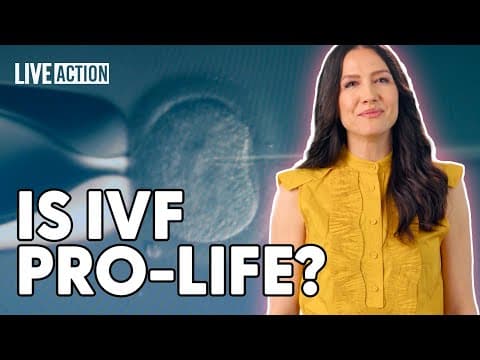
The financial burden is also substantial. A single IVF cycle typically costs between $12,000 and $30,000. Many families require multiple cycles. Success rates per cycle generally range between 30 and 40 percent for younger women and decline with age.
Sixteen states now mandate some level of insurance coverage for IVF, reflecting bipartisan recognition that infertility is a serious medical challenge. Yet while access has expanded, oversight of embryo creation limits, storage standards and malpractice accountability remains fragmented.
The United States permits practices that other developed nations restrict. Countries such as Austria and Italy limit certain forms of embryo donation or surrogacy in an effort to preserve biological ties and reduce commodification. Regulatory approaches vary globally, but many reflect an attempt to balance technological innovation with ethical boundaries.
The American model has emphasized access and market growth. What it has not consistently emphasized is ethical coherence.
A growing body of research suggests that addressing underlying causes of infertility can, in some cases, reduce reliance on IVF. Restorative Reproductive Medicine focuses on diagnosing and treating hormonal imbalances, ovulatory disorders and other root conditions rather than bypassing them.
Some studies indicate that a significant percentage of women previously diagnosed as infertile may conceive after targeted treatment. Such approaches are often less expensive, though they require time and individualized care. They are not a universal substitute for IVF, but they illustrate that assisted reproduction is not the only path forward.
Harm reductions could include:
Capping the number of embryos created per cycle.
Establishing national reporting and auditing standards.
Strengthening malpractice accountability for embryo mix-ups.
Expanding insurance coverage for treatments that address root causes of infertility, not only assisted reproduction.
Creating clearer guidelines for long-term embryo storage and disposition.
These measures recognize that compassion without guardrails can unintentionally create new harms.

This debate is often framed as a choice between supporting families and restricting medicine. That framing obscures the real issue.
The question is not whether children born through IVF are loved. They unquestionably are.
The question is whether a system built on surplus embryo creation and indefinite freezing reflects the dignity we claim to uphold at the beginning of human life.
Medical innovation has always required ethical boundaries:
We regulate organ transplantation.
We regulate pharmaceutical trials.
We regulate pediatric research.
Fertility medicine — which involves the deliberate creation, storage and selection of embryos — warrants the same seriousness.
Compassion for families facing infertility is essential. But compassion must be paired with coherence.
If we believe that human life deserves protection in its most vulnerable stages, then we cannot avoid examining whether a model built on routine cryogenic suspension aligns with that conviction.
Progress is not merely what we can do. It is what we should do — and how we do it responsibly.
Only by confronting the foundational ethical questions can we build a fertility system that honors both hope and human dignity.
Former State Representative Jena Powell served three terms in the Ohio House of Representatives, founded the first-ever Pro-Life Caucus in the Ohio Legislature, and played a pivotal role in advancing landmark pro-life legislation, including her advocacy for the Heartbeat Bill and other measures protecting the unborn. She successfully led the passage of the Save Women’s Sports Act, fought for tax reform to relieve burdens on small businesses, and championed economic development efforts that empowered entrepreneurs and families across Ohio. She currently co-owns Huntington Outdoor, a multi-state outdoor advertising company, and lives in Ohio with her husband Dan and their young son.
Live Action News is pro-life news and commentary from a pro-life perspective.
Our work is possible because of our donors. Please consider giving to further our work of changing hearts and minds on issues of life and human dignity.
Contact editor@liveaction.org for questions, corrections, or if you are seeking permission to reprint any Live Action News content.
Guest Articles: To submit a guest article to Live Action News, email editor@liveaction.org with an attached Word document of 800-1000 words. Please also attach any photos relevant to your submission if applicable. If your submission is accepted for publication, you will be notified within three weeks. Guest articles are not compensated (see our Open License Agreement). Thank you for your interest in Live Action News!
Carole Novielli
·
Guest Column
Ashley Murphy
·
Guest Column
Melissa Bowcutt
·
Guest Column
Mark Lee Dickson
·
Politics
Right to Life UK
·
Guest Column
David Daleiden
·GUEST OPINION: Does fertility medicine uphold human dignity?
Disclaimer: Opinions expressed in this guest post are solely those of the author.
Most people walk into a fertility clinic hoping for a miracle.
They arrive after months or years of quiet heartbreak — after negative tests, specialist appointments, financial strain and private grief. Infertility affects roughly one in six couples in the United States. It can stem from endometriosis, polycystic ovary syndrome (PCOS), male factor infertility, or causes that remain unexplained. The longing for a child is deeply human.
In vitro fertilization (IVF) has brought hundreds of thousands of children into the world. Many families consider it a gift. But alongside its success stories lies a reality we are increasingly forced to confront: fertility medicine in the United States operates with limited federal oversight, inconsistent ethical guardrails and a structure that raises serious moral questions.
And those questions are no longer theoretical.
In Georgia, a woman carried a pregnancy to term only to discover at birth that the embryo transferred to her was not hers. DNA testing confirmed a clinic error. She later described herself as an “unwitting surrogate” and ultimately lost custody of the child she had carried for nine months.
In California, a couple learned months after welcoming their daughter that the embryo implanted was not biologically theirs.
Another family had experienced the same error in reverse. Two families, bonded to their infants, were forced into an unimaginable reckoning between biology and attachment.
Other cases have surfaced through consumer DNA testing: adults discovering that their biological father was not an anonymous donor but the fertility physician who treated their mother. Dozens of such cases have emerged nationwide.
These are not minor administrative errors. They reveal structural weaknesses in an industry entrusted with the earliest stages of human life.
IVF is more common than ever. In 2023, more than 400,000 IVF cycles were performed in the United States, resulting in fewer than 100,000 births. In a typical cycle, physicians retrieve 10 to 15 eggs. Several are fertilized. A handful develop into viable embryos. Often only one embryo is transferred at a time.
The arithmetic is unavoidable: even in successful cycles, multiple embryos frequently remain unused.
Across hundreds of thousands of cycles each year, this model has contributed to the storage of more than one million frozen embryos in the United States.
Which brings us to a foundational question the public debate often avoids: If an entire medical practice depends on the routine creation and cryogenic freezing of surplus embryos, is that practice ethically coherent at all?
READ: Can IVF ever be ethical? Here are some things to consider.
Freezing is not an accidental byproduct of IVF. It is built into the model. Multiple embryos are created because success rates per transfer are limited. Surplus embryos are expected. Cryopreservation allows clinics to preserve them for future attempts.
But cryogenic suspension is not morally neutral.
Some embryos will eventually be transferred. Many will remain frozen for years. Some will be discarded. Others will be donated for research. Still others will enter legal limbo when parents divorce, die or cannot agree on their disposition.
If embryos are regarded as nascent human life, indefinite freezing presents a profound ethical problem. If they are regarded merely as biological material, then we must confront how readily we are willing to create and store potential human beings in excess of what will ever be born.
Either way, a tension exists.
A system designed around surplus creation inevitably treats some embryos as means rather than ends — as inventory rather than individuals. Even those who strongly support IVF as a compassionate response to infertility should be willing to examine that structural reality.
In 2024, the Supreme Court of Alabama ruled that frozen embryos could be recognized as children under state wrongful death law when destroyed through negligence. The decision did not ban IVF. But it underscored the legal and philosophical contradiction at the heart of assisted reproduction: embryos are treated as property in some contexts and as persons in others.
Law and medicine cannot indefinitely ignore that inconsistency.
The financial burden is also substantial. A single IVF cycle typically costs between $12,000 and $30,000. Many families require multiple cycles. Success rates per cycle generally range between 30 and 40 percent for younger women and decline with age.
Sixteen states now mandate some level of insurance coverage for IVF, reflecting bipartisan recognition that infertility is a serious medical challenge. Yet while access has expanded, oversight of embryo creation limits, storage standards and malpractice accountability remains fragmented.
The United States permits practices that other developed nations restrict. Countries such as Austria and Italy limit certain forms of embryo donation or surrogacy in an effort to preserve biological ties and reduce commodification. Regulatory approaches vary globally, but many reflect an attempt to balance technological innovation with ethical boundaries.
The American model has emphasized access and market growth. What it has not consistently emphasized is ethical coherence.
A growing body of research suggests that addressing underlying causes of infertility can, in some cases, reduce reliance on IVF. Restorative Reproductive Medicine focuses on diagnosing and treating hormonal imbalances, ovulatory disorders and other root conditions rather than bypassing them.
Some studies indicate that a significant percentage of women previously diagnosed as infertile may conceive after targeted treatment. Such approaches are often less expensive, though they require time and individualized care. They are not a universal substitute for IVF, but they illustrate that assisted reproduction is not the only path forward.
Harm reductions could include:
Capping the number of embryos created per cycle.
Establishing national reporting and auditing standards.
Strengthening malpractice accountability for embryo mix-ups.
Expanding insurance coverage for treatments that address root causes of infertility, not only assisted reproduction.
Creating clearer guidelines for long-term embryo storage and disposition.
These measures recognize that compassion without guardrails can unintentionally create new harms.
This debate is often framed as a choice between supporting families and restricting medicine. That framing obscures the real issue.
The question is not whether children born through IVF are loved. They unquestionably are.
The question is whether a system built on surplus embryo creation and indefinite freezing reflects the dignity we claim to uphold at the beginning of human life.
Medical innovation has always required ethical boundaries:
We regulate organ transplantation.
We regulate pharmaceutical trials.
We regulate pediatric research.
Fertility medicine — which involves the deliberate creation, storage and selection of embryos — warrants the same seriousness.
Compassion for families facing infertility is essential. But compassion must be paired with coherence.
If we believe that human life deserves protection in its most vulnerable stages, then we cannot avoid examining whether a model built on routine cryogenic suspension aligns with that conviction.
Progress is not merely what we can do. It is what we should do — and how we do it responsibly.
Only by confronting the foundational ethical questions can we build a fertility system that honors both hope and human dignity.
Former State Representative Jena Powell served three terms in the Ohio House of Representatives, founded the first-ever Pro-Life Caucus in the Ohio Legislature, and played a pivotal role in advancing landmark pro-life legislation, including her advocacy for the Heartbeat Bill and other measures protecting the unborn. She successfully led the passage of the Save Women’s Sports Act, fought for tax reform to relieve burdens on small businesses, and championed economic development efforts that empowered entrepreneurs and families across Ohio. She currently co-owns Huntington Outdoor, a multi-state outdoor advertising company, and lives in Ohio with her husband Dan and their young son.
Live Action News is pro-life news and commentary from a pro-life perspective.
Our work is possible because of our donors. Please consider giving to further our work of changing hearts and minds on issues of life and human dignity.
Contact editor@liveaction.org for questions, corrections, or if you are seeking permission to reprint any Live Action News content.
Guest Articles: To submit a guest article to Live Action News, email editor@liveaction.org with an attached Word document of 800-1000 words. Please also attach any photos relevant to your submission if applicable. If your submission is accepted for publication, you will be notified within three weeks. Guest articles are not compensated (see our Open License Agreement). Thank you for your interest in Live Action News!
Carole Novielli
·Guest Column
Ashley Murphy
·Guest Column
Melissa Bowcutt
·Guest Column
Mark Lee Dickson
·Politics
Right to Life UK
·Guest Column
David Daleiden
·