 Opinion
Read Next
International
Report: 25% of Belgian euthanasia patients in 2025 were not terminally ill
Cassy Cooke
·

Can IVF ever be ethical? Here are some things to consider.
A new method of in vitro fertilization (IVF) known as "natural" or "ethical" IVF has gained popularity, especially among adults experiencing infertility who don't want to create multiple embryos that will generally not survive.
For individuals wishing to use IVF, but feeling conflicted about creating more embryos than they would want to carry to term, "ethical" or "natural" IVF appears to be a solution — but is it?
IVF is not a pro-life treatment, as more human beings die during the IVF process than successfully make it to birth.
Although it's marketed as a more morally sound version of IVF, so-called "natural" IVF is still fraught with ethical problems.
Even when deemed ethical or natural, the IVF process offers testing and grading of embryos, treats children as products, involves immoral acts, opens the door for life-altering mistakes, carries health risks for women and children, and creates human beings outside the marital act.
Many individuals consider IVF to be a pro-life fertility treatment because its goal is to create human beings. However, the majority of human embryos created through IVF do not survive to birth. It is now known that more human beings die annually during the IVF process in the U.S. than from abortion. It is unknown exactly how many are destroyed for failing to meet the standards set by fertility doctors, but estimates paint a grim picture.
In 2023, there were 432,641 IVF cycles at 371 reporting clinics in the U.S., but only 95,860 babies were born. Based on a conservative average of nine embryos created per cycle (a study found nine to be the number needed to optimize live birth rates), an estimated 3,893,769 embryos were created in 2023 alone. About half of those are estimated to have not survived beyond the next two stages: the blastocyst stage and the genetic testing stage.
Of the remaining estimate of 1,946,884 embryos, 91,360 were automatically "banked" for "future use." Of the remainder, only 95,860 survived to birth after being graded, labeled, selected, and transferred. This leaves 1,759,664 human embryos unaccounted for, who were either frozen, miscarried, donated to research, or released for embryo adoption (with the adoption rate at just 1-6%). In comparison, there were an estimated 1,037,880 abortions in 2024 in the U.S. (and 1,053,430 abortions in 2024).
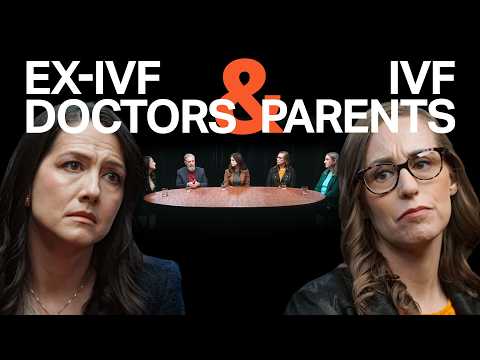
For individuals wishing to use IVF but feeling conflicted about creating more embryos than they would want to carry to term, "ethical" or "natural" IVF appears to be a solution — but is it?
Natural IVF uses a woman's typical monthly cycle to harvest a single egg when her body is ready to release it. This means the woman is not subjected to the same hormone injections that women participating in typical IVF are. The egg retrieval process is the same, and with natural IVF, if the retrieval of one egg is successful, it will presumably be fertilized with the husband's sperm.
Avoiding the use of drugs to stimulate the development of multiple eggs means less stress on the woman's body and a lower price tag. It also means there's only one egg to fertilize; while this may sound more ethical, this may still require multiple attempts with multiple lives lost.
According to CNY Fertility, "The overall pregnancy rate per patient undergoing conventional IVF was not significantly different from that of the natural cycle group (19.72% vs. 15.65%, p = 0.228)," and "There was no significant difference between the two groups in terms of [miscarriage] rates (p = 0.2915) and live birth rates (p = 0.2281)."
However, CNY Fertility also explained, "In the natural cycle group, the pregnancy rate per cycle was significantly lower compared to the conventional stimulation group (6.25% vs. 12.89%, p = 0.0001)." In addition, "The pregnancy rate per patient with at least one embryo transfer was also significantly lower in the natural cycle group (18.85% vs. 28.11%, p = 0.025)."
This indicates that while similar pregnancy rates and live birth rates exist between the two groups, the women undergoing natural IVF must often do more IVF cycles than women undergoing traditional IVF.
If the embryo does not survive during the natural IVF process, another session of harvesting would be repeated during the woman's next cycle, requiring more frequent harvesting of the egg.
In addition, if an embryo survives to the blastocyst stage, it could still be tested for quality before implantation is attempted, according to the Florida Institute for Reproductive Sciences and Technologies (FIRST IVF), which markets itself as the only natural IVF clinic in Florida. FIRST IVF explained, "If an embryo is formed and continues to develop, it can, as in standard IVF, be tested for common genetic abnormalities (if you choose this extra step and relatively low additional expense). Whether or not genetic testing is performed, your embryo would be transferred back to the uterus, just as it is done with conventional IVF."
The reduced use of hormones and drugs along with the creation of fewer embryos are positive changes to a typical IVF process, but they do not mean that "natural" IVF is an ethical solution to infertility. Several concerns remain:
While not every natural/ethical IVF facility or couple will test or grade the embryos created, the possibility still exists, and embryos are still being graded for their perceived quality. FIRST IVF, though marketed as "natural," states on its site that embryos can "be tested for common genetic abnormalities." Testing and grading human beings to weed out certain people or characteristics is eugenic and discriminatory, even when done on just one embryo at a time.
Natural IVF does not rule out the possibility that "donor" eggs or sperm will be used to conceive a child, who could then be placed into the womb of a surrogate.
These acts violate a child's right to both his biological mother and biological father. When using a surrogate, the child is created with the intention of removing him from the one person he has bonded with over the entirety of his life. This is quite different from the separation that happens in adoption, which exists to heal a trauma created when parents can't take care of their child. The use of "donor" eggs and donor sperm means the child is denied access to one or both biological parents, and using a surrogate means the child is created with the intention of inflicting the trauma of separation at birth.
Studies have shown that a separation from his or her birth mother is a “major physiologic stressor” for the baby; this trauma can permanently alter her brain and leave her susceptible to depression, abandonment issues, and problems related to attachment, bonding, and self-esteem.
While society wants individuals created through IVF to be nothing but grateful for their lives, they sometimes experience other emotions surrounding the means of their conception.
One woman told the children's rights organization Them Before Us:
“Somehow, somewhere, my parents developed the idea that they deserved to have a baby, and it didn’t matter how much it cost, how many times it took, or how many died in the process. They deserved a child. And with an attitude like that, by the time I was born they thought they deserved to have the perfect child… as Dad defined a perfect child. And since they deserved a child, I was their property to be controlled, not a person or a gift to be treasured.”
In a book for Anonymous Us, another person wrote, "I am a human being, yet I was conceived with a technique that had its origins in animal husbandry."
Katie Breckenridge of Them Before Us explained, “When you are commissioning and swiping your credit card for a product, even one that you want badly, you are participating in commodification [...] In this case, the products are human beings."
Natural/ethical IVF is also not free of the potential for life-altering "mistakes" in which the wrong sperm is used to create the child, or one couple's embryo is "mixed up" with another, resulting in a mother giving birth to someone else's child. This is not as rare as it should be.
One couple aborted a healthy baby at six months after learning she was someone else's biological child. The trauma inflicted on that child's biological parents is unimaginable.
Another couple filed a lawsuit against the fertility business after giving birth to a baby who didn't look like them. Daphna Cardinale and her husband Alexander suspected that the baby wasn’t genetically related to them because she had a darker complexion than either of them. She belonged to a different couple who had given birth to the Cardinale's daughter in an embryo mix-up. The babies lived with the "wrong" families for months before being switched back, which caused trauma for everyone.
One of the often ignored ethical concerns with the IVF process is how the sperm is retrieved, with many facilities encouraging men to masturbate by providing them with pornographic materials. Pornography has been shown to have negative impacts on mental health, relationships, and sexual function, and has been shown to be addictive.
According to Fight the New Drug, porn use is the second strongest indicator that a relationship will suffer. It has been associated with mental health issues and it perpetuates stereotypes. It can also harm sexual performance and expectations, and can alter the person's brain.
With masturbation, there is no intimacy with another person, and any persons imagined or objectified during the act are typically reduced to sexual objects in someone's mind.
C.S. Lewis said of masturbation:
For me the real evil of masturbation would be that it takes an appetite which, in lawful use, leads the individual out of himself to complete (and correct) his own personality in that of another (and finally in children and even grandchildren) and turns it back: sending the man back into the prison of himself, there to keep a harem of imaginary brides.
While there are other means to obtain sperm, including specialized condoms to collect the sperm during sex, as well as surgical retrieval methods, masturbation is the commonly used option.
IVF eliminates the natural, procreative act of sexual intercourse as the means of achieving pregnancy. Without intending to, the couple is saying that the sexual and procreative act of self-giving is no longer necessary. The act of creating new life is turned into a process completed in a laboratory, entrusting the dignity and the very life of a human to doctors and other medical personnel. In other words, life is being made instead of being received.
As explained in Donum vitae, even when no embryos are destroyed, IVF "establishes the domination of technology over the origin and destiny of the human person. Such a relationship of domination is in itself contrary to the dignity and equality that must be common to parents and children.”
While natural/ethical IVF reduces the health risks to the mother, it is still linked to an increased risk of hypertension, preeclampsia, and gestational diabetes mellitus.
In addition, the children created through IVF who do survive are at risk of premature birth as well as multiple health conditions, including low birth weight, higher blood pressure, hormonal imbalances and advanced bone age, cardiovascular issues and cerebral palsy, autism spectrum disorder, childhood leukemia, and even infertility.
Infertility causes deep heartbreak and its understandable to want to make every effort to have a biological child. But no matter how it's framed, IVF is an unethical practice.
Live Action News is pro-life news and commentary from a pro-life perspective.
Our work is possible because of our donors. Please consider giving to further our work of changing hearts and minds on issues of life and human dignity.
Contact editor@liveaction.org for questions, corrections, or if you are seeking permission to reprint any Live Action News content.
Guest Articles: To submit a guest article to Live Action News, email editor@liveaction.org with an attached Word document of 800-1000 words. Please also attach any photos relevant to your submission if applicable. If your submission is accepted for publication, you will be notified within three weeks. Guest articles are not compensated (see our Open License Agreement). Thank you for your interest in Live Action News!
Cassy Cooke
·
Opinion
Cassy Cooke
·
Opinion
Nancy Flanders
·
Fact Checks
Cassy Cooke
·
Opinion
Sheena Rodriguez
·
Pop Culture
Nancy Flanders
·
Politics
Nancy Flanders
·
International
Nancy Flanders
·
Activism
Nancy Flanders
·
International
Nancy Flanders
·
Issues
Nancy Flanders
·Can IVF ever be ethical? Here are some things to consider.
A new method of in vitro fertilization (IVF) known as "natural" or "ethical" IVF has gained popularity, especially among adults experiencing infertility who don't want to create multiple embryos that will generally not survive.
For individuals wishing to use IVF, but feeling conflicted about creating more embryos than they would want to carry to term, "ethical" or "natural" IVF appears to be a solution — but is it?
IVF is not a pro-life treatment, as more human beings die during the IVF process than successfully make it to birth.
Although it's marketed as a more morally sound version of IVF, so-called "natural" IVF is still fraught with ethical problems.
Even when deemed ethical or natural, the IVF process offers testing and grading of embryos, treats children as products, involves immoral acts, opens the door for life-altering mistakes, carries health risks for women and children, and creates human beings outside the marital act.
Many individuals consider IVF to be a pro-life fertility treatment because its goal is to create human beings. However, the majority of human embryos created through IVF do not survive to birth. It is now known that more human beings die annually during the IVF process in the U.S. than from abortion. It is unknown exactly how many are destroyed for failing to meet the standards set by fertility doctors, but estimates paint a grim picture.
In 2023, there were 432,641 IVF cycles at 371 reporting clinics in the U.S., but only 95,860 babies were born. Based on a conservative average of nine embryos created per cycle (a study found nine to be the number needed to optimize live birth rates), an estimated 3,893,769 embryos were created in 2023 alone. About half of those are estimated to have not survived beyond the next two stages: the blastocyst stage and the genetic testing stage.
Of the remaining estimate of 1,946,884 embryos, 91,360 were automatically "banked" for "future use." Of the remainder, only 95,860 survived to birth after being graded, labeled, selected, and transferred. This leaves 1,759,664 human embryos unaccounted for, who were either frozen, miscarried, donated to research, or released for embryo adoption (with the adoption rate at just 1-6%). In comparison, there were an estimated 1,037,880 abortions in 2024 in the U.S. (and 1,053,430 abortions in 2024).
For individuals wishing to use IVF but feeling conflicted about creating more embryos than they would want to carry to term, "ethical" or "natural" IVF appears to be a solution — but is it?
Natural IVF uses a woman's typical monthly cycle to harvest a single egg when her body is ready to release it. This means the woman is not subjected to the same hormone injections that women participating in typical IVF are. The egg retrieval process is the same, and with natural IVF, if the retrieval of one egg is successful, it will presumably be fertilized with the husband's sperm.
Avoiding the use of drugs to stimulate the development of multiple eggs means less stress on the woman's body and a lower price tag. It also means there's only one egg to fertilize; while this may sound more ethical, this may still require multiple attempts with multiple lives lost.
According to CNY Fertility, "The overall pregnancy rate per patient undergoing conventional IVF was not significantly different from that of the natural cycle group (19.72% vs. 15.65%, p = 0.228)," and "There was no significant difference between the two groups in terms of [miscarriage] rates (p = 0.2915) and live birth rates (p = 0.2281)."
However, CNY Fertility also explained, "In the natural cycle group, the pregnancy rate per cycle was significantly lower compared to the conventional stimulation group (6.25% vs. 12.89%, p = 0.0001)." In addition, "The pregnancy rate per patient with at least one embryo transfer was also significantly lower in the natural cycle group (18.85% vs. 28.11%, p = 0.025)."
This indicates that while similar pregnancy rates and live birth rates exist between the two groups, the women undergoing natural IVF must often do more IVF cycles than women undergoing traditional IVF.
If the embryo does not survive during the natural IVF process, another session of harvesting would be repeated during the woman's next cycle, requiring more frequent harvesting of the egg.
In addition, if an embryo survives to the blastocyst stage, it could still be tested for quality before implantation is attempted, according to the Florida Institute for Reproductive Sciences and Technologies (FIRST IVF), which markets itself as the only natural IVF clinic in Florida. FIRST IVF explained, "If an embryo is formed and continues to develop, it can, as in standard IVF, be tested for common genetic abnormalities (if you choose this extra step and relatively low additional expense). Whether or not genetic testing is performed, your embryo would be transferred back to the uterus, just as it is done with conventional IVF."
The reduced use of hormones and drugs along with the creation of fewer embryos are positive changes to a typical IVF process, but they do not mean that "natural" IVF is an ethical solution to infertility. Several concerns remain:
While not every natural/ethical IVF facility or couple will test or grade the embryos created, the possibility still exists, and embryos are still being graded for their perceived quality. FIRST IVF, though marketed as "natural," states on its site that embryos can "be tested for common genetic abnormalities." Testing and grading human beings to weed out certain people or characteristics is eugenic and discriminatory, even when done on just one embryo at a time.
Natural IVF does not rule out the possibility that "donor" eggs or sperm will be used to conceive a child, who could then be placed into the womb of a surrogate.
These acts violate a child's right to both his biological mother and biological father. When using a surrogate, the child is created with the intention of removing him from the one person he has bonded with over the entirety of his life. This is quite different from the separation that happens in adoption, which exists to heal a trauma created when parents can't take care of their child. The use of "donor" eggs and donor sperm means the child is denied access to one or both biological parents, and using a surrogate means the child is created with the intention of inflicting the trauma of separation at birth.
Studies have shown that a separation from his or her birth mother is a “major physiologic stressor” for the baby; this trauma can permanently alter her brain and leave her susceptible to depression, abandonment issues, and problems related to attachment, bonding, and self-esteem.
While society wants individuals created through IVF to be nothing but grateful for their lives, they sometimes experience other emotions surrounding the means of their conception.
One woman told the children's rights organization Them Before Us:
“Somehow, somewhere, my parents developed the idea that they deserved to have a baby, and it didn’t matter how much it cost, how many times it took, or how many died in the process. They deserved a child. And with an attitude like that, by the time I was born they thought they deserved to have the perfect child… as Dad defined a perfect child. And since they deserved a child, I was their property to be controlled, not a person or a gift to be treasured.”
In a book for Anonymous Us, another person wrote, "I am a human being, yet I was conceived with a technique that had its origins in animal husbandry."
Katie Breckenridge of Them Before Us explained, “When you are commissioning and swiping your credit card for a product, even one that you want badly, you are participating in commodification [...] In this case, the products are human beings."
Natural/ethical IVF is also not free of the potential for life-altering "mistakes" in which the wrong sperm is used to create the child, or one couple's embryo is "mixed up" with another, resulting in a mother giving birth to someone else's child. This is not as rare as it should be.
One couple aborted a healthy baby at six months after learning she was someone else's biological child. The trauma inflicted on that child's biological parents is unimaginable.
Another couple filed a lawsuit against the fertility business after giving birth to a baby who didn't look like them. Daphna Cardinale and her husband Alexander suspected that the baby wasn’t genetically related to them because she had a darker complexion than either of them. She belonged to a different couple who had given birth to the Cardinale's daughter in an embryo mix-up. The babies lived with the "wrong" families for months before being switched back, which caused trauma for everyone.
One of the often ignored ethical concerns with the IVF process is how the sperm is retrieved, with many facilities encouraging men to masturbate by providing them with pornographic materials. Pornography has been shown to have negative impacts on mental health, relationships, and sexual function, and has been shown to be addictive.
According to Fight the New Drug, porn use is the second strongest indicator that a relationship will suffer. It has been associated with mental health issues and it perpetuates stereotypes. It can also harm sexual performance and expectations, and can alter the person's brain.
With masturbation, there is no intimacy with another person, and any persons imagined or objectified during the act are typically reduced to sexual objects in someone's mind.
C.S. Lewis said of masturbation:
For me the real evil of masturbation would be that it takes an appetite which, in lawful use, leads the individual out of himself to complete (and correct) his own personality in that of another (and finally in children and even grandchildren) and turns it back: sending the man back into the prison of himself, there to keep a harem of imaginary brides.
While there are other means to obtain sperm, including specialized condoms to collect the sperm during sex, as well as surgical retrieval methods, masturbation is the commonly used option.
IVF eliminates the natural, procreative act of sexual intercourse as the means of achieving pregnancy. Without intending to, the couple is saying that the sexual and procreative act of self-giving is no longer necessary. The act of creating new life is turned into a process completed in a laboratory, entrusting the dignity and the very life of a human to doctors and other medical personnel. In other words, life is being made instead of being received.
As explained in Donum vitae, even when no embryos are destroyed, IVF "establishes the domination of technology over the origin and destiny of the human person. Such a relationship of domination is in itself contrary to the dignity and equality that must be common to parents and children.”
While natural/ethical IVF reduces the health risks to the mother, it is still linked to an increased risk of hypertension, preeclampsia, and gestational diabetes mellitus.
In addition, the children created through IVF who do survive are at risk of premature birth as well as multiple health conditions, including low birth weight, higher blood pressure, hormonal imbalances and advanced bone age, cardiovascular issues and cerebral palsy, autism spectrum disorder, childhood leukemia, and even infertility.
Infertility causes deep heartbreak and its understandable to want to make every effort to have a biological child. But no matter how it's framed, IVF is an unethical practice.
Live Action News is pro-life news and commentary from a pro-life perspective.
Our work is possible because of our donors. Please consider giving to further our work of changing hearts and minds on issues of life and human dignity.
Contact editor@liveaction.org for questions, corrections, or if you are seeking permission to reprint any Live Action News content.
Guest Articles: To submit a guest article to Live Action News, email editor@liveaction.org with an attached Word document of 800-1000 words. Please also attach any photos relevant to your submission if applicable. If your submission is accepted for publication, you will be notified within three weeks. Guest articles are not compensated (see our Open License Agreement). Thank you for your interest in Live Action News!
Cassy Cooke
·Opinion
Cassy Cooke
·Opinion
Nancy Flanders
·Fact Checks
Cassy Cooke
·Opinion
Sheena Rodriguez
·Pop Culture
Nancy Flanders
·Politics
Nancy Flanders
·International
Nancy Flanders
·Activism
Nancy Flanders
·International
Nancy Flanders
·Issues
Nancy Flanders
·