Read Next
Guest Column
Idaho doctors delivered my baby to save my life, and I didn't need abortion
Valerie Abraham
·

 Abortion Pill·By Carole Novielli
Dear FDA: Why are you aiding the breaking of federal laws about abortion?
The U.S. Food and Drug Administration (FDA) has eroded safety requirements on the abortion pill, allowing the drug to be dispensed by mail though the federal Comstock Act prohibits the mailing of abortion inducing drugs in the United States.
While the FDA is not the enforcing arm of the Comstock federal law, a governing agency should not be eroding regulations that outright violate federal law. So why is it?
The mailing of abortion drugs is already illegal under the federal Comstock laws. The FDA and DOJ — under both the Biden and Trump administrations — appear to be ignoring this.
Various states have filed lawsuits claiming that their sovereignty is threatened by the mail-order abortion pill and by shield laws enacted by pro-abortion states to protect lawbreaking abortionists.
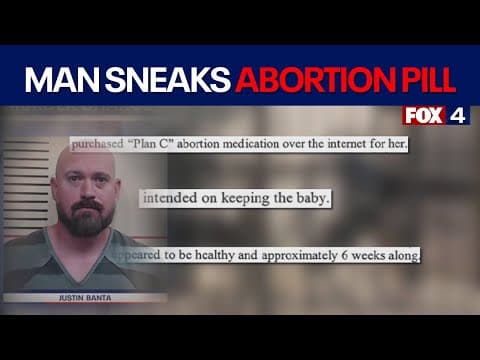
Women have also been coerced or forced to take abortion drugs that predatory men obtained illegally online and had mailed to them.
If the federal Comstock laws already on the books were enforced, it could cripple the abortion pill industry.
The abortion pill (Mifeprex or mifepristone 200 mg) was approved by the FDA for the “termination of pregnancy” in 2000.
In 2023, the FDA removed the in-person dispensing requirement, eroding safety regulations (known as REMS) to allow for the drug to be dispensed by mail or pharmacy.
In October of 2025, the Trump Administration's FDA approved the second generic abortion pill maker (Evita Solutions, LLC). In the FDA's approval letter, it told Evita (emphasis added), "Your REMS must be fully operational before you introduce your drug into interstate commerce."
This is despite the fact that the federal Comstock Act prohibits the mailing of abortion inducing drugs.
Of additional concern is the fact that the drug's label requires the pills to be stored at a specific temperature; if altered, this can corrupt the drug's effectiveness, casting doubts about the stability of abortion drugs sent by mail.
The State of Louisiana recently argued a lawsuit before a District Court, seeking to enjoin the 2023 REMS. the state claims that the REMS:
allowed the abortion pill to be dispensed via the mail, violating the Comstock Act.
causes sovereign harm by facilitating illegal abortions.
causes economic harm by increasing Louisiana's Medicaid costs due to injuries.
A brief filed by 60 lawmakers in that case contended that while the FDA has been given the power by Congress to "approve drugs and regulate their safety and efficacy within the parameters set by federal law," the Comstock Act, passed by Congress, already made it illegal to mail "'[e]very article or thing designed, adapted, or intended for producing abortion.' 18 U.S.C. § 1461."
The brief accused the Biden administration's FDA of violating this "longstanding federal law," adding:
Unelected, unaccountable bureaucrats in Biden’s FDA therefore overrode the will of the American people as expressed through their elected representatives in Congress and in state legislatures and subverted Congress’s critical public policy interests in upholding patient welfare.
The brief called these actions "lawless," adding that they "have also caused real harm and continue to endanger women and girls undergoing chemical abortions, warranting preliminary relief."
That sentiment was expressed by the states of Texas and Florida as well as Kansas, Missouri, and Idaho.
“Because a federal agency cannot permit what federal law expressly prohibits, the FDA lacked legal authority when issuing the 2021/2023 Removal of the In-Person Dispensing Protection,” the lawsuit claimed.
That decision “failed to account for or address the federal laws that prohibit the distribution of abortion drugs by postal mail, express company, or common carrier and by interactive computer service,” the lawsuit notes. “FDA permitted and sometimes even encouraged these illegal activities. But a federal agency cannot authorize unlawful actions.”
The Guttmacher Institute recently noted that telehealth abortion with the ability to mail abortion pills to abortion seekers across the U.S., even into pro-life states, has contributed to the increased abortion numbers since the end of Roe v. Wade.
Also adding to influx are "shield laws" passed by several pro-abortion states to prevent abortionists in those states from being prosecuted for sending abortion drugs into states where it is illegal.
Some states, including Texas, Florida, and Arkansas, have sent cease-and-desist letters and/or added their voices to lawsuits in an attempt to halt this activity, making it known that federal Comstock laws already cite it as illegal.
This lies squarely at the feet of the FDA's 2023 REMS erosions, put forward despite the federal prohibitions.
Coercion is of increased concern due to mail-order abortion dispensing, as predators hide behind computer screens, have abortion drugs shipped to them, and clandestinely drug their pregnant victims.
Louisiana resident Rosalie Markezich, a plaintiff in a Louisiana abortion pill lawsuit, says that mail-order abortion allowed her then-boyfriend to obtain the drugs by mail from a doctor in California and coerced her into taking them; her preborn child died.

"Rosalie, and other Louisiana citizens similarly situated, need the Comstock Act to be enforced for her, and for their protection," wrote one of the Amici in the case. "The state protections are rendered impotent by the FDA’s 2023 REMS and the FDA’s blatant violation of the Comstock Act by allowing the distribution of abortion-producing drugs through the mail and common carrier into its borders."
Several cases have come to light in recent years in which men administered easily-obtained abortion drugs to women without the women's knowledge or consent (forced abortions); these have been documented by Live Action News and in Live Action's chemical abortion pill report.
The Comstock Act (18 U.S.C. § 1461) prohibits the mailing of “any article, instrument, substance, drug, medicine, or thing [that] may, or can, be used or applied for producing abortion[.]”
Alliance Defending Freedom’s (ADF) Senior Counsel Erik Baptist previously explained:
These longstanding federal laws prohibit the distribution of chemical abortion drugs by mail, common carrier, or express company. That means only the chemical drug manufacturer may deliver and distribute these drugs to abortionists around the country. The manufacturer cannot use the U.S. Postal Service, FedEx, UPS, or any third-party courier to distribute chemical abortion drugs to abortionists, pharmacies, or women in the United States.
Attorney Mike Seibel previously told Live Action News that Comstock could essentially end all abortions.
“The Comstock Act prevents the distribution of any abortion-causing agents or abortion paraphernalia through the mail and interstate commerce. So that would include abortion pills and equipment and thwart mail order abortion distribution,” he said.
The Comstock Act does not prohibit the mailing of drugs to be used...
in cases of miscarriage.
to save the life of a mother.
for other medical purposes.
The law does not prohibit the shipping of the second drug in the abortion pill regimen, misoprostol, when the drug is to be used to treat medical problems including miscarriage and gastric ulcers, for example, as Live Action News previously reported.
In addition, Congress has consistently upheld the Comstock Act’s prohibition on abortion pill trafficking, and according to a joint report on the abortion pill published by Americans United for Life (AUL) and Live Action, “Congress and President Clinton acted in 1996 to expand Section 1462’s application to ‘interactive computer services,’ making it illegal to use the internet to ship or receive abortifacients.”
During March 2024 oral arguments before the United States Supreme Court in Alliance for Hippocratic Medicine (AHM) v. Food and Drug Administration (FDA), Justice Clarence Thomas hinted that the Comstock Act could be in play
“How do you respond to an argument that mailing your product and advertising it would violate the Comstock Act?” Justice Thomas asked Jessica Ellsworth, who represented abortion pill manufacturer Danco Laboratories.
Ellsworth dodged the question, warning Justice Thomas that challenging the FDA could “invit[e] mischief” and that the Court should “think hard” about that.
“My problem is, you’re private,” Thomas stated, alleging that private entities are not subject to a “safe harbor” against federal laws.
Justice Samuel Alito also mentioned Comstock, grilling U.S. Solicitor General Elizabeth Prelogar, who was defending the FDA.
Referencing the law by its US code number (18 U.S.C. 1461), Alito asked, "Shouldn't the FDA [have] at least considered" Comstock?, adding:
"And this is a prominent provision - it's not some obscure section of a complicated obscure law. They knew about it. Everybody in this field knew about it. Shouldn't they have at least addressed it?
You have answers to the arguments that are made on the other side; shouldn't the FDA [have] said, 'at least we considered those' and provide some kind of an explanation?"
“It’s very clear that the only thing FDA can take into account for restrictions are safety and efficacy concerns in deciding whether to maintain a REMS program,” Prelogar said in response.
Justice Alito then grilled Ellsworth, pressing into the profit motive: “So, I gather your injury is that you think you are going to sell more if the restrictions that previously were in place were lifted,” Alito stated.
“Yes,” Ellsworth said in response.
Though Live Action News previously documented at least one instance in which postal workers investigated the mailing of abortion drugs, it appears the investigation only took place because the abortion pills were contaminated by trace amounts of narcotics.
Comstock is enforced by the United States Postal Service (USPS) or the Department of Justice, and neither agency thus far seems to have the willpower to enforce the law.
Live Action News is pro-life news and commentary from a pro-life perspective.
Our work is possible because of our donors. Please consider giving to further our work of changing hearts and minds on issues of life and human dignity.
Contact editor@liveaction.org for questions, corrections, or if you are seeking permission to reprint any Live Action News content.
Guest Articles: To submit a guest article to Live Action News, email editor@liveaction.org with an attached Word document of 800-1000 words. Please also attach any photos relevant to your submission if applicable. If your submission is accepted for publication, you will be notified within three weeks. Guest articles are not compensated (see our Open License Agreement). Thank you for your interest in Live Action News!
Valerie Abraham
·
Abortion Pill
Carole Novielli
·
Abortion Pill
Carole Novielli
·
Abortion Pill
Bridget Sielicki
·
Abortion Pill
Cassy Cooke
·
Abortion Pill
Carole Novielli
·Abortion Pill
Carole Novielli
·Abortion Pill
Carole Novielli
·Abortion Pill
Carole Novielli
·
Abortion Pill
Carole Novielli
·
Abortion Pill
Carole Novielli
·Abortion Pill·By Carole Novielli
Dear FDA: Why are you aiding the breaking of federal laws about abortion?
The U.S. Food and Drug Administration (FDA) has eroded safety requirements on the abortion pill, allowing the drug to be dispensed by mail though the federal Comstock Act prohibits the mailing of abortion inducing drugs in the United States.
While the FDA is not the enforcing arm of the Comstock federal law, a governing agency should not be eroding regulations that outright violate federal law. So why is it?
The mailing of abortion drugs is already illegal under the federal Comstock laws. The FDA and DOJ — under both the Biden and Trump administrations — appear to be ignoring this.
Various states have filed lawsuits claiming that their sovereignty is threatened by the mail-order abortion pill and by shield laws enacted by pro-abortion states to protect lawbreaking abortionists.
Women have also been coerced or forced to take abortion drugs that predatory men obtained illegally online and had mailed to them.
If the federal Comstock laws already on the books were enforced, it could cripple the abortion pill industry.
The abortion pill (Mifeprex or mifepristone 200 mg) was approved by the FDA for the “termination of pregnancy” in 2000.
In 2023, the FDA removed the in-person dispensing requirement, eroding safety regulations (known as REMS) to allow for the drug to be dispensed by mail or pharmacy.
In October of 2025, the Trump Administration's FDA approved the second generic abortion pill maker (Evita Solutions, LLC). In the FDA's approval letter, it told Evita (emphasis added), "Your REMS must be fully operational before you introduce your drug into interstate commerce."
This is despite the fact that the federal Comstock Act prohibits the mailing of abortion inducing drugs.
Of additional concern is the fact that the drug's label requires the pills to be stored at a specific temperature; if altered, this can corrupt the drug's effectiveness, casting doubts about the stability of abortion drugs sent by mail.
The State of Louisiana recently argued a lawsuit before a District Court, seeking to enjoin the 2023 REMS. the state claims that the REMS:
allowed the abortion pill to be dispensed via the mail, violating the Comstock Act.
causes sovereign harm by facilitating illegal abortions.
causes economic harm by increasing Louisiana's Medicaid costs due to injuries.
A brief filed by 60 lawmakers in that case contended that while the FDA has been given the power by Congress to "approve drugs and regulate their safety and efficacy within the parameters set by federal law," the Comstock Act, passed by Congress, already made it illegal to mail "'[e]very article or thing designed, adapted, or intended for producing abortion.' 18 U.S.C. § 1461."
The brief accused the Biden administration's FDA of violating this "longstanding federal law," adding:
Unelected, unaccountable bureaucrats in Biden’s FDA therefore overrode the will of the American people as expressed through their elected representatives in Congress and in state legislatures and subverted Congress’s critical public policy interests in upholding patient welfare.
The brief called these actions "lawless," adding that they "have also caused real harm and continue to endanger women and girls undergoing chemical abortions, warranting preliminary relief."
That sentiment was expressed by the states of Texas and Florida as well as Kansas, Missouri, and Idaho.
“Because a federal agency cannot permit what federal law expressly prohibits, the FDA lacked legal authority when issuing the 2021/2023 Removal of the In-Person Dispensing Protection,” the lawsuit claimed.
That decision “failed to account for or address the federal laws that prohibit the distribution of abortion drugs by postal mail, express company, or common carrier and by interactive computer service,” the lawsuit notes. “FDA permitted and sometimes even encouraged these illegal activities. But a federal agency cannot authorize unlawful actions.”
The Guttmacher Institute recently noted that telehealth abortion with the ability to mail abortion pills to abortion seekers across the U.S., even into pro-life states, has contributed to the increased abortion numbers since the end of Roe v. Wade.
Also adding to influx are "shield laws" passed by several pro-abortion states to prevent abortionists in those states from being prosecuted for sending abortion drugs into states where it is illegal.
Some states, including Texas, Florida, and Arkansas, have sent cease-and-desist letters and/or added their voices to lawsuits in an attempt to halt this activity, making it known that federal Comstock laws already cite it as illegal.
This lies squarely at the feet of the FDA's 2023 REMS erosions, put forward despite the federal prohibitions.
Coercion is of increased concern due to mail-order abortion dispensing, as predators hide behind computer screens, have abortion drugs shipped to them, and clandestinely drug their pregnant victims.
Louisiana resident Rosalie Markezich, a plaintiff in a Louisiana abortion pill lawsuit, says that mail-order abortion allowed her then-boyfriend to obtain the drugs by mail from a doctor in California and coerced her into taking them; her preborn child died.
"Rosalie, and other Louisiana citizens similarly situated, need the Comstock Act to be enforced for her, and for their protection," wrote one of the Amici in the case. "The state protections are rendered impotent by the FDA’s 2023 REMS and the FDA’s blatant violation of the Comstock Act by allowing the distribution of abortion-producing drugs through the mail and common carrier into its borders."
Several cases have come to light in recent years in which men administered easily-obtained abortion drugs to women without the women's knowledge or consent (forced abortions); these have been documented by Live Action News and in Live Action's chemical abortion pill report.
The Comstock Act (18 U.S.C. § 1461) prohibits the mailing of “any article, instrument, substance, drug, medicine, or thing [that] may, or can, be used or applied for producing abortion[.]”
Alliance Defending Freedom’s (ADF) Senior Counsel Erik Baptist previously explained:
These longstanding federal laws prohibit the distribution of chemical abortion drugs by mail, common carrier, or express company. That means only the chemical drug manufacturer may deliver and distribute these drugs to abortionists around the country. The manufacturer cannot use the U.S. Postal Service, FedEx, UPS, or any third-party courier to distribute chemical abortion drugs to abortionists, pharmacies, or women in the United States.
Attorney Mike Seibel previously told Live Action News that Comstock could essentially end all abortions.
“The Comstock Act prevents the distribution of any abortion-causing agents or abortion paraphernalia through the mail and interstate commerce. So that would include abortion pills and equipment and thwart mail order abortion distribution,” he said.
The Comstock Act does not prohibit the mailing of drugs to be used...
in cases of miscarriage.
to save the life of a mother.
for other medical purposes.
The law does not prohibit the shipping of the second drug in the abortion pill regimen, misoprostol, when the drug is to be used to treat medical problems including miscarriage and gastric ulcers, for example, as Live Action News previously reported.
In addition, Congress has consistently upheld the Comstock Act’s prohibition on abortion pill trafficking, and according to a joint report on the abortion pill published by Americans United for Life (AUL) and Live Action, “Congress and President Clinton acted in 1996 to expand Section 1462’s application to ‘interactive computer services,’ making it illegal to use the internet to ship or receive abortifacients.”
During March 2024 oral arguments before the United States Supreme Court in Alliance for Hippocratic Medicine (AHM) v. Food and Drug Administration (FDA), Justice Clarence Thomas hinted that the Comstock Act could be in play
“How do you respond to an argument that mailing your product and advertising it would violate the Comstock Act?” Justice Thomas asked Jessica Ellsworth, who represented abortion pill manufacturer Danco Laboratories.
Ellsworth dodged the question, warning Justice Thomas that challenging the FDA could “invit[e] mischief” and that the Court should “think hard” about that.
“My problem is, you’re private,” Thomas stated, alleging that private entities are not subject to a “safe harbor” against federal laws.
Justice Samuel Alito also mentioned Comstock, grilling U.S. Solicitor General Elizabeth Prelogar, who was defending the FDA.
Referencing the law by its US code number (18 U.S.C. 1461), Alito asked, "Shouldn't the FDA [have] at least considered" Comstock?, adding:
"And this is a prominent provision - it's not some obscure section of a complicated obscure law. They knew about it. Everybody in this field knew about it. Shouldn't they have at least addressed it?
You have answers to the arguments that are made on the other side; shouldn't the FDA [have] said, 'at least we considered those' and provide some kind of an explanation?"
“It’s very clear that the only thing FDA can take into account for restrictions are safety and efficacy concerns in deciding whether to maintain a REMS program,” Prelogar said in response.
Justice Alito then grilled Ellsworth, pressing into the profit motive: “So, I gather your injury is that you think you are going to sell more if the restrictions that previously were in place were lifted,” Alito stated.
“Yes,” Ellsworth said in response.
Though Live Action News previously documented at least one instance in which postal workers investigated the mailing of abortion drugs, it appears the investigation only took place because the abortion pills were contaminated by trace amounts of narcotics.
Comstock is enforced by the United States Postal Service (USPS) or the Department of Justice, and neither agency thus far seems to have the willpower to enforce the law.
Live Action News is pro-life news and commentary from a pro-life perspective.
Our work is possible because of our donors. Please consider giving to further our work of changing hearts and minds on issues of life and human dignity.
Contact editor@liveaction.org for questions, corrections, or if you are seeking permission to reprint any Live Action News content.
Guest Articles: To submit a guest article to Live Action News, email editor@liveaction.org with an attached Word document of 800-1000 words. Please also attach any photos relevant to your submission if applicable. If your submission is accepted for publication, you will be notified within three weeks. Guest articles are not compensated (see our Open License Agreement). Thank you for your interest in Live Action News!
Valerie Abraham
·Abortion Pill
Carole Novielli
·Abortion Pill
Carole Novielli
·Abortion Pill
Bridget Sielicki
·Abortion Pill
Cassy Cooke
·Abortion Pill
Carole Novielli
·Abortion Pill
Carole Novielli
·Abortion Pill
Carole Novielli
·Abortion Pill
Carole Novielli
·Abortion Pill
Carole Novielli
·Abortion Pill
Carole Novielli
·