 Analysis
Read Next
Human Interest
Second infant surrendered at Safe Haven Baby Box in Wisconsin
Bridget Sielicki
·

Tragic: Couples fight over embryos as possessions in divorce cases
The Wall Street Journal has published an article about divorced couples fighting over the frozen embryos they chose to create — another example of the dehumanization and commodification of preborn children created through the fertility industry.
The first baby ever conceived through in vitro fertilization (IVF) was born in 1978.
There have been an estimated 17 million children born as a result of IVF, though millions more have been created and destroyed or frozen.
Today, many couples create far more embryos than they intend to use, and the "extras" are most often either destroyed or left frozen indefinitely.
These embryos — actual human beings — have become pawns in divorce battles, with exes fighting over them like possessions instead of people.
The Wall Street Journal reported on the divorce battle of Stephanie Nelson, who is battling her ex-husband for the right to keep her embryos frozen; he wants them to be destroyed. Nelson has both endometriosis and polycystic ovarian syndrome, which she knew from her 20s would lead to infertility, so she began setting money aside for IVF.
Nelson met the man who became her husband in 2019, and shortly after they began dating, she started fertility treatments. In 2020, they got married, and her then-husband donated sperm.
“Head over heels, we just kind of did it without thinking,” Nelson said.
That same year, the fertility clinic called to notify her that her husband had called to request the embryos they created be destroyed because he no longer wanted to be a father. The two had been married for just four months, but began a years-long battle over the embryos and what to do with them.
The father of the preborn embryos said he had a right not to procreate, while Nelson wanted to save the embryos. “Please do not destroy my life’s work,” she testified in court. “This is my complete future. This is all I’ve dreamt about.”
In 2022, a judge awarded Nelson the embryos, and that decision was upheld upon appeal in 2024. She is now pregnant with twins, with her new partner planning to adopt them. It's not clear how many embryos she has frozen, but she is considering having a third child in the future.
Another woman, Kate St. John, told the Wall Street Journal she made sure to have her husband sign away the rights to the embryos they created together. “I think my intuition was like, hey, girl, you need to protect your reproductive options,” she said. Their agreement was that, should they divorce, he would have no obligation towards the children, and St. John has since given birth to a daughter.
The other embryos are frozen, but St. John said she worries that her now ex-husband may try to have them destroyed despite the agreement.
“Even if an ex-spouse agrees to no involvement, they could later seek visitation or custody once a child is born,” Naomi Cahn, a family law professor at the University of Virginia, told the Wall Street Journal, adding that even with an agreement in place, people like Nelson and St. John's ex-husbands could still be forced to pay child support.
In numerous instances, human embryos have been fought over after couples created the children and later separated. The most well-known example is that of Sherri Shepherd, former co-host of "The View," though she and her ex-husband, Lamar Sally, used a surrogate. After Shepherd and Sally separated during the surrogate's pregnancy, Shepherd said she no longer wanted to be a parent, and went so far as to remove the baby from her health insurance. Allegedly, she didn't want to have to pay Sally child support.
In other cases, embryos have literally been named property in custody battles. Still others have been traded to other couples... and even used as jewelry.
Ultimately, it serves as another example of the commodification of children by the fertility industry. Embryos are literal human beings, though their growth has been halted by being frozen. Yet rather than being treated as people, they are treated as products to fight over, trade, or destroy... all based on the whims of the adults who created them.
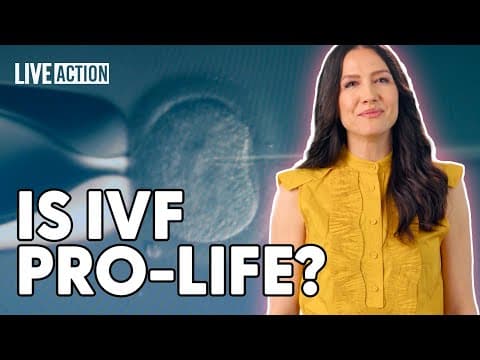
Fertility and Sterility published a recent study estimating that as many as 13 million children were born through IVF around the world from 1978 to 2018. Since then, it is estimated that an addition four million have been born, bring that total closer to 17 million.
Yet because multiple embryos are created in each IVF cycle, more embryos end up being destroyed than are born. Embryos are also typically screened to decide which are the "best" through a grading system, with only the most desirable embryos implanted. Those leftover are either frozen indefinitely, destroyed, or fail to implant in another IVF cycle.
According to research published in Reproductive Biomedicine Online, over 2.5 million IVF cycles are performed every year, yet only 500,000 of these babies are born.
It has also been estimated that over one million embryos are frozen in storage in the United States alone. Additionally, the number of children conceived through IVF is growing each year, with 2.6% of all births in the United States coming from IVF in 2023.
The fertility industry dehumanizes preborn children, turning them into products that are then viewed by hopeful parents as possessions to be bought and sold rather as human beings.
Live Action News is pro-life news and commentary from a pro-life perspective.
Our work is possible because of our donors. Please consider giving to further our work of changing hearts and minds on issues of life and human dignity.
Contact editor@liveaction.org for questions, corrections, or if you are seeking permission to reprint any Live Action News content.
Guest Articles: To submit a guest article to Live Action News, email editor@liveaction.org with an attached Word document of 800-1000 words. Please also attach any photos relevant to your submission if applicable. If your submission is accepted for publication, you will be notified within three weeks. Guest articles are not compensated (see our Open License Agreement). Thank you for your interest in Live Action News!
Bridget Sielicki
·
Issues
Nancy Flanders
·
Analysis
Cassy Cooke
·
Analysis
Nancy Flanders
·
Analysis
Cassy Cooke
·
Analysis
Nancy Flanders
·
International
Cassy Cooke
·
International
Cassy Cooke
·
Politics
Cassy Cooke
·Analysis
Cassy Cooke
·
Politics
Cassy Cooke
·Tragic: Couples fight over embryos as possessions in divorce cases
The Wall Street Journal has published an article about divorced couples fighting over the frozen embryos they chose to create — another example of the dehumanization and commodification of preborn children created through the fertility industry.
The first baby ever conceived through in vitro fertilization (IVF) was born in 1978.
There have been an estimated 17 million children born as a result of IVF, though millions more have been created and destroyed or frozen.
Today, many couples create far more embryos than they intend to use, and the "extras" are most often either destroyed or left frozen indefinitely.
These embryos — actual human beings — have become pawns in divorce battles, with exes fighting over them like possessions instead of people.
The Wall Street Journal reported on the divorce battle of Stephanie Nelson, who is battling her ex-husband for the right to keep her embryos frozen; he wants them to be destroyed. Nelson has both endometriosis and polycystic ovarian syndrome, which she knew from her 20s would lead to infertility, so she began setting money aside for IVF.
Nelson met the man who became her husband in 2019, and shortly after they began dating, she started fertility treatments. In 2020, they got married, and her then-husband donated sperm.
“Head over heels, we just kind of did it without thinking,” Nelson said.
That same year, the fertility clinic called to notify her that her husband had called to request the embryos they created be destroyed because he no longer wanted to be a father. The two had been married for just four months, but began a years-long battle over the embryos and what to do with them.
The father of the preborn embryos said he had a right not to procreate, while Nelson wanted to save the embryos. “Please do not destroy my life’s work,” she testified in court. “This is my complete future. This is all I’ve dreamt about.”
In 2022, a judge awarded Nelson the embryos, and that decision was upheld upon appeal in 2024. She is now pregnant with twins, with her new partner planning to adopt them. It's not clear how many embryos she has frozen, but she is considering having a third child in the future.
Another woman, Kate St. John, told the Wall Street Journal she made sure to have her husband sign away the rights to the embryos they created together. “I think my intuition was like, hey, girl, you need to protect your reproductive options,” she said. Their agreement was that, should they divorce, he would have no obligation towards the children, and St. John has since given birth to a daughter.
The other embryos are frozen, but St. John said she worries that her now ex-husband may try to have them destroyed despite the agreement.
“Even if an ex-spouse agrees to no involvement, they could later seek visitation or custody once a child is born,” Naomi Cahn, a family law professor at the University of Virginia, told the Wall Street Journal, adding that even with an agreement in place, people like Nelson and St. John's ex-husbands could still be forced to pay child support.
In numerous instances, human embryos have been fought over after couples created the children and later separated. The most well-known example is that of Sherri Shepherd, former co-host of "The View," though she and her ex-husband, Lamar Sally, used a surrogate. After Shepherd and Sally separated during the surrogate's pregnancy, Shepherd said she no longer wanted to be a parent, and went so far as to remove the baby from her health insurance. Allegedly, she didn't want to have to pay Sally child support.
In other cases, embryos have literally been named property in custody battles. Still others have been traded to other couples... and even used as jewelry.
Ultimately, it serves as another example of the commodification of children by the fertility industry. Embryos are literal human beings, though their growth has been halted by being frozen. Yet rather than being treated as people, they are treated as products to fight over, trade, or destroy... all based on the whims of the adults who created them.
Fertility and Sterility published a recent study estimating that as many as 13 million children were born through IVF around the world from 1978 to 2018. Since then, it is estimated that an addition four million have been born, bring that total closer to 17 million.
Yet because multiple embryos are created in each IVF cycle, more embryos end up being destroyed than are born. Embryos are also typically screened to decide which are the "best" through a grading system, with only the most desirable embryos implanted. Those leftover are either frozen indefinitely, destroyed, or fail to implant in another IVF cycle.
According to research published in Reproductive Biomedicine Online, over 2.5 million IVF cycles are performed every year, yet only 500,000 of these babies are born.
It has also been estimated that over one million embryos are frozen in storage in the United States alone. Additionally, the number of children conceived through IVF is growing each year, with 2.6% of all births in the United States coming from IVF in 2023.
The fertility industry dehumanizes preborn children, turning them into products that are then viewed by hopeful parents as possessions to be bought and sold rather as human beings.
Live Action News is pro-life news and commentary from a pro-life perspective.
Our work is possible because of our donors. Please consider giving to further our work of changing hearts and minds on issues of life and human dignity.
Contact editor@liveaction.org for questions, corrections, or if you are seeking permission to reprint any Live Action News content.
Guest Articles: To submit a guest article to Live Action News, email editor@liveaction.org with an attached Word document of 800-1000 words. Please also attach any photos relevant to your submission if applicable. If your submission is accepted for publication, you will be notified within three weeks. Guest articles are not compensated (see our Open License Agreement). Thank you for your interest in Live Action News!
Bridget Sielicki
·Issues
Nancy Flanders
·Analysis
Cassy Cooke
·Analysis
Nancy Flanders
·Analysis
Cassy Cooke
·Analysis
Nancy Flanders
·International
Cassy Cooke
·International
Cassy Cooke
·Politics
Cassy Cooke
·Analysis
Cassy Cooke
·Politics
Cassy Cooke
·