 Analysis
Read Next
Abortion Pill
'It's a dream': Group promotes prototype over-the-counter abortion pill
Carole Novielli
·

U.S. fertility rate falls to record lows as births continue to decline
The Centers for Disease Control and Prevention (CDC) recently revealed that America's fertility rate has fallen to its lowest point in recorded history as fewer women have children and millions postpone pregnancy.
While births among women over 30 increased, they declined for those under 30.
Overall, there is a 1% decrease from 2024, and 20% decrease over the past 20 years.
Many factors are causing people to wait until they are older to have children. This can result in infertility and a move toward increased use of artificial reproductive technologies like IVF.
A low fertility rate has multiple impacts on society, not the least of which are dire economic impacts.
According to preliminary figures published April 9 by the CDC, roughly 3.6 million births happened in the United States in 2025 — translating to roughly 53 births per 1,000 women of childbearing age. This marks a decrease of about 1% from 2024, and a drop of almost 20% compared with levels recorded 20 years ago. The report from the CDC read:
The provisional number of births for the United States in 2025 was 3,606,400, a 1% decline from 2024. The general fertility rate was 53.1 births per 1,000 females ages 15–44, also a 1% decline from 2024. The fertility rate for teenagers ages 15–19 declined 7% in 2025 to 11.7 births per 1,000 females; the rates for younger (15–17) and older (18–19) teenagers declined by 11% and 7%, respectively.
In general, American women are opting to delay having children. From 2024 to 2025, birth rates increased slightly among women aged 30 and above, but those increases were outweighed by a more marked decrease among women under 30.
Some conservatives in the current Trump administration have articulated their worries that the birth rate has fallen well beneath the so‑called “replacement level” required to maintain a steady population from one generation to the next.
Observers widely admit that declining fertility rates can have tangible effects, particularly on the economy, but highlight the importance of understanding the root causes before attempting to reverse the trend.
Dr. Alison Gemmill, an associate professor of epidemiology at the UCLA School of Public Health, said:
Our world and our lives are complex. There are so many factors that people consider when making decisions about how and when to start a family, and they all matter. Women now have better control over their reproductive lives, so there’s not as much unintended pregnancy as there used to be. Our timelines have shifted.
Likewise, at NPR, Brian Mann said:
After the Great Recession happened, some experts thought fertility rates would just bounce back naturally. That hasn't happened. Now some economists think maybe more women will eventually have babies when they're older, in their late 30s or 40s. There are signs that's happening, but not fast enough to reverse this downward trend.
Wendy Manning, a sociology professor at Bowling Green State University, wrote, “The declines in the age-specific fertility rates of women in their 20’s is likely related to increases in age at first marriage along with uncertainty and stress about the future.”
Adding that occasionally such uncertainty is not due to an “objective measure” of employment or income, Manning said that it was “more so the subjective indicators of stress about economics, relationships, and health” that influenced these women to make the decisions they did.
Research has found that numerous couples are postponing parenthood due to financial constraints, like increasing housing and health care expenses, and stagnant wages. To tackle these challenges, the Trump administration has introduced initiatives meant to spur prospective parents to have children, including newborn savings accounts and expanded tax credits.
Dr. Sigal Klipstein, a reproductive endocrinology and infertility expert at InVia Fertility Specialists in Chicago, emphasized that finding the right partner is among the chief factors her patients contemplate when deciding to have children.
“It’s very uncommon that women say, ‘I’m a really busy professional and I just don’t have time to have babies, so I want to freeze my eggs so I can focus on my career," he told CNN. "The largest group is women who said they haven’t found the appropriate partner and don’t want to have children alone. It’s very much that they want children, but that they want them either in the context of a family or in a context of financial security, and they’re willing to wait in the hopes that they do not need to compromise."
The demographic ramifications of falling American birth rates are already evident in states experiencing declining school enrollments and graying workforces.
Economists have warned that persistently low fertility could shrink the labor supply, slow innovation, and pressure social systems as the population ages.
The United States has now joined countries such as Japan and South Korea, where faltering birth rates have prompted governments to provide incentives — including cash bonuses, tax relief, and expanded childcare — to encourage family growth.
While various observers pointed out the falling teen birth rates in the latest CDC report, rising abortion rates in some states are more likely a contributing factor, together with increased dependence on chemical abortion pills disseminated by mail-order providers.
True enough, the latest figures indicate that for many Americans, marriage and childbearing seem intimidating instead of desirable — a reversal of traditional values that once exalted the institution of the family as the cornerstone of society.
Meanwhile, artificial fertility treatments such as in vitro fertilization (IVF) cannot be seen as a true solution to America’s falling birth rates because they divorce the gift of life from the natural, marital act from which life is meant to be conceived.
While proponents often allege that IVF is a “compassionate” response to infertility, the procedure routinely involves the creation, selection, and destruction of human embryos—each a unique human life with inherent dignity.
IVF dehumanizes children, treating them as products of technology instead of persons to be received in love. Rather than hinging on artificial means that commodify life, a genuinely life-affirming approach would focus on supporting marriage, restoring faith in family, and creating social conditions that encourage children as blessings instead of liabilities.
With fewer births and rising cultural ambivalence toward family, America faces an uncertain demographic future.
Whether the country chooses to rebuild its foundation on life and family, or persist along the highway of decline, will likely determine the outcomes for the next generation.
Live Action News is pro-life news and commentary from a pro-life perspective.
Our work is possible because of our donors. Please consider giving to further our work of changing hearts and minds on issues of life and human dignity.
Contact editor@liveaction.org for questions, corrections, or if you are seeking permission to reprint any Live Action News content.
Guest Articles: To submit a guest article to Live Action News, email editor@liveaction.org with an attached Word document of 800-1000 words. Please also attach any photos relevant to your submission if applicable. If your submission is accepted for publication, you will be notified within three weeks. Guest articles are not compensated (see our Open License Agreement). Thank you for your interest in Live Action News!
Carole Novielli
·
Analysis
Cassy Cooke
·
Analysis
Cassy Cooke
·
Opinion
Cassy Cooke
·
Analysis
Cassy Cooke
·
International
Nancy Flanders
·
Activism
Angeline Tan
·
International
Angeline Tan
·
Human Interest
Angeline Tan
·
Human Interest
Angeline Tan
·
Activism
Angeline Tan
·U.S. fertility rate falls to record lows as births continue to decline
The Centers for Disease Control and Prevention (CDC) recently revealed that America's fertility rate has fallen to its lowest point in recorded history as fewer women have children and millions postpone pregnancy.
While births among women over 30 increased, they declined for those under 30.
Overall, there is a 1% decrease from 2024, and 20% decrease over the past 20 years.
Many factors are causing people to wait until they are older to have children. This can result in infertility and a move toward increased use of artificial reproductive technologies like IVF.
A low fertility rate has multiple impacts on society, not the least of which are dire economic impacts.
According to preliminary figures published April 9 by the CDC, roughly 3.6 million births happened in the United States in 2025 — translating to roughly 53 births per 1,000 women of childbearing age. This marks a decrease of about 1% from 2024, and a drop of almost 20% compared with levels recorded 20 years ago. The report from the CDC read:
The provisional number of births for the United States in 2025 was 3,606,400, a 1% decline from 2024. The general fertility rate was 53.1 births per 1,000 females ages 15–44, also a 1% decline from 2024. The fertility rate for teenagers ages 15–19 declined 7% in 2025 to 11.7 births per 1,000 females; the rates for younger (15–17) and older (18–19) teenagers declined by 11% and 7%, respectively.
In general, American women are opting to delay having children. From 2024 to 2025, birth rates increased slightly among women aged 30 and above, but those increases were outweighed by a more marked decrease among women under 30.
Some conservatives in the current Trump administration have articulated their worries that the birth rate has fallen well beneath the so‑called “replacement level” required to maintain a steady population from one generation to the next.
Observers widely admit that declining fertility rates can have tangible effects, particularly on the economy, but highlight the importance of understanding the root causes before attempting to reverse the trend.
Dr. Alison Gemmill, an associate professor of epidemiology at the UCLA School of Public Health, said:
Our world and our lives are complex. There are so many factors that people consider when making decisions about how and when to start a family, and they all matter. Women now have better control over their reproductive lives, so there’s not as much unintended pregnancy as there used to be. Our timelines have shifted.
Likewise, at NPR, Brian Mann said:
After the Great Recession happened, some experts thought fertility rates would just bounce back naturally. That hasn't happened. Now some economists think maybe more women will eventually have babies when they're older, in their late 30s or 40s. There are signs that's happening, but not fast enough to reverse this downward trend.
Wendy Manning, a sociology professor at Bowling Green State University, wrote, “The declines in the age-specific fertility rates of women in their 20’s is likely related to increases in age at first marriage along with uncertainty and stress about the future.”
Adding that occasionally such uncertainty is not due to an “objective measure” of employment or income, Manning said that it was “more so the subjective indicators of stress about economics, relationships, and health” that influenced these women to make the decisions they did.
Research has found that numerous couples are postponing parenthood due to financial constraints, like increasing housing and health care expenses, and stagnant wages. To tackle these challenges, the Trump administration has introduced initiatives meant to spur prospective parents to have children, including newborn savings accounts and expanded tax credits.
Dr. Sigal Klipstein, a reproductive endocrinology and infertility expert at InVia Fertility Specialists in Chicago, emphasized that finding the right partner is among the chief factors her patients contemplate when deciding to have children.
“It’s very uncommon that women say, ‘I’m a really busy professional and I just don’t have time to have babies, so I want to freeze my eggs so I can focus on my career," he told CNN. "The largest group is women who said they haven’t found the appropriate partner and don’t want to have children alone. It’s very much that they want children, but that they want them either in the context of a family or in a context of financial security, and they’re willing to wait in the hopes that they do not need to compromise."
The demographic ramifications of falling American birth rates are already evident in states experiencing declining school enrollments and graying workforces.
Economists have warned that persistently low fertility could shrink the labor supply, slow innovation, and pressure social systems as the population ages.
The United States has now joined countries such as Japan and South Korea, where faltering birth rates have prompted governments to provide incentives — including cash bonuses, tax relief, and expanded childcare — to encourage family growth.
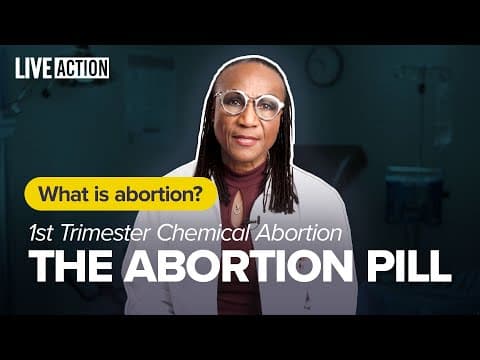
While various observers pointed out the falling teen birth rates in the latest CDC report, rising abortion rates in some states are more likely a contributing factor, together with increased dependence on chemical abortion pills disseminated by mail-order providers.
True enough, the latest figures indicate that for many Americans, marriage and childbearing seem intimidating instead of desirable — a reversal of traditional values that once exalted the institution of the family as the cornerstone of society.
Meanwhile, artificial fertility treatments such as in vitro fertilization (IVF) cannot be seen as a true solution to America’s falling birth rates because they divorce the gift of life from the natural, marital act from which life is meant to be conceived.
While proponents often allege that IVF is a “compassionate” response to infertility, the procedure routinely involves the creation, selection, and destruction of human embryos—each a unique human life with inherent dignity.
IVF dehumanizes children, treating them as products of technology instead of persons to be received in love. Rather than hinging on artificial means that commodify life, a genuinely life-affirming approach would focus on supporting marriage, restoring faith in family, and creating social conditions that encourage children as blessings instead of liabilities.
With fewer births and rising cultural ambivalence toward family, America faces an uncertain demographic future.
Whether the country chooses to rebuild its foundation on life and family, or persist along the highway of decline, will likely determine the outcomes for the next generation.
Live Action News is pro-life news and commentary from a pro-life perspective.
Our work is possible because of our donors. Please consider giving to further our work of changing hearts and minds on issues of life and human dignity.
Contact editor@liveaction.org for questions, corrections, or if you are seeking permission to reprint any Live Action News content.
Guest Articles: To submit a guest article to Live Action News, email editor@liveaction.org with an attached Word document of 800-1000 words. Please also attach any photos relevant to your submission if applicable. If your submission is accepted for publication, you will be notified within three weeks. Guest articles are not compensated (see our Open License Agreement). Thank you for your interest in Live Action News!
Carole Novielli
·Analysis
Cassy Cooke
·Analysis
Cassy Cooke
·Opinion
Cassy Cooke
·Analysis
Cassy Cooke
·International
Nancy Flanders
·Activism
Angeline Tan
·International
Angeline Tan
·Human Interest
Angeline Tan
·Human Interest
Angeline Tan
·Activism
Angeline Tan
·