Read Next
Pop Culture
R&B star: Abortion ended secret romance with Righteous Brothers singer
Cassy Cooke
·

 Investigative·By Carole Novielli
No child should die by a violent abortion because of a prenatal diagnosis
Preborn children who receive a potential or confirmed health diagnosis are often targeted for abortion, and their bodies are treated as experiments. Live Action News reviewed various publications containing autopsy images of aborted babies who exhibited various "malformations."
Every child deserves the right to live their full lives and not have their days shortened by a violent abortion, regardless of their perceived health status or diagnosis.
Children who receive a prenatal diagnosis are often targeted for abortion.
Case studies detail the diagnosis and death of these children, including photographs.
In one report, a child was dismembered in the womb following a diagnosis of hydrocephalus, although treatment for the condition is available.
In another case, a child was aborted following a diagnosis of Wolf-Hirschhorn syndrome. Often considered fatal, some people with the condition are living into adulthood.
In yet another report, a baby with Down syndrome was aborted in the second trimester following diagnosis.
Each of these children deserved to live out their natural lives.
After a baby is aborted, their bodies are often used for experimentation, and in the cases of children who receive a prenatal health diagnosis, their bodies are often used to study their conditions. These reports show how horrific this practice is, as it treats human beings as specimens rather than people.
For copyright reasons, images of the aborted children are not all included here; however, they can be viewed in the articles linked below.
A report published by the Archives of Pathology (AOP), details the pathologic examination of fetal and placental tissue obtained by a dilation and evacuation (D&E) abortion of a baby at 20 weeks following a diagnosis of hydrocephalus, a buildup of fluid in the brain.
The report states that “after 12 weeks’ clinical gestational age, the fetal tissue becomes larger and the bony tissue is more calcified. Therefore, in the second trimester, D&E is performed because the procedure requires greater cervical dilation and advanced surgical skills for removal of the tissue.”
The "tissue" is the baby's body parts, including arms and legs. A D&E abortion is typically carried out over two to three days. Once the cervix has been dilated, the abortionist uses a Sopher clamp to grasp the arms and legs of the preborn child and tear them off. He then crushes the child's skull.

The publication shows multiple images of the aborted child, including the baby's hand, which can be viewed here.
AOP explained the image:
A 34-year-old woman at 20 weeks' gestation underwent D&E for fetal hydrocephalus. The fetus was classified as male by identification of both the internal and external genitalia at pathologic examination. The head and brain were too disrupted to make a definitive diagnosis of hydrocephalus, but the hands appeared abnormal with adducted thumbs
According to the AOP report, after a D&E abortion is complete, “specimens” are typically “examined in surgical pathology” rather than requiring an autopsy. However, the report notes, it is standard for a pathologist to see or do the following:
Examine fetal body parts externally from head to toe.
The skull is typically collapsed, and skull bones are examined for defects.
Scalp skin can be identified in most cases.
The completeness of the face varies from case to case.
Limbs are examined for bony anomalies, and the fingers/toes, nails, and creases are examined on all intact feet and hands.
Foot length is recorded as a critical anatomic parameter to estimate gestational age.
The heart is identified in most cases.
Lung tissue is frequently found.
One or both kidneys are usually found.
The external and/or internal reproductive organs are identified up to 62% of the time, making assessment of gender possible in those cases.
According to the authors, “Products of conception, including D&E specimens, are unique among the surgical pathology specimens because the family can request a private cremation or burial for the specimen, which is considered the fetal remains.”
This child was killed by a D&E abortion, yet the Children's Hospital of Philadelphia states treatments are available for hydrocephalus. "Treatment for hydrocephalus happens after the baby is born," it explained. "Prenatal diagnosis is important because it allows doctors and families to plan ahead for delivery and immediate newborn care." Following surgery, most children with hydrocephalus go on to live active lives.
A 2012 Open Access publication of Molecular Cytogenetics detailed the autopsy of a 24-week female preborn baby who had been aborted following a diagnosis of Wolf-Hirschhorn syndrome (WHS), a rare genetic disorder associated with certain facial features, developmental delays, intellectual disability, and seizures.
According to Cleveland Clinic, "Wolf-Hirschhorn syndrome is a genetic condition that affects several parts of your child’s body, including their face, heart, brain and height. Missing genes on chromosome 4 cause the condition" that "affects an estimated 1 out of every 50,000 births."
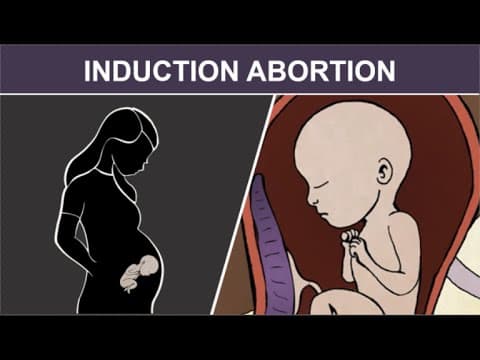
The baby girl was killed by an induction abortion, which usually takes two to three days and typically involves injecting the baby's heart or head with a feticide such as digoxin. The mother then delivers a stillborn child. However, oftentimes the child survives by accident, or the feticide is never given, but the child is not provided with medical care before dying.

"Autopsy of a 24 weeks' gestation female fetus after pregnancy termination (Case 2) that showed external features of facial dysmorphism with bilateral cleft lip, hypertelorism, broad and high nasal bridge, small filter and large ears," the image description reads. The report states:
After extensive counseling, the family decided to terminate the pregnancy and agreed to an autopsy for the fetus. A female fetus was delivered at 24 weeks after medical induction. Fetal autopsy showed external features of facial dysmorphism with bilateral cleft lip, hypertelorism, broad and high nasal bridge, small filter and large ears (Figure 1). The skull was oval shaped, consistent with the helmet-like typical description of WHS related facial appearance.
Treatment for WHS could include:
Surgery to repair growth abnormalities, especially the heart.
Physical or occupational therapy to build muscle tone.
Educational programs (special education) to help with cognitive development.
Medicine to treat seizures.
Children can live with the condition. Doctors told the parents of Dallan Cloward, who was born with Wolf-Hirschhorn syndrome, that he likely wouldn’t live beyond the age of two. However, Dallan survived well into adulthood.
In addition, in 2022, a New York Times analysis of genetic screening tests, found that the chances of a false positive prenatal screen were 86% for Wolf-Hirschhorn syndrome.
A case report published by the Balkan Journal of Medical Genetics showed the body of a baby diagnosed with Down syndrome and aborted in the second trimester of pregnancy.
The image, which can be viewed here, shows the child's precious little face, back of the head, and left hand.
Tragically, countless babies with Down syndrome have been killed by targeted eugenic abortions.
In November 2025, Gazette.com wrote in part:
A report published in August by The National Library of Medicine, “Evaluating pregnancy termination rates for fetal chromosome and single gene disorders,” concludes that 80% of Down syndrome pregnancies studied were aborted. Estimated rates of termination range between 60% and 90%, depending on the research, with a national average of around 70%.
Additional images of aborted pre-born babies diagnosed with Down Syndrome were shown in an Open Access publication of Diagnostic Pathology, which said:
Different types of chromosomal abnormalities complicate the wide, diverse variety of skeletal abnormalities. For example, fetuses carrying trisomy 13, trisomy 18, or even trisomy 21 (Down’s syndrome) may have abnormal skeletal development. In the present study, two fetuses with trisomy 18 (cases 1 and 2) exhibited chromosomal abnormalities in local bone lesions, suggesting that the screening for chromosomal abnormalities remains vital when skeletal lesions are observed

Children who receive a prenatal diagnosis are often targeted for abortion, with doctors instilling fear in parents of the potential stresses of raising a child with health concerns or telling them there is no chance their baby will survive. However, in 2022, the New York Times published an article exposing the frequent inaccuracies of non-invasive prenatal screening tests (NIPT), revealing that certain prenatal genetic tests are wrong up to 93% of the time.
Regardless, even when the tests are accurate, every child is inherently valuable and deserves to live out his natural life. Every human life is incommensurable, meaning that it cannot be duplicated, and every person granted life by God is unique and sent to this earth for a specific purpose. No child should be violently killed and no parent should be told that ending their child's life is an act of compassion.

In addition, as a previous Live Action News article explained, "There is no research that supports the idea that having an abortion following a prenatal diagnosis is psychologically better for a woman than carrying to term. In fact, one study determined, 'Couples experienced selective termination as traumatic … [T]he women ultimately felt as if they were betraying themselves and their babies.'
"'Termination is not a shortcut through grief,' noted the organization."
No one has the right to take the life of another innocent human being, and killing a baby in the womb will never reduce the emotional pain of parents given a poor prenatal diagnosis for a baby they wanted.
Live Action News is pro-life news and commentary from a pro-life perspective.
Our work is possible because of our donors. Please consider giving to further our work of changing hearts and minds on issues of life and human dignity.
Contact editor@liveaction.org for questions, corrections, or if you are seeking permission to reprint any Live Action News content.
Guest Articles: To submit a guest article to Live Action News, email editor@liveaction.org with an attached Word document of 800-1000 words. Please also attach any photos relevant to your submission if applicable. If your submission is accepted for publication, you will be notified within three weeks. Guest articles are not compensated (see our Open License Agreement). Thank you for your interest in Live Action News!
Cassy Cooke
·
Investigative
Nancy Flanders
·
Investigative
Kelli Keane
·
Investigative
Bridget Sielicki
·
Investigative
Carole Novielli
·
Investigative
Bridget Sielicki
·
Abortion Pill
Carole Novielli
·Investigative
Carole Novielli
·
Abortion Pill
Carole Novielli
·
Investigative
Carole Novielli
·
Abortion Pill
Carole Novielli
·Investigative·By Carole Novielli
No child should die by a violent abortion because of a prenatal diagnosis
Preborn children who receive a potential or confirmed health diagnosis are often targeted for abortion, and their bodies are treated as experiments. Live Action News reviewed various publications containing autopsy images of aborted babies who exhibited various "malformations."
Every child deserves the right to live their full lives and not have their days shortened by a violent abortion, regardless of their perceived health status or diagnosis.
Children who receive a prenatal diagnosis are often targeted for abortion.
Case studies detail the diagnosis and death of these children, including photographs.
In one report, a child was dismembered in the womb following a diagnosis of hydrocephalus, although treatment for the condition is available.
In another case, a child was aborted following a diagnosis of Wolf-Hirschhorn syndrome. Often considered fatal, some people with the condition are living into adulthood.
In yet another report, a baby with Down syndrome was aborted in the second trimester following diagnosis.
Each of these children deserved to live out their natural lives.
After a baby is aborted, their bodies are often used for experimentation, and in the cases of children who receive a prenatal health diagnosis, their bodies are often used to study their conditions. These reports show how horrific this practice is, as it treats human beings as specimens rather than people.
For copyright reasons, images of the aborted children are not all included here; however, they can be viewed in the articles linked below.
A report published by the Archives of Pathology (AOP), details the pathologic examination of fetal and placental tissue obtained by a dilation and evacuation (D&E) abortion of a baby at 20 weeks following a diagnosis of hydrocephalus, a buildup of fluid in the brain.
The report states that “after 12 weeks’ clinical gestational age, the fetal tissue becomes larger and the bony tissue is more calcified. Therefore, in the second trimester, D&E is performed because the procedure requires greater cervical dilation and advanced surgical skills for removal of the tissue.”
The "tissue" is the baby's body parts, including arms and legs. A D&E abortion is typically carried out over two to three days. Once the cervix has been dilated, the abortionist uses a Sopher clamp to grasp the arms and legs of the preborn child and tear them off. He then crushes the child's skull.
The publication shows multiple images of the aborted child, including the baby's hand, which can be viewed here.
AOP explained the image:
A 34-year-old woman at 20 weeks' gestation underwent D&E for fetal hydrocephalus. The fetus was classified as male by identification of both the internal and external genitalia at pathologic examination. The head and brain were too disrupted to make a definitive diagnosis of hydrocephalus, but the hands appeared abnormal with adducted thumbs
According to the AOP report, after a D&E abortion is complete, “specimens” are typically “examined in surgical pathology” rather than requiring an autopsy. However, the report notes, it is standard for a pathologist to see or do the following:
Examine fetal body parts externally from head to toe.
The skull is typically collapsed, and skull bones are examined for defects.
Scalp skin can be identified in most cases.
The completeness of the face varies from case to case.
Limbs are examined for bony anomalies, and the fingers/toes, nails, and creases are examined on all intact feet and hands.
Foot length is recorded as a critical anatomic parameter to estimate gestational age.
The heart is identified in most cases.
Lung tissue is frequently found.
One or both kidneys are usually found.
The external and/or internal reproductive organs are identified up to 62% of the time, making assessment of gender possible in those cases.
According to the authors, “Products of conception, including D&E specimens, are unique among the surgical pathology specimens because the family can request a private cremation or burial for the specimen, which is considered the fetal remains.”
This child was killed by a D&E abortion, yet the Children's Hospital of Philadelphia states treatments are available for hydrocephalus. "Treatment for hydrocephalus happens after the baby is born," it explained. "Prenatal diagnosis is important because it allows doctors and families to plan ahead for delivery and immediate newborn care." Following surgery, most children with hydrocephalus go on to live active lives.
A 2012 Open Access publication of Molecular Cytogenetics detailed the autopsy of a 24-week female preborn baby who had been aborted following a diagnosis of Wolf-Hirschhorn syndrome (WHS), a rare genetic disorder associated with certain facial features, developmental delays, intellectual disability, and seizures.
According to Cleveland Clinic, "Wolf-Hirschhorn syndrome is a genetic condition that affects several parts of your child’s body, including their face, heart, brain and height. Missing genes on chromosome 4 cause the condition" that "affects an estimated 1 out of every 50,000 births."
The baby girl was killed by an induction abortion, which usually takes two to three days and typically involves injecting the baby's heart or head with a feticide such as digoxin. The mother then delivers a stillborn child. However, oftentimes the child survives by accident, or the feticide is never given, but the child is not provided with medical care before dying.
"Autopsy of a 24 weeks' gestation female fetus after pregnancy termination (Case 2) that showed external features of facial dysmorphism with bilateral cleft lip, hypertelorism, broad and high nasal bridge, small filter and large ears," the image description reads. The report states:
After extensive counseling, the family decided to terminate the pregnancy and agreed to an autopsy for the fetus. A female fetus was delivered at 24 weeks after medical induction. Fetal autopsy showed external features of facial dysmorphism with bilateral cleft lip, hypertelorism, broad and high nasal bridge, small filter and large ears (Figure 1). The skull was oval shaped, consistent with the helmet-like typical description of WHS related facial appearance.
Treatment for WHS could include:
Surgery to repair growth abnormalities, especially the heart.
Physical or occupational therapy to build muscle tone.
Educational programs (special education) to help with cognitive development.
Medicine to treat seizures.
Children can live with the condition. Doctors told the parents of Dallan Cloward, who was born with Wolf-Hirschhorn syndrome, that he likely wouldn’t live beyond the age of two. However, Dallan survived well into adulthood.
In addition, in 2022, a New York Times analysis of genetic screening tests, found that the chances of a false positive prenatal screen were 86% for Wolf-Hirschhorn syndrome.
A case report published by the Balkan Journal of Medical Genetics showed the body of a baby diagnosed with Down syndrome and aborted in the second trimester of pregnancy.
The image, which can be viewed here, shows the child's precious little face, back of the head, and left hand.
Tragically, countless babies with Down syndrome have been killed by targeted eugenic abortions.
In November 2025, Gazette.com wrote in part:
A report published in August by The National Library of Medicine, “Evaluating pregnancy termination rates for fetal chromosome and single gene disorders,” concludes that 80% of Down syndrome pregnancies studied were aborted. Estimated rates of termination range between 60% and 90%, depending on the research, with a national average of around 70%.
Additional images of aborted pre-born babies diagnosed with Down Syndrome were shown in an Open Access publication of Diagnostic Pathology, which said:
Different types of chromosomal abnormalities complicate the wide, diverse variety of skeletal abnormalities. For example, fetuses carrying trisomy 13, trisomy 18, or even trisomy 21 (Down’s syndrome) may have abnormal skeletal development. In the present study, two fetuses with trisomy 18 (cases 1 and 2) exhibited chromosomal abnormalities in local bone lesions, suggesting that the screening for chromosomal abnormalities remains vital when skeletal lesions are observed
Children who receive a prenatal diagnosis are often targeted for abortion, with doctors instilling fear in parents of the potential stresses of raising a child with health concerns or telling them there is no chance their baby will survive. However, in 2022, the New York Times published an article exposing the frequent inaccuracies of non-invasive prenatal screening tests (NIPT), revealing that certain prenatal genetic tests are wrong up to 93% of the time.
Regardless, even when the tests are accurate, every child is inherently valuable and deserves to live out his natural life. Every human life is incommensurable, meaning that it cannot be duplicated, and every person granted life by God is unique and sent to this earth for a specific purpose. No child should be violently killed and no parent should be told that ending their child's life is an act of compassion.
In addition, as a previous Live Action News article explained, "There is no research that supports the idea that having an abortion following a prenatal diagnosis is psychologically better for a woman than carrying to term. In fact, one study determined, 'Couples experienced selective termination as traumatic … [T]he women ultimately felt as if they were betraying themselves and their babies.'
"'Termination is not a shortcut through grief,' noted the organization."
No one has the right to take the life of another innocent human being, and killing a baby in the womb will never reduce the emotional pain of parents given a poor prenatal diagnosis for a baby they wanted.
Live Action News is pro-life news and commentary from a pro-life perspective.
Our work is possible because of our donors. Please consider giving to further our work of changing hearts and minds on issues of life and human dignity.
Contact editor@liveaction.org for questions, corrections, or if you are seeking permission to reprint any Live Action News content.
Guest Articles: To submit a guest article to Live Action News, email editor@liveaction.org with an attached Word document of 800-1000 words. Please also attach any photos relevant to your submission if applicable. If your submission is accepted for publication, you will be notified within three weeks. Guest articles are not compensated (see our Open License Agreement). Thank you for your interest in Live Action News!
Cassy Cooke
·Investigative
Nancy Flanders
·Investigative
Kelli Keane
·Investigative
Bridget Sielicki
·Investigative
Carole Novielli
·Investigative
Bridget Sielicki
·Abortion Pill
Carole Novielli
·Investigative
Carole Novielli
·Abortion Pill
Carole Novielli
·Investigative
Carole Novielli
·Abortion Pill
Carole Novielli
·