 Analysis
Read Next
International
Report: 25% of Belgian euthanasia patients in 2025 were not terminally ill
Cassy Cooke
·

Adoption is always a better option than abortion. Always.
When facing an unplanned pregnancy, a woman has two ethical, life-affirming options: to raise her child or to place her child for adoption. Adoption rates have declined over the last 20 years, in part due to the increased availability of abortion.
And though parenting should be the ultimate goal, adoption is a life-affirming (yet emotionally challenging) option for women who feel strongly that they are unable to raise their children.
Induced abortion is the intentional and direct killing of a preborn child.
Adoption helps to place children in loving homes when biological parents do not feel that they are able to raise their children.
While the first option should always be to keep biological families together, adoption is a life-affirming option; it values and honors the life of the child rather than ending it.
Abortion has been marketed as the solution to an unplanned pregnancy for women who don't feel equipped to raise their children for various reasons. In order to sell abortion, the truth of the act has been buried under euphemisms and silenced by chants for women's "rights."
And despite abortion being the "option" that intentionally kills innocent children in the womb, society has come to view adoption as worse than abortion.
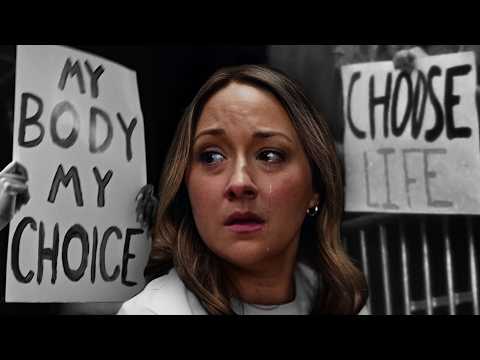
Induced abortion is the direct and intentional killing of a preborn child, which is not necessary. No child needs to be killed because of challenges or fears his or her mother is facing.
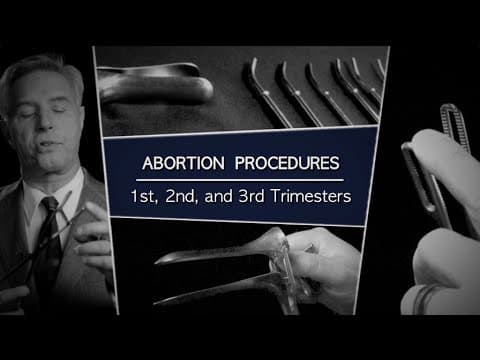
In first-trimester abortions, preborn babies are killed via the abortion pill, which deprives them of nutrients and oxygen before induced contractions expel them from their mother's womb. Another form of first-trimester abortion is a dilation and curettage (D&C) abortion, in which the abortionist vacuums and scrapes out the uterus, dismembering and destroying the living child in the womb.
In the second trimester, a dilation and evacuation (D&E) abortion involves the use of a sopher clamp to tear the arms and legs off the baby and crush her skull. And in the third trimester, the baby is often injected with a feticide, such as digoxin, to stop her heart before she is delivered stillborn. Sometimes, digoxin is not used, and babies are born alive and left to die after birth.
In addition to an innocent child losing her life to violence in what should be a safe place, her mother may suffer the effects of abortion-related trauma. While the abortion industry has long ignored abortion trauma and claimed that abortion brings women only relief, it has recently been more willing to admit the truth: some women suffer a great deal of trauma resulting from abortion.
The Women's Centers, which commit third trimester abortions through 28 weeks of pregnancy, acknowledge the serious emotional impacts of abortion. It advises clients that they may experience:
Persistent sadness or depression that interferes with your daily life and doesn’t improve with time.
Anxiety or panic attacks related to your abortion or reproductive health concerns.
Sleep problems, nightmares, or intrusive thoughts that disrupt your ability to function normally.
Difficulty concentrating at work, school, or in relationships for extended periods.
Significant changes in appetite or weight that concern you or others.
Increased use of alcohol or drugs to deal with emotional pain or difficult emotions.
Thoughts of self-harm or suicide – please seek immediate help if you’re having these thoughts.
Relationship problems that seem connected to your abortion experience or past pregnancy.
Intense guilt, shame, or regret that doesn’t improve over several weeks or months.
One post-abortive woman named Jane explained:
“I regret every day. If someone had told me that I might experience this much pain, there is no way I would have done it. I didn’t realize how deeply attached I already was to my baby – until it was too late, and it was in the rubbish bin… The abortion has blown my life apart, blown my entire self/psyche/soul/belief in myself apart. It has devastated me….”
Abortion can also cause trauma for fathers of aborted babies. After being unable to stop his girlfriend from having an abortion, Theo explained, "I didn’t want to go on; I was in too much pain. I didn’t eat. I didn’t sleep. I had nightmares of my child being aborted.”
In addition, even the doctors who are committing abortions are known to suffer emotional effects. Former abortionist Dr. Catherine Wheeler recently explained in a video for Live Action that she committed abortions until she began to experience "literal darkness around me" during a procedure.
“It always felt off. There was something that was always off emotionally, physically in those rooms,” she said. “You have to blind yourself to the baby's reactions to your instruments.”
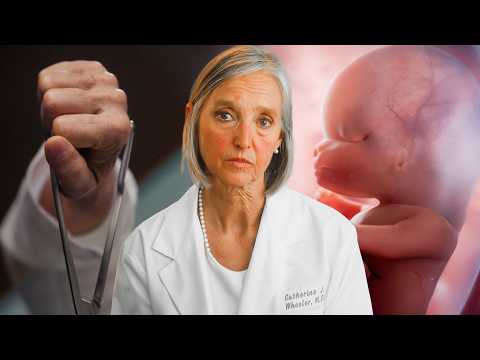
During one procedure, she said, "It was like the blinders came off in the middle of doing an abortion with a sudden awareness… that I was killing a baby."
She stopped committing abortions after that, but she said, "I literally didn't deal with it. I pushed it away like a lot of people do with traumatic experiences."
Adoption can cause trauma, but it also exists as a way to heal.
Open adoptions are now becoming more common after decades of secrecy surrounding teen pregnancy, forced adoptions, and closed adoptions. In an open adoption, the birth parents can choose to remain a part of their child's life, even as he or she is raised by another couple.
Stories shared by adopted individuals show how grateful they are that their birth mothers chose life for them instead of abortion. Despite the pain they felt wondering about their birth families, they were grateful for their lives.
Randall shared that he was reunited with his birth mother 35 years after she gave birth as a teenager. When they met, he told her:
"I wanted to tell you… people have asked me, ‘What would be the first thing you would say if you saw your birth mom?’ And I always say, ‘The first thing I would say is thank you. Thank you for what you did because I have a blessed life.' I can’t imagine what you went through and the decision that you had to make. I just can’t imagine, so I’m very thankful."
Kevin had grown up knowing he was adopted, but as an adult, he learned that his birth father was a fellow attorney whom he saw every month. After telling him that he was his son, he learned that his birth parents had gotten married, had six more children, and had "waited 42 years for this moment." He said he is "darn lucky to have a second chance."
After Dennis found his birth mother, he felt "like the luckiest guy in the world." He added that every child deserves to be welcomed. "I don’t deserve that over those 62 million [aborted] babies… I shouldn’t be more blessed than them," he said. Having his adoptive family and meeting his birth family has made his life "more than I ever thought it could be."
Though adoption can cause trauma that stems from the separation of birth mother and child, it opens the door to love and life. When carried out with the child's best interest in mind, adoption saves lives and keeps an open connection between the birth family and the child.
The number of infant adoptions has declined drastically:
International adoptions dropped by 94% from 2004 to 2023
The Centers for Disease Control and Prevention reported that among never-married women, about nine percent chose adoption before Roe v. Wade, but by the mid-1980s, the number had dropped to two percent, and by 2002, it was only one percent.
It would be remarkable if it could be confirmed that the drop in adoptions was because each of these mothers opted to give birth and raise her child. After all, with the societal acceptance of single motherhood, being a single mom has become less taboo than placing your baby for adoption. Yet at the same time that adoption numbers began to drop, abortion was forcibly legalized in every state, and those numbers began to rise to around a million a year.
In 2014, only 18,000 children under the age of two were placed for adoption through adoption agencies. while nearly 926,000 babies were aborted.
In 1992, Debra Kalmuss, a professor at the Columbia University School of Public Health, told The New York Times, "Relinquishing a baby for adoption really ceased to be a mainstream choice after abortion became legal." That has to change.
Many women believe that relinquishing a baby will be more painful for them than aborting that same baby. They may also believe that they will suffer either no regret or less regret from an abortion than they would in 'abandoning' their child to the adoption process. But this is a misunderstanding about adoption. It is not abandonment — it is actively choosing the home and the adoptive parents for one's child.
It is tragically common for women experiencing unplanned pregnancies to claim, "I could never 'give my baby up,' so I'm having an abortion." This claim is based in fear and in an irrational belief that the intentionally chosen death of that child will be easier and less painful for that woman to grieve than placing her child into the arms of another woman to be raised.
And tragically, it also mimics the mentality of a controlling abuser: 'If I can't have you, no one can.'
Women who have chosen open adoption tell a vastly different story, and they know that the children they placed into hand-picked, loving homes were not better off dead.
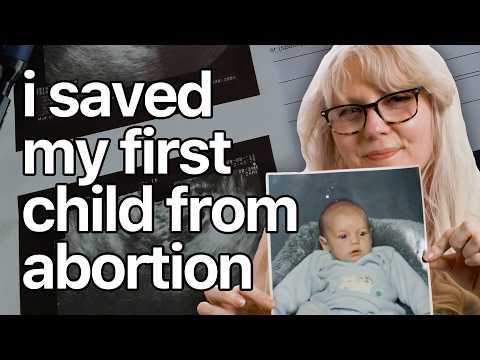
The difference between abortion and adoption is obvious: death vs. life.
Adoption Is An Option is an organization that is seeking to educate and equip those closest to a woman who is facing an unplanned pregnancy with the tools and resources to present adoption as a viable option.
Not every baby who has been aborted would have been saved by an adoption plan, but there must be an acceptance of adoption as a viable option to give babies a good life, rather than killing them.
Live Action News is pro-life news and commentary from a pro-life perspective.
Our work is possible because of our donors. Please consider giving to further our work of changing hearts and minds on issues of life and human dignity.
Contact editor@liveaction.org for questions, corrections, or if you are seeking permission to reprint any Live Action News content.
Guest Articles: To submit a guest article to Live Action News, email editor@liveaction.org with an attached Word document of 800-1000 words. Please also attach any photos relevant to your submission if applicable. If your submission is accepted for publication, you will be notified within three weeks. Guest articles are not compensated (see our Open License Agreement). Thank you for your interest in Live Action News!
Cassy Cooke
·
Analysis
Cassy Cooke
·
Analysis
Cassy Cooke
·
Opinion
Cassy Cooke
·
Analysis
Cassy Cooke
·
International
Nancy Flanders
·
Politics
Nancy Flanders
·
International
Nancy Flanders
·
Activism
Nancy Flanders
·International
Nancy Flanders
·
Issues
Nancy Flanders
·Adoption is always a better option than abortion. Always.
When facing an unplanned pregnancy, a woman has two ethical, life-affirming options: to raise her child or to place her child for adoption. Adoption rates have declined over the last 20 years, in part due to the increased availability of abortion.
And though parenting should be the ultimate goal, adoption is a life-affirming (yet emotionally challenging) option for women who feel strongly that they are unable to raise their children.
Induced abortion is the intentional and direct killing of a preborn child.
Adoption helps to place children in loving homes when biological parents do not feel that they are able to raise their children.
While the first option should always be to keep biological families together, adoption is a life-affirming option; it values and honors the life of the child rather than ending it.
Abortion has been marketed as the solution to an unplanned pregnancy for women who don't feel equipped to raise their children for various reasons. In order to sell abortion, the truth of the act has been buried under euphemisms and silenced by chants for women's "rights."
And despite abortion being the "option" that intentionally kills innocent children in the womb, society has come to view adoption as worse than abortion.
Induced abortion is the direct and intentional killing of a preborn child, which is not necessary. No child needs to be killed because of challenges or fears his or her mother is facing.
In first-trimester abortions, preborn babies are killed via the abortion pill, which deprives them of nutrients and oxygen before induced contractions expel them from their mother's womb. Another form of first-trimester abortion is a dilation and curettage (D&C) abortion, in which the abortionist vacuums and scrapes out the uterus, dismembering and destroying the living child in the womb.
In the second trimester, a dilation and evacuation (D&E) abortion involves the use of a sopher clamp to tear the arms and legs off the baby and crush her skull. And in the third trimester, the baby is often injected with a feticide, such as digoxin, to stop her heart before she is delivered stillborn. Sometimes, digoxin is not used, and babies are born alive and left to die after birth.
In addition to an innocent child losing her life to violence in what should be a safe place, her mother may suffer the effects of abortion-related trauma. While the abortion industry has long ignored abortion trauma and claimed that abortion brings women only relief, it has recently been more willing to admit the truth: some women suffer a great deal of trauma resulting from abortion.
The Women's Centers, which commit third trimester abortions through 28 weeks of pregnancy, acknowledge the serious emotional impacts of abortion. It advises clients that they may experience:
Persistent sadness or depression that interferes with your daily life and doesn’t improve with time.
Anxiety or panic attacks related to your abortion or reproductive health concerns.
Sleep problems, nightmares, or intrusive thoughts that disrupt your ability to function normally.
Difficulty concentrating at work, school, or in relationships for extended periods.
Significant changes in appetite or weight that concern you or others.
Increased use of alcohol or drugs to deal with emotional pain or difficult emotions.
Thoughts of self-harm or suicide – please seek immediate help if you’re having these thoughts.
Relationship problems that seem connected to your abortion experience or past pregnancy.
Intense guilt, shame, or regret that doesn’t improve over several weeks or months.
One post-abortive woman named Jane explained:
“I regret every day. If someone had told me that I might experience this much pain, there is no way I would have done it. I didn’t realize how deeply attached I already was to my baby – until it was too late, and it was in the rubbish bin… The abortion has blown my life apart, blown my entire self/psyche/soul/belief in myself apart. It has devastated me….”
Abortion can also cause trauma for fathers of aborted babies. After being unable to stop his girlfriend from having an abortion, Theo explained, "I didn’t want to go on; I was in too much pain. I didn’t eat. I didn’t sleep. I had nightmares of my child being aborted.”
In addition, even the doctors who are committing abortions are known to suffer emotional effects. Former abortionist Dr. Catherine Wheeler recently explained in a video for Live Action that she committed abortions until she began to experience "literal darkness around me" during a procedure.
“It always felt off. There was something that was always off emotionally, physically in those rooms,” she said. “You have to blind yourself to the baby's reactions to your instruments.”
During one procedure, she said, "It was like the blinders came off in the middle of doing an abortion with a sudden awareness… that I was killing a baby."
She stopped committing abortions after that, but she said, "I literally didn't deal with it. I pushed it away like a lot of people do with traumatic experiences."
Adoption can cause trauma, but it also exists as a way to heal.
Open adoptions are now becoming more common after decades of secrecy surrounding teen pregnancy, forced adoptions, and closed adoptions. In an open adoption, the birth parents can choose to remain a part of their child's life, even as he or she is raised by another couple.
Stories shared by adopted individuals show how grateful they are that their birth mothers chose life for them instead of abortion. Despite the pain they felt wondering about their birth families, they were grateful for their lives.
Randall shared that he was reunited with his birth mother 35 years after she gave birth as a teenager. When they met, he told her:
"I wanted to tell you… people have asked me, ‘What would be the first thing you would say if you saw your birth mom?’ And I always say, ‘The first thing I would say is thank you. Thank you for what you did because I have a blessed life.' I can’t imagine what you went through and the decision that you had to make. I just can’t imagine, so I’m very thankful."
Kevin had grown up knowing he was adopted, but as an adult, he learned that his birth father was a fellow attorney whom he saw every month. After telling him that he was his son, he learned that his birth parents had gotten married, had six more children, and had "waited 42 years for this moment." He said he is "darn lucky to have a second chance."
After Dennis found his birth mother, he felt "like the luckiest guy in the world." He added that every child deserves to be welcomed. "I don’t deserve that over those 62 million [aborted] babies… I shouldn’t be more blessed than them," he said. Having his adoptive family and meeting his birth family has made his life "more than I ever thought it could be."
Though adoption can cause trauma that stems from the separation of birth mother and child, it opens the door to love and life. When carried out with the child's best interest in mind, adoption saves lives and keeps an open connection between the birth family and the child.
The number of infant adoptions has declined drastically:
International adoptions dropped by 94% from 2004 to 2023
The Centers for Disease Control and Prevention reported that among never-married women, about nine percent chose adoption before Roe v. Wade, but by the mid-1980s, the number had dropped to two percent, and by 2002, it was only one percent.
It would be remarkable if it could be confirmed that the drop in adoptions was because each of these mothers opted to give birth and raise her child. After all, with the societal acceptance of single motherhood, being a single mom has become less taboo than placing your baby for adoption. Yet at the same time that adoption numbers began to drop, abortion was forcibly legalized in every state, and those numbers began to rise to around a million a year.
In 2014, only 18,000 children under the age of two were placed for adoption through adoption agencies. while nearly 926,000 babies were aborted.
In 1992, Debra Kalmuss, a professor at the Columbia University School of Public Health, told The New York Times, "Relinquishing a baby for adoption really ceased to be a mainstream choice after abortion became legal." That has to change.
Many women believe that relinquishing a baby will be more painful for them than aborting that same baby. They may also believe that they will suffer either no regret or less regret from an abortion than they would in 'abandoning' their child to the adoption process. But this is a misunderstanding about adoption. It is not abandonment — it is actively choosing the home and the adoptive parents for one's child.
It is tragically common for women experiencing unplanned pregnancies to claim, "I could never 'give my baby up,' so I'm having an abortion." This claim is based in fear and in an irrational belief that the intentionally chosen death of that child will be easier and less painful for that woman to grieve than placing her child into the arms of another woman to be raised.
And tragically, it also mimics the mentality of a controlling abuser: 'If I can't have you, no one can.'
Women who have chosen open adoption tell a vastly different story, and they know that the children they placed into hand-picked, loving homes were not better off dead.
The difference between abortion and adoption is obvious: death vs. life.
Adoption Is An Option is an organization that is seeking to educate and equip those closest to a woman who is facing an unplanned pregnancy with the tools and resources to present adoption as a viable option.
Not every baby who has been aborted would have been saved by an adoption plan, but there must be an acceptance of adoption as a viable option to give babies a good life, rather than killing them.
Live Action News is pro-life news and commentary from a pro-life perspective.
Our work is possible because of our donors. Please consider giving to further our work of changing hearts and minds on issues of life and human dignity.
Contact editor@liveaction.org for questions, corrections, or if you are seeking permission to reprint any Live Action News content.
Guest Articles: To submit a guest article to Live Action News, email editor@liveaction.org with an attached Word document of 800-1000 words. Please also attach any photos relevant to your submission if applicable. If your submission is accepted for publication, you will be notified within three weeks. Guest articles are not compensated (see our Open License Agreement). Thank you for your interest in Live Action News!
Cassy Cooke
·Analysis
Cassy Cooke
·Analysis
Cassy Cooke
·Opinion
Cassy Cooke
·Analysis
Cassy Cooke
·International
Nancy Flanders
·Politics
Nancy Flanders
·International
Nancy Flanders
·Activism
Nancy Flanders
·International
Nancy Flanders
·Issues
Nancy Flanders
·