Read Next
Guest Column
Mother more committed to pro-life cause after learning she was nearly aborted
Kim Hayes
·

 Human Interest·By Nancy Flanders
Surrogate fights for life of baby boy with heart condition after refusing abortion
UPDATE, 8/13/26: The couple who hired McKenna West to act as their surrogate have come forward after arriving in Texas, where baby Gabriel was born yesterday. Nausheen Gilkar and Omar Ahmed are represented by attorney Lee Budner, who said in a statement:
"Our clients' son was born yesterday morning and he is now in their physical custody while he receives expert medical care at a tertiary care center. Thankfully, McKenna West's baseless attempt to interfere with his medical care has been soundly rejected by the courts. Right now, our clients are continuing to place their baby's health and well-being first, following the advice of the baby's medical team, as they always have and just as any loving parent would."
He continued, "As if the heartbreak of his condition were not enough, they are devastated to see their family tragedy transformed into political theater by the Texas Attorney General's office and McKenna West. Our clients' only focus at this time is ensuring that their baby receives the medical care that he vitally needs and that they, as his parents, are able to spend every precious moment they can with their beautiful newborn son."
Intentionally ending a child’s life through abortion is not medical care, as it does not provide a preborn child with greater health or well-being.
UPDATE, 8/12/26: Baby Gabriel was born a short while ago and is reportedly "on the path" to receiving the life-saving care he needs following an emergency court order from Texas Attorney General Ken Paxton that Gabriel is to be cared for by doctors.
However, as a result of a separate court order, Gabriel was taken from his surrogate mother, McKenna West, immediately after birth, an act that Science Direct notes is "linked to adverse clinical outcomes and an elevated risk of various mental illnesses in adulthood..." Research states that "early separation-induced stress may induce harmful epigenetic changes" and "may be implicated in neurodevelopmental disorders."
7/31/26: A surrogate is at the center of a new legal battle as she tries to protect the life of the baby boy she is carrying. After the couple that hired her told her to abort the baby following a serious but treatable prenatal diagnosis, she refused — and now, three months later, she is fighting to ensure he receives life-saving care at birth.
McKenna West thought being a surrogate would be a good way to make income for her family as a single mother, and to do something rewarding.
After she was accepted as a surrogate and matched with a couple, she became pregnant through IVF, and all was going smoothly until her 20-week anatomy ultrasound.
The baby boy was diagnosed with hypoplastic left heart syndrome (HLHS), and the couple who hired her decided they wanted her to abort the baby. After she refused to abort, they filed a lawsuit against her.
Despite the fact that specialists have stated that the baby boy has a good chance at survival with the necessary surgeries, the couple has given no indication that they will allow those surgeries.
West is now 35 weeks pregnant and has filed for custody. She hopes that either she is granted custody of the baby or that the couple chooses to accept the surgeries the baby needs instead of letting him die after he is born. She says her goal is to "get him surgery." If the couple commits to the surgeries, she will not fight for custody.
The baby's fate — and West's rights — may now be in the hands of a California court.
A fundraiser has been established to help West as she fights for this baby's life.
McKenna West, a single mother of two young children and a nurse in Alaska, became interested in becoming a surrogate after hearing about a friend's positive experiences. Surrogacy, she felt, would provide benefits for her family as well as another. For West, it sounded like the perfect option.
She recalled to Live Action News:
"I thought [being a surrogate] would be a really awesome way to make extra income for my family, not have to take extra time away from my kids, and get to provide a family the amazing gift of having a child. I felt it would be a rewarding route to take."
In February 2025, West applied to Worldwide Surrogacy and received preliminary approval based on her medical history. Following a physical, West was shown the profile of a couple whom she felt would be a "good match" for her. Then the agency showed West's profile to the couple (known as A.B. and C.D. in court documents), and they agreed to meet with her via Zoom.
"It felt like a perfect match," West recalled. "The conversation was good. It felt exciting for both of us. We both agreed that we wanted to move forward and told the agency, and then took the next steps to move forward from there."
After undergoing a psychiatric evaluation, West traveled to the couple's home state to get medical clearance from their IVF doctor via a physical and lab work. She underwent a procedure to remove small polyps from her uterus at the IVF doctors' request and was then prepared for an embryo transfer.
West became pregnant, and after the baby's heartbeat was heard on the first ultrasound, she was given a due date of September 2, 2026. At the start, she underwent weekly labs and ultrasounds, and everything was going well with the pregnancy.
Then, during the anatomy ultrasound, everything changed.
West explained to Live Action News:
"I was 20 weeks. [A.B. and C.D.] were on a FaceTime call after the ultrasound. The doctor came in and told us there was something really wrong with the baby's heart. There was no blood flow through the left side of the heart.
She said she wasn't qualified to give a diagnosis, and I needed to be referred to an MFM [maternal-fetal medicine doctor] for another ultrasound.
So we were all really upset. It was completely unexpected. Everything had been going great. There had been no signs of anything being wrong. All genetic testing was normal."
That same day, West was able to see the MFM doctor, who diagnosed the baby (whom West calls Gabriel) with hypoplastic left heart syndrome (HLHS).
It was during the conversation with the MFM that West said A.B. brought up the question of aborting the baby. West told Live Action News that by the end of the appointment, she felt panicked that A.B. and C.D. were going to request an abortion.
"I knew that I didn't want to have to go through [an abortion]," said West. "I didn't want for this baby — for his life to be cut short."
After she was matched with A.B. and C.D., the contract she signed with them included a clause that would require her to abort the baby in the event of an “anomaly.”
Although West expressed concern, the agency told her that such a situation is rare.
According to The Atlantic, the vast majority of surrogacy contracts include a clause allowing the couple or person hiring the surrogate to decide whether to abort. Surrogates.com says surrogates cannot legally be forced to abort, but refusing to do so would put them in breach of their contract, and they would risk losing the money they were receiving.
West asked the agency if there was anything they could do to help the couple with costs regarding the care the baby would need so that they didn't feel they had to choose abortion for financial reasons. She shared positive stories of people with HLHS, including someone she knew.
That weekend was "awful," said West.
She spoke with C.D. and asked if he wanted her to send the latest ultrasound images to them, as she had sent all of the previous ones. He told her they had already removed the baby's 12-week ultrasound image from their refrigerator and said she could mail the 20-week images, but to address the envelope only to him.
West shared:
"I was full of fear and stress of what they were going to choose. I was feeling pretty confident that they were going to choose termination, and how could I possibly live with myself going through that?"
West researched treatments for HLHS. Ultimately, she found a hospital in Dallas that has a 100% success rate in recent years with the first of three surgeries that the baby would need. She told the agency she could live with a friend in Texas to mitigate costs to A.B. and C.D.
That's when the liaison at the agency told her that the couple was concerned about the baby's future quality of life. While these concerns are understandable, the chances of survival and a good quality of life with HLHS are strong.
Gabriel would need three surgeries: the Norwood procedure shortly after birth, the Glenn procedure at four to six months old, and the Fontan procedure around age two or three. Some patients will ultimately require a heart transplant, although if and when depends on the patient.
Kimberly Rippentrop, the mother of a now-adult son with HLHS, told Live Action News in 2023 that she would not have even considered abortion, but doctors painted a bleak picture. Rippentrop said:
"Back then (2002) my doctor would’ve had no problem aborting Seth. I never would’ve considered it. They tell young moms, 'your child will have a life of hospitals, medications and procedures.' Yes, a few meds each day, a few procedures here and there, annual checkups. No big deal.
They told us Seth would be small and frail for his age and would have learning disabilities. He’s 6’-3” and consistently on the Dean’s List seeking Summa Cum Laude and majoring in Astrophysics. People are aborting these ‘imperfect’ babies all the time out of fear. Babies who could be just like Seth and [and his college roommate] Tate, thriving and living amazing lives. It’s absolutely heartbreaking.”
In court documents obtained by Live Action News, West's doctor, Dr. William Laird, ехplained that he thinks HLHS is "likely an isolated cardiac anomaly" for baby Gabriel. He said Gabriel seems to be a "standard risk" patient, meaning there is a low risk of "operative mortality" (death) following the Norwood procedure.
In addition, the court document points out, "Baby Gabriel's chances upon receiving the Norwood procedure are good - very good. Yet Defendants still refuse to commit to life-saving care."
On the Monday morning after the diagnosis, West received the call she was dreading.
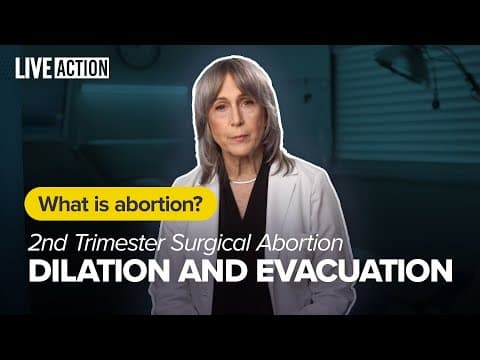
The liaison from Worldwide Surrogacy told her that A.B. and C.D. had officially requested that she undergo an abortion. No doctor in Alaska would commit an abortion at nearly 22 weeks. According to court documents, the abortion would have been a D&E dismemberment procedure.
The document obtained by Live Action News states:
"[McKenna] wrestled with inner turmoil at the thought that doctors would 'have [Baby Gabriel's] heart injected with a solution that will stop his heart and then he'll be literally ripped apart and dismembered as he's taken from [her] uterus.'"
McKenna told Live Action News, "I had to call the MFM and ask for a referral to an abortion center in Seattle," which is the closest location that does abortions that far along. “And that was really upsetting."
The abortion facility scheduled her for a week later — at 23 weeks — for the two-day procedure on April 28 and 29. They required her to bring someone with her, but she had trouble finding someone on such short notice. So, amid pushback from the agency, the abortion was rescheduled for May 6 and 7, when West would be 24 weeks pregnant.
She said:
"Every time I thought about having to show up at the clinic, I was hysterical, and I couldn't picture myself reacting or feeling any other way. So I was really scared of how I would view myself as a woman and a mother, how I'd be able to come home to my kids after participating in something like that.
But I didn't have the means to be sued over this. I'm a single mom. I can't afford lawyers to fight this. I felt I had no other option, no way out. It was just a horrible feeling."
A D&E not only intentionally and brutally ends the life of a preborn child, but also comes with higher risks to the woman than a first-trimester abortion, including a greater risk of uterine perforation or damage to nearby organs:
Then came an unexpected phone call from West's brother:
"He said, 'I do not want you to go through this. I know you don't want to go through this.' He had talked to his wife, and he said, 'We'll adopt this baby if it means you don't have to go through this procedure. We're here for you. We love you either way.'
That was the catalyst for me feeling like I'm not alone. He said, 'What's the worst that can happen? You and your kids are never gonna be on the street even if they try to take what you don't have. You're not alone in this.'"
West said she realized that while the threat of financial ruin was real and scary, the possibility of being bankrupt was "far better than having to live with killing this baby."
She decided to reach out to her friend, podcaster Ellen Fisher, who previously welcomed Live Action founder and president Lila Rose as a guest on her podcast. Within hours, West received a text from Fisher saying that Rose would help her and her children get to Texas to be with the doctors who could save baby Gabriel's life.
West told Live Action News, "And I just turned the phone to my mom, and I was just like, 'I don’t have to do it,'" she said through tears. "I couldn't believe that within 12 hours of talking to my brother I was getting these screenshots of Ellen's and Lila's text exchanges, and I finally felt hopeful. From there it just blew up, and I think the next day, I was already meeting with some of the lawyers."
Because she refused to have an abortion, A.B. and C.D. stopped sending West money and wanted her to return the money they had already paid her, as well as additional damages for failing to abort baby Gabriel.
Now 35 weeks pregnant, West is in Texas and said she has felt "an overwhelming sense of peace."
A.B. and C.D. have filed a lawsuit and are instructing West to go to their home state to give birth, but they have not stated whether they will allow doctors to perform the life-saving surgeries on baby Gabriel or if they will only provide him with 'comfort care' so that he dies shortly after his birth.
Through her attorneys, West agreed to go to California if A.B. and C.D. commit to providing Gabriel with the surgery. It appears they have not agreed to this condition, and they have sued West for not going through with the abortion.
In turn, West has filed for custody of Gabriel so she can allow doctors in Texas to treat him and give him a chance at life.
"I want to fight for him because he deserves that chance," she said. "There's no guarantee; there's not a guarantee with anything. But he deserves a chance of living life outside of my womb. I just really pray he gets that opportunity."
She added, "I want to get them to commit to the surgery or get parental rights so I can get him surgery. My goal is to get him surgery."
A.B. and C.D. have sought to establish parental rights through a California court even though the surrogacy agreement states that "the laws of the State of Alaska shall govern this Agreement."
The California court granted them a judgment, which West is now appealing on an emergency basis.
On Tuesday, the Alaska Superior Court denied a motion to force West to relocate to California to give birth, but also ruled that a California court can dictate where West gives birth and which medical team treats her. Must Read Alaska reported:
"After the surrogate mother refused abortion, she relocated to Texas so she could deliver the baby at a leading hospital specializing in HLHS. The California couple then tried to force the surrogate mother to give birth in California with a medical team of their choosing.
Rather than upholding the Alaskan surrogate mother’s rights to make her own medical decisions, the Alaska Superior Court ruled that California has jurisdiction over the birthplace.
The Court’s decision ignored the Alaska Department of Law’s Statement of Interest arguing that the surrogate mother’s constitutional right to privacy trumps the surrogacy contract."
Soon, Baby Gabriel’s life may be in the hands of a California court.
West said she is now living through one of the worst case scenarios of surrogacy:
"I feel like this object. They feel that because they paid me, they have these rights to my autonomy.
It's a disturbing thing to be on this side of it and realize how the contracts are so unsupportive of the woman who is going through all of it for somebody else and to think, 'Oh, because we're paying you, we're demanding this termination and if you don't do it you're liable for tens or hundreds of thousands of dollars' is really sick and wrong, and this whole thing has greatly changed my perspective on surrogacy."
Lincoln Wilson, a partner at First & Fourteenth PLLC representing West, said:
“McKenna’s case illustrates how an industry that claims to empower women can treat them — and the children they are carrying — as mere property.”
Wilson explained that "at the same time the other side claims to want to parent Baby Gabriel, they are suing her for damages for refusing to abort him." West's attorneys say they "are proud to represent her in her courageous stand to save his life."
West warned women who are considering surrogacy to really think deeply about what it could mean, especially for the babies who are "bought and seen as a commodity":
"I think it can be interpreted that way: being purchased and picked and chosen and 'You have a disability, and you have some diagnosis, and oop we don't want you, and we want to force this woman who is carrying you to end your life because you're not perfect... It can be a really degrading experience."
She added that women should also consider the effects surrogacy can have on children who are created with the intention of taking them from their birth mothers.
As she awaits the ruling from the California court, West is grateful for the support she and the baby have received:
"God has been so evident about it all in the ways He has connected me with people and surrounded me with people who love Him and love life and are completely willing to stand beside me as I go through this.
There are moments when I'm overwhelmed like, 'How am I gonna do this?' And other moments of just, 'Me and this baby are so taken care of, and we're not alone at all.'"
She added, "There's still so much that's happening, and that's going to happen. I can live with this route. I couldn't live with what they wanted me to do."
Click here to support McKenna West as she fights to save baby Gabriel's life.
Live Action News is pro-life news and commentary from a pro-life perspective.
Our work is possible because of our donors. Please consider giving to further our work of changing hearts and minds on issues of life and human dignity.
Contact editor@liveaction.org for questions, corrections, or if you are seeking permission to reprint any Live Action News content.
Guest Articles: To submit a guest article to Live Action News, email editor@liveaction.org with an attached Word document of 800-1000 words. Please also attach any photos relevant to your submission if applicable. If your submission is accepted for publication, you will be notified within three weeks. Guest articles are not compensated (see our Open License Agreement). Thank you for your interest in Live Action News!
Kim Hayes
·
Human Interest
Right to Life UK
·
Human Interest
Bridget Sielicki
·
Human Interest
Angeline Tan
·
Human Interest
Isabella Childs
·
Human Interest
Cassy Cooke
·
Pop Culture
Nancy Flanders
·
Issues
Nancy Flanders
·
Pop Culture
Nancy Flanders
·
Politics
Nancy Flanders
·
Fact Checks
Nancy Flanders
·Human Interest·By Nancy Flanders
Surrogate fights for life of baby boy with heart condition after refusing abortion
UPDATE, 8/13/26: The couple who hired McKenna West to act as their surrogate have come forward after arriving in Texas, where baby Gabriel was born yesterday. Nausheen Gilkar and Omar Ahmed are represented by attorney Lee Budner, who said in a statement:
"Our clients' son was born yesterday morning and he is now in their physical custody while he receives expert medical care at a tertiary care center. Thankfully, McKenna West's baseless attempt to interfere with his medical care has been soundly rejected by the courts. Right now, our clients are continuing to place their baby's health and well-being first, following the advice of the baby's medical team, as they always have and just as any loving parent would."
He continued, "As if the heartbreak of his condition were not enough, they are devastated to see their family tragedy transformed into political theater by the Texas Attorney General's office and McKenna West. Our clients' only focus at this time is ensuring that their baby receives the medical care that he vitally needs and that they, as his parents, are able to spend every precious moment they can with their beautiful newborn son."
Intentionally ending a child’s life through abortion is not medical care, as it does not provide a preborn child with greater health or well-being.
UPDATE, 8/12/26: Baby Gabriel was born a short while ago and is reportedly "on the path" to receiving the life-saving care he needs following an emergency court order from Texas Attorney General Ken Paxton that Gabriel is to be cared for by doctors.
However, as a result of a separate court order, Gabriel was taken from his surrogate mother, McKenna West, immediately after birth, an act that Science Direct notes is "linked to adverse clinical outcomes and an elevated risk of various mental illnesses in adulthood..." Research states that "early separation-induced stress may induce harmful epigenetic changes" and "may be implicated in neurodevelopmental disorders."
7/31/26: A surrogate is at the center of a new legal battle as she tries to protect the life of the baby boy she is carrying. After the couple that hired her told her to abort the baby following a serious but treatable prenatal diagnosis, she refused — and now, three months later, she is fighting to ensure he receives life-saving care at birth.
McKenna West thought being a surrogate would be a good way to make income for her family as a single mother, and to do something rewarding.
After she was accepted as a surrogate and matched with a couple, she became pregnant through IVF, and all was going smoothly until her 20-week anatomy ultrasound.
The baby boy was diagnosed with hypoplastic left heart syndrome (HLHS), and the couple who hired her decided they wanted her to abort the baby. After she refused to abort, they filed a lawsuit against her.
Despite the fact that specialists have stated that the baby boy has a good chance at survival with the necessary surgeries, the couple has given no indication that they will allow those surgeries.
West is now 35 weeks pregnant and has filed for custody. She hopes that either she is granted custody of the baby or that the couple chooses to accept the surgeries the baby needs instead of letting him die after he is born. She says her goal is to "get him surgery." If the couple commits to the surgeries, she will not fight for custody.
The baby's fate — and West's rights — may now be in the hands of a California court.
A fundraiser has been established to help West as she fights for this baby's life.
McKenna West, a single mother of two young children and a nurse in Alaska, became interested in becoming a surrogate after hearing about a friend's positive experiences. Surrogacy, she felt, would provide benefits for her family as well as another. For West, it sounded like the perfect option.
She recalled to Live Action News:
"I thought [being a surrogate] would be a really awesome way to make extra income for my family, not have to take extra time away from my kids, and get to provide a family the amazing gift of having a child. I felt it would be a rewarding route to take."
In February 2025, West applied to Worldwide Surrogacy and received preliminary approval based on her medical history. Following a physical, West was shown the profile of a couple whom she felt would be a "good match" for her. Then the agency showed West's profile to the couple (known as A.B. and C.D. in court documents), and they agreed to meet with her via Zoom.
"It felt like a perfect match," West recalled. "The conversation was good. It felt exciting for both of us. We both agreed that we wanted to move forward and told the agency, and then took the next steps to move forward from there."
After undergoing a psychiatric evaluation, West traveled to the couple's home state to get medical clearance from their IVF doctor via a physical and lab work. She underwent a procedure to remove small polyps from her uterus at the IVF doctors' request and was then prepared for an embryo transfer.
West became pregnant, and after the baby's heartbeat was heard on the first ultrasound, she was given a due date of September 2, 2026. At the start, she underwent weekly labs and ultrasounds, and everything was going well with the pregnancy.
Then, during the anatomy ultrasound, everything changed.
West explained to Live Action News:
"I was 20 weeks. [A.B. and C.D.] were on a FaceTime call after the ultrasound. The doctor came in and told us there was something really wrong with the baby's heart. There was no blood flow through the left side of the heart.
She said she wasn't qualified to give a diagnosis, and I needed to be referred to an MFM [maternal-fetal medicine doctor] for another ultrasound.
So we were all really upset. It was completely unexpected. Everything had been going great. There had been no signs of anything being wrong. All genetic testing was normal."
That same day, West was able to see the MFM doctor, who diagnosed the baby (whom West calls Gabriel) with hypoplastic left heart syndrome (HLHS).
It was during the conversation with the MFM that West said A.B. brought up the question of aborting the baby. West told Live Action News that by the end of the appointment, she felt panicked that A.B. and C.D. were going to request an abortion.
"I knew that I didn't want to have to go through [an abortion]," said West. "I didn't want for this baby — for his life to be cut short."
After she was matched with A.B. and C.D., the contract she signed with them included a clause that would require her to abort the baby in the event of an “anomaly.”
Although West expressed concern, the agency told her that such a situation is rare.
According to The Atlantic, the vast majority of surrogacy contracts include a clause allowing the couple or person hiring the surrogate to decide whether to abort. Surrogates.com says surrogates cannot legally be forced to abort, but refusing to do so would put them in breach of their contract, and they would risk losing the money they were receiving.
West asked the agency if there was anything they could do to help the couple with costs regarding the care the baby would need so that they didn't feel they had to choose abortion for financial reasons. She shared positive stories of people with HLHS, including someone she knew.
That weekend was "awful," said West.
She spoke with C.D. and asked if he wanted her to send the latest ultrasound images to them, as she had sent all of the previous ones. He told her they had already removed the baby's 12-week ultrasound image from their refrigerator and said she could mail the 20-week images, but to address the envelope only to him.
West shared:
"I was full of fear and stress of what they were going to choose. I was feeling pretty confident that they were going to choose termination, and how could I possibly live with myself going through that?"
West researched treatments for HLHS. Ultimately, she found a hospital in Dallas that has a 100% success rate in recent years with the first of three surgeries that the baby would need. She told the agency she could live with a friend in Texas to mitigate costs to A.B. and C.D.
That's when the liaison at the agency told her that the couple was concerned about the baby's future quality of life. While these concerns are understandable, the chances of survival and a good quality of life with HLHS are strong.
Gabriel would need three surgeries: the Norwood procedure shortly after birth, the Glenn procedure at four to six months old, and the Fontan procedure around age two or three. Some patients will ultimately require a heart transplant, although if and when depends on the patient.
Kimberly Rippentrop, the mother of a now-adult son with HLHS, told Live Action News in 2023 that she would not have even considered abortion, but doctors painted a bleak picture. Rippentrop said:
"Back then (2002) my doctor would’ve had no problem aborting Seth. I never would’ve considered it. They tell young moms, 'your child will have a life of hospitals, medications and procedures.' Yes, a few meds each day, a few procedures here and there, annual checkups. No big deal.
They told us Seth would be small and frail for his age and would have learning disabilities. He’s 6’-3” and consistently on the Dean’s List seeking Summa Cum Laude and majoring in Astrophysics. People are aborting these ‘imperfect’ babies all the time out of fear. Babies who could be just like Seth and [and his college roommate] Tate, thriving and living amazing lives. It’s absolutely heartbreaking.”
In court documents obtained by Live Action News, West's doctor, Dr. William Laird, ехplained that he thinks HLHS is "likely an isolated cardiac anomaly" for baby Gabriel. He said Gabriel seems to be a "standard risk" patient, meaning there is a low risk of "operative mortality" (death) following the Norwood procedure.
In addition, the court document points out, "Baby Gabriel's chances upon receiving the Norwood procedure are good - very good. Yet Defendants still refuse to commit to life-saving care."
On the Monday morning after the diagnosis, West received the call she was dreading.
The liaison from Worldwide Surrogacy told her that A.B. and C.D. had officially requested that she undergo an abortion. No doctor in Alaska would commit an abortion at nearly 22 weeks. According to court documents, the abortion would have been a D&E dismemberment procedure.
The document obtained by Live Action News states:
"[McKenna] wrestled with inner turmoil at the thought that doctors would 'have [Baby Gabriel's] heart injected with a solution that will stop his heart and then he'll be literally ripped apart and dismembered as he's taken from [her] uterus.'"
McKenna told Live Action News, "I had to call the MFM and ask for a referral to an abortion center in Seattle," which is the closest location that does abortions that far along. “And that was really upsetting."
The abortion facility scheduled her for a week later — at 23 weeks — for the two-day procedure on April 28 and 29. They required her to bring someone with her, but she had trouble finding someone on such short notice. So, amid pushback from the agency, the abortion was rescheduled for May 6 and 7, when West would be 24 weeks pregnant.
She said:
"Every time I thought about having to show up at the clinic, I was hysterical, and I couldn't picture myself reacting or feeling any other way. So I was really scared of how I would view myself as a woman and a mother, how I'd be able to come home to my kids after participating in something like that.
But I didn't have the means to be sued over this. I'm a single mom. I can't afford lawyers to fight this. I felt I had no other option, no way out. It was just a horrible feeling."
A D&E not only intentionally and brutally ends the life of a preborn child, but also comes with higher risks to the woman than a first-trimester abortion, including a greater risk of uterine perforation or damage to nearby organs:
Then came an unexpected phone call from West's brother:
"He said, 'I do not want you to go through this. I know you don't want to go through this.' He had talked to his wife, and he said, 'We'll adopt this baby if it means you don't have to go through this procedure. We're here for you. We love you either way.'
That was the catalyst for me feeling like I'm not alone. He said, 'What's the worst that can happen? You and your kids are never gonna be on the street even if they try to take what you don't have. You're not alone in this.'"
West said she realized that while the threat of financial ruin was real and scary, the possibility of being bankrupt was "far better than having to live with killing this baby."
She decided to reach out to her friend, podcaster Ellen Fisher, who previously welcomed Live Action founder and president Lila Rose as a guest on her podcast. Within hours, West received a text from Fisher saying that Rose would help her and her children get to Texas to be with the doctors who could save baby Gabriel's life.
West told Live Action News, "And I just turned the phone to my mom, and I was just like, 'I don’t have to do it,'" she said through tears. "I couldn't believe that within 12 hours of talking to my brother I was getting these screenshots of Ellen's and Lila's text exchanges, and I finally felt hopeful. From there it just blew up, and I think the next day, I was already meeting with some of the lawyers."
Because she refused to have an abortion, A.B. and C.D. stopped sending West money and wanted her to return the money they had already paid her, as well as additional damages for failing to abort baby Gabriel.
Now 35 weeks pregnant, West is in Texas and said she has felt "an overwhelming sense of peace."
A.B. and C.D. have filed a lawsuit and are instructing West to go to their home state to give birth, but they have not stated whether they will allow doctors to perform the life-saving surgeries on baby Gabriel or if they will only provide him with 'comfort care' so that he dies shortly after his birth.
Through her attorneys, West agreed to go to California if A.B. and C.D. commit to providing Gabriel with the surgery. It appears they have not agreed to this condition, and they have sued West for not going through with the abortion.
In turn, West has filed for custody of Gabriel so she can allow doctors in Texas to treat him and give him a chance at life.
"I want to fight for him because he deserves that chance," she said. "There's no guarantee; there's not a guarantee with anything. But he deserves a chance of living life outside of my womb. I just really pray he gets that opportunity."
She added, "I want to get them to commit to the surgery or get parental rights so I can get him surgery. My goal is to get him surgery."
A.B. and C.D. have sought to establish parental rights through a California court even though the surrogacy agreement states that "the laws of the State of Alaska shall govern this Agreement."
The California court granted them a judgment, which West is now appealing on an emergency basis.
On Tuesday, the Alaska Superior Court denied a motion to force West to relocate to California to give birth, but also ruled that a California court can dictate where West gives birth and which medical team treats her. Must Read Alaska reported:
"After the surrogate mother refused abortion, she relocated to Texas so she could deliver the baby at a leading hospital specializing in HLHS. The California couple then tried to force the surrogate mother to give birth in California with a medical team of their choosing.
Rather than upholding the Alaskan surrogate mother’s rights to make her own medical decisions, the Alaska Superior Court ruled that California has jurisdiction over the birthplace.
The Court’s decision ignored the Alaska Department of Law’s Statement of Interest arguing that the surrogate mother’s constitutional right to privacy trumps the surrogacy contract."
Soon, Baby Gabriel’s life may be in the hands of a California court.
West said she is now living through one of the worst case scenarios of surrogacy:
"I feel like this object. They feel that because they paid me, they have these rights to my autonomy.
It's a disturbing thing to be on this side of it and realize how the contracts are so unsupportive of the woman who is going through all of it for somebody else and to think, 'Oh, because we're paying you, we're demanding this termination and if you don't do it you're liable for tens or hundreds of thousands of dollars' is really sick and wrong, and this whole thing has greatly changed my perspective on surrogacy."
Lincoln Wilson, a partner at First & Fourteenth PLLC representing West, said:
“McKenna’s case illustrates how an industry that claims to empower women can treat them — and the children they are carrying — as mere property.”
Wilson explained that "at the same time the other side claims to want to parent Baby Gabriel, they are suing her for damages for refusing to abort him." West's attorneys say they "are proud to represent her in her courageous stand to save his life."
West warned women who are considering surrogacy to really think deeply about what it could mean, especially for the babies who are "bought and seen as a commodity":
"I think it can be interpreted that way: being purchased and picked and chosen and 'You have a disability, and you have some diagnosis, and oop we don't want you, and we want to force this woman who is carrying you to end your life because you're not perfect... It can be a really degrading experience."
She added that women should also consider the effects surrogacy can have on children who are created with the intention of taking them from their birth mothers.
As she awaits the ruling from the California court, West is grateful for the support she and the baby have received:
"God has been so evident about it all in the ways He has connected me with people and surrounded me with people who love Him and love life and are completely willing to stand beside me as I go through this.
There are moments when I'm overwhelmed like, 'How am I gonna do this?' And other moments of just, 'Me and this baby are so taken care of, and we're not alone at all.'"
She added, "There's still so much that's happening, and that's going to happen. I can live with this route. I couldn't live with what they wanted me to do."
Click here to support McKenna West as she fights to save baby Gabriel's life.
Live Action News is pro-life news and commentary from a pro-life perspective.
Our work is possible because of our donors. Please consider giving to further our work of changing hearts and minds on issues of life and human dignity.
Contact editor@liveaction.org for questions, corrections, or if you are seeking permission to reprint any Live Action News content.
Guest Articles: To submit a guest article to Live Action News, email editor@liveaction.org with an attached Word document of 800-1000 words. Please also attach any photos relevant to your submission if applicable. If your submission is accepted for publication, you will be notified within three weeks. Guest articles are not compensated (see our Open License Agreement). Thank you for your interest in Live Action News!
Kim Hayes
·Human Interest
Right to Life UK
·Human Interest
Bridget Sielicki
·Human Interest
Angeline Tan
·Human Interest
Isabella Childs
·Human Interest
Cassy Cooke
·Pop Culture
Nancy Flanders
·Issues
Nancy Flanders
·Pop Culture
Nancy Flanders
·Politics
Nancy Flanders
·Fact Checks
Nancy Flanders
·UPDATE: Baby Gabriel is here! McKenna gave birth after courageously refusing the contracting parents’ demand that she abort him because of his serious but treatable heart condition. Heartbreakingly, a temporary restraining order issued yesterday prevented McKenna from seeing or Show more

