 Analysis
Analysis
'The Death Wish Beneath the Language': Expert uncovers truth behind assisted dying
Angeline Tan
·

Is picking the 'best' embryo a mere parenting tool, or eugenics fueled by hubris?
The founder and CEO of a company that focuses on the "genetic optimization" of human beings recently appeared on CBS Mornings to discuss how his business allows potential parents to ensure "superior" genetics by handpicking their child's attributes.
Nucleus Genetics founder Kian Sadeghi insisted that giving parents their "best baby" does not mean his company is practicing eugenics.
Nucleus Genetics, founded by Kian Sadeghi, allows parents to screen embryos for traits including eye color, height, and IQ so they can pick their "best baby."
The sudden death of Sadeghi's cousin at age 15 inspired him to create a way to screen embryos for more health conditions (and generic traits) than standard IVF does, including the potential for certain conditions.
Sadeghi does not believe he is practicing eugenics, saying, "You're just picking from siblings."
He believes parents have the "right to know" about their children's physical traits and IQ so they can make a "deliberate and thoughtful choice" over which embryo to implant.
Sadeghi was inspired to enter the field of genetic testing by the sudden death of his cousin at age 15. Sadeghi was only seven at the time, and his father told him that the cousin's death was caused by "bad genetics." Wanting to prevent similar deaths, he eventually dropped out of college to found Nucleus and allow parents to screen their embryos for potential health issues, as well as physical traits and IQ.
His mindset is that if his cousin's parents had known about their daughter's genetic issue, they could have prevented it from happening — by preventing her birth.
Sadeghi doesn't advocate for better health screening after birth so people can receive better care. He advocates for in-depth screening before birth, so life for certain people can be avoided. If his cousin had died as an embryo, she wouldn't have died as a teenager.
He calls it "building generational health" and says that while IVF lets people have a baby, Nucleus is IVF Plus, and lets people have their "best baby."
During the CBS segment, Sadeghi spoke to CBS Mornings co-host Tony Dokoupil (who has since taken a position as anchor of the CBS Evening News), telling him:
"You can read the origin of life, if you will, for just a couple hundred dollars. ... It means we can much better predict and then also prevent disease like cancers, like heart disease, like schizophrenia, like Alzheimer's, like rare genetic conditions. So in understanding where we are in genetics, it's really an understanding about human health and the future of reproduction."
But his company doesn't prevent disease; it prevents certain preborn children from being born.
Sadeghi admitted that an embryo is a full human being:
"But really, the thing I want people to understand is that if you read an embryo's DNA, that DNA file that comes out of it, that's the same as an adult's DNA file, right? ... When you take a cheek swab and swab your cheeks, that's the same DNA that's in an embryo's DNA."
He added:
"There's this idea that people have of genetics that a really bad genetic marker basically causes a bad pheontype, which often is what happens like cystic fibrosis for example, PKU, Huntington's.... [A] single gene causes a bad condition, basically. That's one class of diseases. Then there's ... diseases like breast cancer....
If you went to an IVF clinic today, the genetic testing that they do in the clinic would not screen for that genetic marker. Think about how crazy that is. So you're talking about every woman undergoing IVF today, if they did have a hereditary marker for breast cancer, they would unknowingly and inadvertently pass down breast cancer from mother to daughter. I find that crazy."
In other words, current embryo screening searches for actual health conditions in the child, like Down syndrome or cystic fibrosis, but Nucleus checks for genetic markers that indicate a potential future risk of a condition like breast cancer.
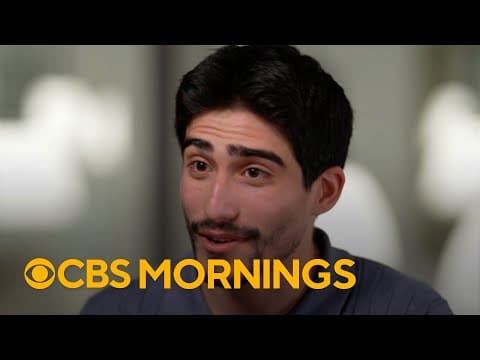
In fact, Sadeghi boasted that Nucleus can find over 2,000 different "diseases, conditions, and traits" in embryos, including hereditary cancers. But, notes Dokoupil, the company doesn't stop there. It also looks at height, eye color, hair color, intelligence, and acne.
What Sadeghi believes:
"It's the parents' right to know... further information about [their] future child."
"[T]he parent and the physician [should] decide what and how they want to implant" (similar to the pro-abortion "woman and doctor" and "choice" mantras) stemming from the idea that children are products to build and test for "quality."
Randomness in the process isn't an "alternative," as parents would want to be "very deliberate and thoughtful in [their] choice" when selecting a child based on various qualities.
Embryo selection is "beautiful" and "preventative medicine," even when selecting for "an embryo that is going to have greater longevity." But embryo selection (not just for potential illness, but even potential for things like acne) prevents lives, not tragedies.
Ruling out disease is not enough. "... [W]hen you have a child, you want your child to be healthy, of course, first and foremost... Life as a parent doesn't just stop at 'I want my child to be healthy.'... It goes well beyond that."
Setting a standard of perfection that the child must then live up to seems a disturbing prospect.
Even as he promoted Nucleus as a way to choose children based on height or eye color, Sadeghi admitted that his brother is taller than he is, "not because my mom fed him and didn't feed me," but because of DNA. When he got pushback from Dokoupil, he changed his tune.
Dokoupil asked, "But does that not give you pause when you think about the lives that will not exist as people optimize for things not realizing they're losing a 'Kian' in the process."
Sadeghi insists he still would have existed. "DNA is not destiny," he said. "So I think... when we talk about using genetics to predict something like height or IQ, they think you can look at an embryo's DNA and say 'That one's gonna be 5'11,' right? That's not how it works. Why? Because anything like height, for example, is a mix of nature and nurture."
So which is it?
Are people born with their height determined? Or can your mother feed your brother more and make him taller?
Dokoupil continued to press him on it. "But Kian... does it not give you pause knowing that within your own family, if your parents had sought to optimize for height — understanding it's not a perfect science and not destiny — if they had done that, potentially someone like yourself would have been overlooked at the embryo stage."
"[That's] not how I think about it," Sadeghi said, elaborating:
"No, I think the thing to look at is that you're really picking an embryo, that it's not, you know — the embryos that you have are still based off my mom and my dad's DNA, right. So the embryos' DNA between them, they're not that different between them. It's not like one embryo is five feet and one's like seven feet. That's not how this is.
You are picking from basically already existing embryos that are from Mom and Dad's DNA. So they're combinations already of life."
Mental gymnastics at its finest!
Dokoupil moved to a personal note, as if trying to reach Sadeghi. He explained that his father has schizophrenia, and that it's "one dimension" of his life.
"Do you throw away that whole life, which includes me and then all of my children, because you're trying to sort out the schizophrenia?" he asked.
Sadeghi simply replied, "It's all mom and dad's DNA, and you're just picking from siblings," pointing out that in every IVF clinic, embryos are selected and others are rejected and discarded. But oddly, he then added:
"[I]f the parents want to implant an embryo that has the wrong number of chromosomes, for example, they have the right to do that. Parents today mostly choose not to do that. Similarly, if a parent doesn't want to implant an embryo with breast cancer, or diabetes, or cancer, that is ...a very common sense right of the patient."
No one is screening embryos in hopes of implanting the ones prone to illness. The screening exists to weed them out. And Dokoupil continued to powerfully point out the obvious truth:
"If you're optimizing against depression — there's good evidence Lincoln had depression, and it might have actually helped him survive some of the most difficult times in this country's history —while you're throwing out for schizophrenia and depression for understandable reasons, you might also be throwing out a complex mix of things that go along with it, and you don't get a Lincoln, and you don't get a Van Gogh, and you don't get my father."
Sadeghi replied, "No, no, no. The risk is still there..."
He claimed that Dokoupil's questions are just based on "fear," and insisted that genetic screening for embryo selection is a mere parenting tool.
Dokoupil continued to press him (emphasis added):
"The word 'hubris' comes to mind. Not as an accusation, but just the idea that we could select embryos better than the chance of the universe, the randomness of it, the holiness of it, depending on one's worldview. Is that not the very definition of hubris?"
But Sadeghi refused to see how his company is practicing eugenics. He argued that in IVF clinics, sperm and egg are randomly selected and that parents simply get to choose between — his example — an embryo with a high risk for Down syndrome and an embryo without a high risk for Down syndrome. This is clearly eugenics; he considers it a parental "choice."
Sadeghi either cannot see or refuses to acknowledge that it is the choice itself that is the problem.
Creating embryos, testing them, grading them, and selecting among them for any reason whatsoever is not a parental right; it's eugenics.
Live Action News is pro-life news and commentary from a pro-life perspective.
Our work is possible because of our donors. Please consider giving to further our work of changing hearts and minds on issues of life and human dignity.
Contact editor@liveaction.org for questions, corrections, or if you are seeking permission to reprint any Live Action News content.
Guest Articles: To submit a guest article to Live Action News, email editor@liveaction.org with an attached Word document of 800-1000 words. Please also attach any photos relevant to your submission if applicable. If your submission is accepted for publication, you will be notified within three weeks. Guest articles are not compensated (see our Open License Agreement). Thank you for your interest in Live Action News!
Is picking the 'best' embryo a mere parenting tool, or eugenics fueled by hubris?
The founder and CEO of a company that focuses on the "genetic optimization" of human beings recently appeared on CBS Mornings to discuss how his business allows potential parents to ensure "superior" genetics by handpicking their child's attributes.
Nucleus Genetics founder Kian Sadeghi insisted that giving parents their "best baby" does not mean his company is practicing eugenics.
Nucleus Genetics, founded by Kian Sadeghi, allows parents to screen embryos for traits including eye color, height, and IQ so they can pick their "best baby."
The sudden death of Sadeghi's cousin at age 15 inspired him to create a way to screen embryos for more health conditions (and generic traits) than standard IVF does, including the potential for certain conditions.
Sadeghi does not believe he is practicing eugenics, saying, "You're just picking from siblings."
He believes parents have the "right to know" about their children's physical traits and IQ so they can make a "deliberate and thoughtful choice" over which embryo to implant.
Sadeghi was inspired to enter the field of genetic testing by the sudden death of his cousin at age 15. Sadeghi was only seven at the time, and his father told him that the cousin's death was caused by "bad genetics." Wanting to prevent similar deaths, he eventually dropped out of college to found Nucleus and allow parents to screen their embryos for potential health issues, as well as physical traits and IQ.
His mindset is that if his cousin's parents had known about their daughter's genetic issue, they could have prevented it from happening — by preventing her birth.
Sadeghi doesn't advocate for better health screening after birth so people can receive better care. He advocates for in-depth screening before birth, so life for certain people can be avoided. If his cousin had died as an embryo, she wouldn't have died as a teenager.
He calls it "building generational health" and says that while IVF lets people have a baby, Nucleus is IVF Plus, and lets people have their "best baby."
During the CBS segment, Sadeghi spoke to CBS Mornings co-host Tony Dokoupil (who has since taken a position as anchor of the CBS Evening News), telling him:
"You can read the origin of life, if you will, for just a couple hundred dollars. ... It means we can much better predict and then also prevent disease like cancers, like heart disease, like schizophrenia, like Alzheimer's, like rare genetic conditions. So in understanding where we are in genetics, it's really an understanding about human health and the future of reproduction."
But his company doesn't prevent disease; it prevents certain preborn children from being born.
Sadeghi admitted that an embryo is a full human being:
"But really, the thing I want people to understand is that if you read an embryo's DNA, that DNA file that comes out of it, that's the same as an adult's DNA file, right? ... When you take a cheek swab and swab your cheeks, that's the same DNA that's in an embryo's DNA."
He added:
"There's this idea that people have of genetics that a really bad genetic marker basically causes a bad pheontype, which often is what happens like cystic fibrosis for example, PKU, Huntington's.... [A] single gene causes a bad condition, basically. That's one class of diseases. Then there's ... diseases like breast cancer....
If you went to an IVF clinic today, the genetic testing that they do in the clinic would not screen for that genetic marker. Think about how crazy that is. So you're talking about every woman undergoing IVF today, if they did have a hereditary marker for breast cancer, they would unknowingly and inadvertently pass down breast cancer from mother to daughter. I find that crazy."
In other words, current embryo screening searches for actual health conditions in the child, like Down syndrome or cystic fibrosis, but Nucleus checks for genetic markers that indicate a potential future risk of a condition like breast cancer.
In fact, Sadeghi boasted that Nucleus can find over 2,000 different "diseases, conditions, and traits" in embryos, including hereditary cancers. But, notes Dokoupil, the company doesn't stop there. It also looks at height, eye color, hair color, intelligence, and acne.
What Sadeghi believes:
"It's the parents' right to know... further information about [their] future child."
"[T]he parent and the physician [should] decide what and how they want to implant" (similar to the pro-abortion "woman and doctor" and "choice" mantras) stemming from the idea that children are products to build and test for "quality."
Randomness in the process isn't an "alternative," as parents would want to be "very deliberate and thoughtful in [their] choice" when selecting a child based on various qualities.
Embryo selection is "beautiful" and "preventative medicine," even when selecting for "an embryo that is going to have greater longevity." But embryo selection (not just for potential illness, but even potential for things like acne) prevents lives, not tragedies.
Ruling out disease is not enough. "... [W]hen you have a child, you want your child to be healthy, of course, first and foremost... Life as a parent doesn't just stop at 'I want my child to be healthy.'... It goes well beyond that."
Setting a standard of perfection that the child must then live up to seems a disturbing prospect.
Even as he promoted Nucleus as a way to choose children based on height or eye color, Sadeghi admitted that his brother is taller than he is, "not because my mom fed him and didn't feed me," but because of DNA. When he got pushback from Dokoupil, he changed his tune.
Dokoupil asked, "But does that not give you pause when you think about the lives that will not exist as people optimize for things not realizing they're losing a 'Kian' in the process."
Sadeghi insists he still would have existed. "DNA is not destiny," he said. "So I think... when we talk about using genetics to predict something like height or IQ, they think you can look at an embryo's DNA and say 'That one's gonna be 5'11,' right? That's not how it works. Why? Because anything like height, for example, is a mix of nature and nurture."
So which is it?
Are people born with their height determined? Or can your mother feed your brother more and make him taller?
Dokoupil continued to press him on it. "But Kian... does it not give you pause knowing that within your own family, if your parents had sought to optimize for height — understanding it's not a perfect science and not destiny — if they had done that, potentially someone like yourself would have been overlooked at the embryo stage."
"[That's] not how I think about it," Sadeghi said, elaborating:
"No, I think the thing to look at is that you're really picking an embryo, that it's not, you know — the embryos that you have are still based off my mom and my dad's DNA, right. So the embryos' DNA between them, they're not that different between them. It's not like one embryo is five feet and one's like seven feet. That's not how this is.
You are picking from basically already existing embryos that are from Mom and Dad's DNA. So they're combinations already of life."
Mental gymnastics at its finest!
Dokoupil moved to a personal note, as if trying to reach Sadeghi. He explained that his father has schizophrenia, and that it's "one dimension" of his life.
"Do you throw away that whole life, which includes me and then all of my children, because you're trying to sort out the schizophrenia?" he asked.
Sadeghi simply replied, "It's all mom and dad's DNA, and you're just picking from siblings," pointing out that in every IVF clinic, embryos are selected and others are rejected and discarded. But oddly, he then added:
"[I]f the parents want to implant an embryo that has the wrong number of chromosomes, for example, they have the right to do that. Parents today mostly choose not to do that. Similarly, if a parent doesn't want to implant an embryo with breast cancer, or diabetes, or cancer, that is ...a very common sense right of the patient."
No one is screening embryos in hopes of implanting the ones prone to illness. The screening exists to weed them out. And Dokoupil continued to powerfully point out the obvious truth:
"If you're optimizing against depression — there's good evidence Lincoln had depression, and it might have actually helped him survive some of the most difficult times in this country's history —while you're throwing out for schizophrenia and depression for understandable reasons, you might also be throwing out a complex mix of things that go along with it, and you don't get a Lincoln, and you don't get a Van Gogh, and you don't get my father."
Sadeghi replied, "No, no, no. The risk is still there..."
He claimed that Dokoupil's questions are just based on "fear," and insisted that genetic screening for embryo selection is a mere parenting tool.
Dokoupil continued to press him (emphasis added):
"The word 'hubris' comes to mind. Not as an accusation, but just the idea that we could select embryos better than the chance of the universe, the randomness of it, the holiness of it, depending on one's worldview. Is that not the very definition of hubris?"
But Sadeghi refused to see how his company is practicing eugenics. He argued that in IVF clinics, sperm and egg are randomly selected and that parents simply get to choose between — his example — an embryo with a high risk for Down syndrome and an embryo without a high risk for Down syndrome. This is clearly eugenics; he considers it a parental "choice."
Sadeghi either cannot see or refuses to acknowledge that it is the choice itself that is the problem.
Creating embryos, testing them, grading them, and selecting among them for any reason whatsoever is not a parental right; it's eugenics.
Live Action News is pro-life news and commentary from a pro-life perspective.
Our work is possible because of our donors. Please consider giving to further our work of changing hearts and minds on issues of life and human dignity.
Contact editor@liveaction.org for questions, corrections, or if you are seeking permission to reprint any Live Action News content.
Guest Articles: To submit a guest article to Live Action News, email editor@liveaction.org with an attached Word document of 800-1000 words. Please also attach any photos relevant to your submission if applicable. If your submission is accepted for publication, you will be notified within three weeks. Guest articles are not compensated (see our Open License Agreement). Thank you for your interest in Live Action News!

Politics
Nancy Flanders
·
Politics
Nancy Flanders
·
Issues
Nancy Flanders
·Analysis
Cassy Cooke
·
Politics
Nancy Flanders
·Analysis
Angeline Tan
·
Analysis
Bridget Sielicki
·
Analysis
Cassy Cooke
·
Analysis
Cassy Cooke
·
Opinion
Cassy Cooke
·Politics
Nancy Flanders
·Politics
Nancy Flanders
·Issues
Nancy Flanders
·Politics
Nancy Flanders
·
International
Nancy Flanders
·