 Analysis
Read Next
International
Report: 25% of Belgian euthanasia patients in 2025 were not terminally ill
Cassy Cooke
·

Pro-abortion influencer rails against distinguishing abortion from lifesaving care
Pro-abortion influencer Jessica Valenti recently claimed that pro-lifers are trying to change the definition of abortion, that they don't want to protect women, that they want teenagers to be married and pregnant, and that OB/GYNs are avoiding pro-life states.
To make these accusations, Valenti seems to have avoided actual facts.
Valenti claimed Republicans are trying to change the definition of abortion via legislation.
She claimed (without proof) that OB/GYNs are avoiding practicing in pro-life states.
Pro-lifers, she argued, do not actually want to protect women's lives.
Valenti said Live Action's "Baby Olivia" prenatal development video is anti-scientific propaganda designed to pressure teenagers into marriage.
On her blog, "Abortion, Every Day," Valenti discussed various abortion-related topics — but her comments lack truth.
Valenti wrote that pro-life "lawmakers in multiple states are trying to change the definition of 'abortion,'" claiming that pro-life legislators say women don't "need life-saving abotion becasue they could have 'maternal fetal separations' instead (aka c-sections and forced delivery)."
Some facts to remember as we examine her claims:
Induced abortion is the direct and intentional killing of the preborn child.
Emergency procedures do not carry that intent or direct act.
Clarifying this is key to education and crucial to protecting women in emergencies.
It's unclear why a bill to clarify what is and is not an abortion would be a negative in Valenti's opinion.
Could it be that clarifying the difference between intentional killing (induced abortion) and induced preterm labor for a medical emergency would mean that abortion proponents would no longer be able to deceive the public through propaganda that claims pro-life laws risk women's health?
Valenti should understand the difference because of her own personal story, which she shared with The Guardian in 2011. She was 28 weeks pregnant when symptoms of preeclampsia began. Doctors told her she would stay in the hospital to be monitored until she gave birth. They don't seem to have suggested abortion, only "birth." Two days later, her condition worsened to HELLP syndrome, and she underwent an emergency C-section. Both she and her daughter survived.
But her story doesn't fit the narrative. Ensuring that pro-life laws are clear about what an abortion is could mean abortion proponents lose the ability to exploit such stories.
Valenti mentioned that several states are reviewing bills to ensure procedures aimed at protecting women's lives are not classified as abortions.
Utah: HB 48 would ensure medical records distinguish between "elective" and "medically indicated" abortions to ensure that women who miscarry, suffer ectopic pregnancies, or need emergency c-sections or preterm deliveries are not labeled as having had abortions. Unfortunately, the bill also states that women who intentionally abort their babies due to a fetal diagnosis would also be labeled as "medically indicated" (which isn't exactly pro-life).
Louisiana: HB 288 ensures that doctors code unintentional pregnancy losses as "miscarriage" rather than "abortions" or "spontaneous abortions." Miscarriage and induced abortions, while both losses, are very different because one is an accidental death, and one is an intentional killing. Many women who miscarry are heartbroken to see it classified as "abortion" on their paperwork.
South Dakota: HB 1257 would change the definition of abortion so that it does not include miscarriage treatment, ectopic pregnancy treatment, or "any medical procedure performed for the purpose of saving the life or preserving the health of the unborn child.” This is entirely reasonable. These treatments have never been considered "abortions."
These laws don't indicate a change to the definition of abortion, but a clarification for the doctors trained under the reign of Roe to understand that there is indeed a difference between intentionally killing a preborn child and carrying out a medically necessary procedure.
The intent is what matters. If doctors do not understand the difference between intentional killing and a procedure that might accidentally and secondarily result in a child's death, this is gravely concerning.
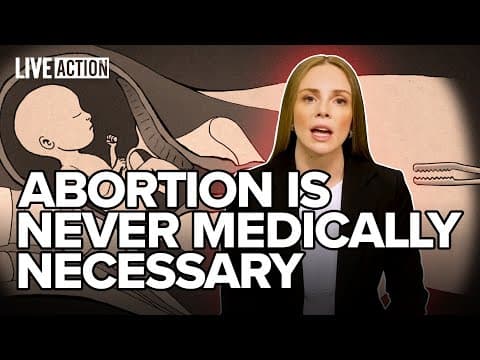
Prior to Roe, abortion was split into three categories:
spontaneous abortion: miscarriage
elective abortion: induced abortion for any reason
therapeutic abortion: procedures carried out to save the mother or when the baby has a diagnosis
"To abort" means to end something prematurely because of a perceived problem; that makes sense when considering that miscarriage occurs because of a problem perceived by the body.
After Roe, abortion became more common and all types became known as abortion.
When Roe fell in 2022, some states passed laws that allowed abortions for medical reasons, but elective abortions were limited (similar to the situation before Roe). Yet abortion proponents began claiming women would die. This message was so pervasive that some doctors, rather than understanding how to deliver a baby in an emergency as had been done for decades, suddenly decided not to treat women experiencing emergencies at all.
These cases, however, have been few and far between; those that have occurred appear to be due to medical neglect, not due to any stipulations of the pro-life law.
Today, the CDC defines "legal induced abortion" as (emphases added):
"'an intervention performed within the limits of state and jurisdiction law by a licensed clinician (for instance, a physician, nurse-midwife, nurse practitioner, physician assistant) intended to terminate a suspected or known intrauterine pregnancy and that does not result in a live birth.'
This definition excludes management of intrauterine fetal death, early pregnancy failure/loss, ectopic pregnancy, or retained products of conception.
Most states and jurisdictions that collect abortion data report whether an abortion was performed by medication or surgery."
Once abortion became more common, the term "maternal-fetal separation" did as well. It means that the baby is 'separated from the mother,' but treatment is given to both, especially if the baby is 21 weeks or older and has a proven chance of survival.
Valenti claimed that "states with abortion bans are getting less residency applications — and not just from OB/GYNs." Citing two studies, she said there is "marked decline in OB/GYNs willing to live and practice in states with abortion restrictions."
However, this narrative conflicts with other data.
Dr. Michael New explained at National Review last year that another study shows that since Roe fell in June 2022, "states with strong pro-life laws saw a larger increase in the number of practicing OBGYNs." He wrote:
Specifically, they found that the number of practicing OBGYNs increased by 8.3 percent in states where abortion is banned, and by 10.5 percent in states where abortion is threatened. However, in states where abortion was legally protected, the number of OBGYNs increased by only 7.7 percent.
He noted something else, which has been known for some time (emphasis added):
"[A] very low percentage of OB/GYNs perform abortions. The legal status of abortion would likely have little impact on the decisions of most OB/GYNs as to where to move or locate their practice."
Valenti also claimed that because Tennessee legislators voted against HB 179, they don't want to protect women's lives. The bill aimed to ensure that doctors who committed an abortion on a woman to protect her life would not face criminal charges.
Yet Tennessee law already includes an exception for the life of the mother, stating that an abortion is not a criminal act if:
The physician determined, in the physician's good faith medical judgment, based upon the facts known to the physician at the time, that the abortion was necessary to prevent the death of the pregnant woman or to prevent serious risk of substantial and irreversible impairment of a major bodily function of the pregnant woman.
In other words, HB 179 was redundant.
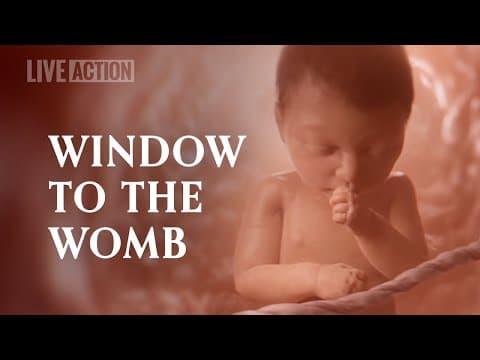
Valenti also rather oddly claims that Live Action's "Baby Olivia" video is a way to encourage teen pregnancy.
In reality, it is an educational video aimed at instructing individuals of all ages about human development in the womb.
Planned Parenthood is teaching kids how to partake in dangerous sexual activities, but a prenatal development video that was based on National Geographic-distributed data is somehow "propaganda" aimed at increasing teen pregnancy?
The real issue abortion proponents have with "Baby Olivia" is that its information counteracts the pro-abortion propaganda that preborn babies are clumps of tissue.
Valenti also took issue with a Live Action representative being present at the Utah hearing on its HB 315 bill regarding videos on human development. She might need reminding that Planned Parenthood itself has a history of writing state legislation so that it worked in its favor. Planned Parenthood Action Fund literally exists to help write and promote pro-abortion legislation.
Valenti's weirdest accusation has to be that pro-lifers are trying to marry off teens.
She wrote that because minors need parental permission to have an abortion in North Dakota unless they're married (which would imply an emancipated minor), it must somehow mean... that pro-lifers want teens to be married and pregnant.
Really?
On the other hand, Planned Parenthood has actively worked against laws that would ban child marriage. The reason? Likely, it's because if a child is considered too young to make a clear decision to marry, she is also too young to have an abortion without her parents' knowledge.
Valenti doesn't think police should investigate when the body of a baby is found; instead, she wants them to assume that the baby was stillborn or miscarried. This is how desperately she wants to protect abortion.
Pro-abortion logic always fails because it's based on lies and the discriminatory belief that certain human beings aren't people.
Live Action News is pro-life news and commentary from a pro-life perspective.
Our work is possible because of our donors. Please consider giving to further our work of changing hearts and minds on issues of life and human dignity.
Contact editor@liveaction.org for questions, corrections, or if you are seeking permission to reprint any Live Action News content.
Guest Articles: To submit a guest article to Live Action News, email editor@liveaction.org with an attached Word document of 800-1000 words. Please also attach any photos relevant to your submission if applicable. If your submission is accepted for publication, you will be notified within three weeks. Guest articles are not compensated (see our Open License Agreement). Thank you for your interest in Live Action News!
Cassy Cooke
·
Analysis
Bridget Sielicki
·
Analysis
Cassy Cooke
·
Analysis
Cassy Cooke
·
Opinion
Cassy Cooke
·
Analysis
Cassy Cooke
·Pro-abortion influencer rails against distinguishing abortion from lifesaving care
Pro-abortion influencer Jessica Valenti recently claimed that pro-lifers are trying to change the definition of abortion, that they don't want to protect women, that they want teenagers to be married and pregnant, and that OB/GYNs are avoiding pro-life states.
To make these accusations, Valenti seems to have avoided actual facts.
Valenti claimed Republicans are trying to change the definition of abortion via legislation.
She claimed (without proof) that OB/GYNs are avoiding practicing in pro-life states.
Pro-lifers, she argued, do not actually want to protect women's lives.
Valenti said Live Action's "Baby Olivia" prenatal development video is anti-scientific propaganda designed to pressure teenagers into marriage.
On her blog, "Abortion, Every Day," Valenti discussed various abortion-related topics — but her comments lack truth.
Valenti wrote that pro-life "lawmakers in multiple states are trying to change the definition of 'abortion,'" claiming that pro-life legislators say women don't "need life-saving abotion becasue they could have 'maternal fetal separations' instead (aka c-sections and forced delivery)."
Some facts to remember as we examine her claims:
Induced abortion is the direct and intentional killing of the preborn child.
Emergency procedures do not carry that intent or direct act.
Clarifying this is key to education and crucial to protecting women in emergencies.
It's unclear why a bill to clarify what is and is not an abortion would be a negative in Valenti's opinion.
Could it be that clarifying the difference between intentional killing (induced abortion) and induced preterm labor for a medical emergency would mean that abortion proponents would no longer be able to deceive the public through propaganda that claims pro-life laws risk women's health?
Valenti should understand the difference because of her own personal story, which she shared with The Guardian in 2011. She was 28 weeks pregnant when symptoms of preeclampsia began. Doctors told her she would stay in the hospital to be monitored until she gave birth. They don't seem to have suggested abortion, only "birth." Two days later, her condition worsened to HELLP syndrome, and she underwent an emergency C-section. Both she and her daughter survived.
But her story doesn't fit the narrative. Ensuring that pro-life laws are clear about what an abortion is could mean abortion proponents lose the ability to exploit such stories.
Valenti mentioned that several states are reviewing bills to ensure procedures aimed at protecting women's lives are not classified as abortions.
Utah: HB 48 would ensure medical records distinguish between "elective" and "medically indicated" abortions to ensure that women who miscarry, suffer ectopic pregnancies, or need emergency c-sections or preterm deliveries are not labeled as having had abortions. Unfortunately, the bill also states that women who intentionally abort their babies due to a fetal diagnosis would also be labeled as "medically indicated" (which isn't exactly pro-life).
Louisiana: HB 288 ensures that doctors code unintentional pregnancy losses as "miscarriage" rather than "abortions" or "spontaneous abortions." Miscarriage and induced abortions, while both losses, are very different because one is an accidental death, and one is an intentional killing. Many women who miscarry are heartbroken to see it classified as "abortion" on their paperwork.
South Dakota: HB 1257 would change the definition of abortion so that it does not include miscarriage treatment, ectopic pregnancy treatment, or "any medical procedure performed for the purpose of saving the life or preserving the health of the unborn child.” This is entirely reasonable. These treatments have never been considered "abortions."
These laws don't indicate a change to the definition of abortion, but a clarification for the doctors trained under the reign of Roe to understand that there is indeed a difference between intentionally killing a preborn child and carrying out a medically necessary procedure.
The intent is what matters. If doctors do not understand the difference between intentional killing and a procedure that might accidentally and secondarily result in a child's death, this is gravely concerning.
Prior to Roe, abortion was split into three categories:
spontaneous abortion: miscarriage
elective abortion: induced abortion for any reason
therapeutic abortion: procedures carried out to save the mother or when the baby has a diagnosis
"To abort" means to end something prematurely because of a perceived problem; that makes sense when considering that miscarriage occurs because of a problem perceived by the body.
After Roe, abortion became more common and all types became known as abortion.
When Roe fell in 2022, some states passed laws that allowed abortions for medical reasons, but elective abortions were limited (similar to the situation before Roe). Yet abortion proponents began claiming women would die. This message was so pervasive that some doctors, rather than understanding how to deliver a baby in an emergency as had been done for decades, suddenly decided not to treat women experiencing emergencies at all.
These cases, however, have been few and far between; those that have occurred appear to be due to medical neglect, not due to any stipulations of the pro-life law.
Today, the CDC defines "legal induced abortion" as (emphases added):
"'an intervention performed within the limits of state and jurisdiction law by a licensed clinician (for instance, a physician, nurse-midwife, nurse practitioner, physician assistant) intended to terminate a suspected or known intrauterine pregnancy and that does not result in a live birth.'
This definition excludes management of intrauterine fetal death, early pregnancy failure/loss, ectopic pregnancy, or retained products of conception.
Most states and jurisdictions that collect abortion data report whether an abortion was performed by medication or surgery."
Once abortion became more common, the term "maternal-fetal separation" did as well. It means that the baby is 'separated from the mother,' but treatment is given to both, especially if the baby is 21 weeks or older and has a proven chance of survival.
Valenti claimed that "states with abortion bans are getting less residency applications — and not just from OB/GYNs." Citing two studies, she said there is "marked decline in OB/GYNs willing to live and practice in states with abortion restrictions."
However, this narrative conflicts with other data.
Dr. Michael New explained at National Review last year that another study shows that since Roe fell in June 2022, "states with strong pro-life laws saw a larger increase in the number of practicing OBGYNs." He wrote:
Specifically, they found that the number of practicing OBGYNs increased by 8.3 percent in states where abortion is banned, and by 10.5 percent in states where abortion is threatened. However, in states where abortion was legally protected, the number of OBGYNs increased by only 7.7 percent.
He noted something else, which has been known for some time (emphasis added):
"[A] very low percentage of OB/GYNs perform abortions. The legal status of abortion would likely have little impact on the decisions of most OB/GYNs as to where to move or locate their practice."
Valenti also claimed that because Tennessee legislators voted against HB 179, they don't want to protect women's lives. The bill aimed to ensure that doctors who committed an abortion on a woman to protect her life would not face criminal charges.
Yet Tennessee law already includes an exception for the life of the mother, stating that an abortion is not a criminal act if:
The physician determined, in the physician's good faith medical judgment, based upon the facts known to the physician at the time, that the abortion was necessary to prevent the death of the pregnant woman or to prevent serious risk of substantial and irreversible impairment of a major bodily function of the pregnant woman.
In other words, HB 179 was redundant.
Valenti also rather oddly claims that Live Action's "Baby Olivia" video is a way to encourage teen pregnancy.
In reality, it is an educational video aimed at instructing individuals of all ages about human development in the womb.
Planned Parenthood is teaching kids how to partake in dangerous sexual activities, but a prenatal development video that was based on National Geographic-distributed data is somehow "propaganda" aimed at increasing teen pregnancy?
The real issue abortion proponents have with "Baby Olivia" is that its information counteracts the pro-abortion propaganda that preborn babies are clumps of tissue.
Valenti also took issue with a Live Action representative being present at the Utah hearing on its HB 315 bill regarding videos on human development. She might need reminding that Planned Parenthood itself has a history of writing state legislation so that it worked in its favor. Planned Parenthood Action Fund literally exists to help write and promote pro-abortion legislation.
Valenti's weirdest accusation has to be that pro-lifers are trying to marry off teens.
She wrote that because minors need parental permission to have an abortion in North Dakota unless they're married (which would imply an emancipated minor), it must somehow mean... that pro-lifers want teens to be married and pregnant.
Really?
On the other hand, Planned Parenthood has actively worked against laws that would ban child marriage. The reason? Likely, it's because if a child is considered too young to make a clear decision to marry, she is also too young to have an abortion without her parents' knowledge.
Valenti doesn't think police should investigate when the body of a baby is found; instead, she wants them to assume that the baby was stillborn or miscarried. This is how desperately she wants to protect abortion.
Pro-abortion logic always fails because it's based on lies and the discriminatory belief that certain human beings aren't people.
Live Action News is pro-life news and commentary from a pro-life perspective.
Our work is possible because of our donors. Please consider giving to further our work of changing hearts and minds on issues of life and human dignity.
Contact editor@liveaction.org for questions, corrections, or if you are seeking permission to reprint any Live Action News content.
Guest Articles: To submit a guest article to Live Action News, email editor@liveaction.org with an attached Word document of 800-1000 words. Please also attach any photos relevant to your submission if applicable. If your submission is accepted for publication, you will be notified within three weeks. Guest articles are not compensated (see our Open License Agreement). Thank you for your interest in Live Action News!
Cassy Cooke
·Analysis
Bridget Sielicki
·Analysis
Cassy Cooke
·Analysis
Cassy Cooke
·Opinion
Cassy Cooke
·Analysis
Cassy Cooke
·
