 Analysis
Read Next
Human Interest
'Over the moon': Three generations born on the same day at the same time
Isabella Doer
·
How open adoption is transforming a once-troubled industry
When a parent is unable or unwilling to care for a child, it is a tragedy, and adoption is meant to be a way to heal the wounds caused by that tragedy. Past practices, however, added to the trauma experienced by both parents and children. The rise of open adoption is working to bring an end to past negative practices and create positive outcomes for all.
It is always a tragedy when a mother feels she cannot parent her child, but adoption provides a life-affirming alternative to abortion.
For decades, closed adoption was the norm, and this often created trauma for both biological mothers and adoptees.
In recent years, open adoption has become more common, allowing a biological mother to choose the adoptive family for her child without completely severing any sort of relationship with her child.
In past decades, adoptions were most commonly closed adoptions, with adoptees and adoptive parents knowing little to no information about the child's biological parents.
It was common for an adopted child to be unaware he was adopted until later in life, if he was ever told at all. And the biological parents often struggled with not knowing what had happened to their child or what sort of parents were raising their baby.
As these and other negative effects of closed adoption became better understood, society began to move away from closed adoption toward open adoption, which has alleviated many of the problems present in closed adoptions.
Adoptees have at times been able to access information about their biological families after closed adoptions, but it typically takes years and strenuous effort.
In recent years, as open adoption has become more commonplace, only a handful of states still resist making open adoption agreements legally enforceable.
In an open adoption, the child is raised by his or her adoptive family (often selected by the biological parents), but the child's biological family is included, often through visits and letters. The child remains aware of his or her background and biological family, eliminating many of the causes of trauma and stress found in closed adoption.
Today, the vast majority of domestic adoptions are open.
Children of open adoption are typically happier and more well-adjusted, and birth mothers do not have to experience giving birth and then having no knowledge of their child any longer.
Instead, new relationships are formed and, ideally, maintained.
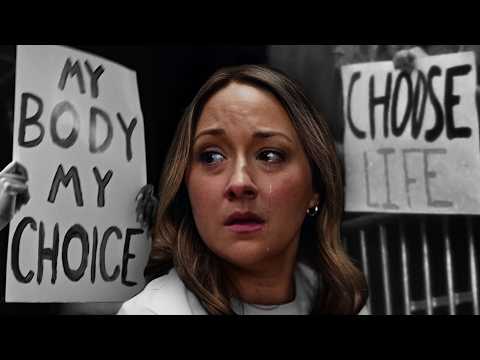
Click here to learn more about the option of open adoption.
It is now well known that preborn children bond closely with their mothers during pregnancy.
Yet in the past, it was thought that separating a child from his or her mother at birth would not create any trauma; after all, the baby was too young to remember being separated.
Babies were taken immediately from their mothers and handed over to adoptive parents, with all records of the biological family sealed, if not erased entirely.
Biological mothers were expected to disappear quietly without a thought of the child they lost; they were left to deal with the trauma of that separation alone and with no support.
This mindset reached its peak during the Baby Scoop Era, which began after World War II and ran through the 1970s. During this time, millions of mothers, often unwed, were pressured into adoption. These women were frequently sent to maternity homes, where they experienced pregnancy in secret, before giving birth and then returning home without their babies.
The mothers were rarely given the chance to see their children, much less hold them, and they were expected to go home and get on with their lives.
As explained by adoption researchers Joe Soll and Karen Wilson Buterbaugh:
Life inside the maternity home was regimented. Their incoming and outgoing mail was strictly censored. Usually the only visitors allowed were their own parents. Rarely were they allowed to speak to or see their friends, especially not the babies’ fathers.
They were not told about labor and many were heavily drugged or given no medication at all. Most were left alone during labor with no family present. Some saw and held their babies but the majority did neither. Some babies were placed in new homes directly from the hospital. Others returned with their mothers to the maternity home. Some were instructed by their social worker to give the baby to her because they viewed this act as the mother transferring the baby as a “gift” to them. Social workers viewed this as re-enforcing the voluntary nature of the mothers’ decision, of solidifying the transaction. It was the expected outcome after months of “counseling.”
Many babies went to foster care. As a result, mothers could not visit or reclaim them. They were not informed of a revocation period, a time in which they could reclaim their babies.
Some mothers were asked to sign surrender papers while still in the hospital, drugged and recuperating from childbirth. Some signed before they left the maternity home. Some signed in front of a judge. It is not uncommon to hear that mothers sobbed when asked if they were signing willingly yet many signatures were still accepted.
The babies placed for adoption likewise lived in secrecy. Some families were open about the child's adoption, while others were not. Either way, the information about the child's biological family, heritage, and background was kept from the child and the adoptive family.
Similarly, the Orphan Train Movement, a controversial "social experiment" that took place from 1854 to 1929, was a drastically less-than-ideal "precursor" to today's foster care system.
An article published by Virginia Commonwealth University states that orphan trains "moved approximately 200,000 children from cities like New York and Boston to the American West to be adopted. Many of these children were placed with parents who loved and cared for them; however others always felt out of place and some were even mistreated."
Charles Loring Brace founded the Children's Aid Society in an attempt to help the thousands of homeless children who lived on the streets of certain major cities and to keep them from growing up in orphanages. At the time, children as young as five lived in gangs for protection and were frequently arrested and incarcerated with adult criminals. These children reportedly "were in search of food, shelter, and money, [selling] rags, matches, and newspapers just to survive."
Brace believed it would be beneficial to remove these children from overcrowded cities and transport them to live with rural families. However, many of these children still had relatives in the cities, but were transported out west via "orphan trains" regardless.
"The children often had no idea where they were going, and were only told that they were going to take a train ride," the article noted, adding:
When the children arrived in the new area where they were to live, there was no formal process to place them with new families. There were only handbills that announced the distribution of groups of needy children that brought crowds of prospective parents to view and choose children.... Some of the farming families saw the children only as cheap labor; there was also evidence that some children experienced abuse in their new homes.
Tragically, "The confused and often frightened children lost contact with their families back in their hometowns[,] and those who were old enough were encouraged to make a complete break with their past."
Winifred Lorraine Williams was a survivor of the Orphan Train Movement, and the Washington Post recounted her story:
In 1926, Williams and 13 other orphans were scrubbed, dressed in new clothes and put aboard a westbound train at Grand Central Station. The children were not told where they were going or why. They had no idea that they were on an ''orphan train'' or that they had become participants in the largest children’s migration in history.
... When Williams’ train reached Kirksville, Mo., the children were taken to a crowded local church and told to sit in chairs on the stage. An old man with a white beard approached the small, fair-haired Williams and pointed a bony finger at her. ''I’ll take that one!'' he boomed. ''My wife is sick, and I need someone to wash the dishes.''
Terrified, Williams refused to go with him. A music professor and his wife saw what happened and began talking gently to her. Would she like to be their little girl? Williams consented, and in that moment, she acquired loving parents.
The Post added:
Once selected, each was dressed in new clothing, given a Bible and placed in the care of Children’s Aid Society agents who accompanied them west.
Most children thought that the train ride, which could last from days to weeks, was an exciting adventure. Few understood what was happening. Once they did, their reactions ranged from delight at finding a new family to anger and resentment at being ''placed out'' when they had relatives ''back home.''
Some children were assigned to specific families in advance. Most were placed en route after being displayed at train stops. Local committees would approve applications of families wanting children, and society agents would follow up with yearly visits, removing children from unfit homes.
Siblings were often separated from each other, and children were treated as products. The Washington Post cited a contemporary source:
''Some ordered boys, others girls, some preferred light babies, others dark, and the orders were filled out properly and every new parent was delighted,'' reported The Daily Independent of Grand Island, Neb., in May 1912. ''They were very healthy tots and as pretty as anyone ever laid eyes on.''
While these events took place for a relatively limited period in history, closed adoption remained the status quo.
Contrary to past beliefs, separation — even at birth — creates deep trauma for both mothers and their children. Closed adoption was practiced through the 20th century, despite the harms it is now known to have caused. As Erica Kramer, director of Boston Post-Adoptive Resources, wrote:
Research shows that babies learn their mother’s characteristics in utero (Dolfi, 2022), including the mother’s voice, language, and sounds. For any infant, the separation from familiar sensory experiences from the in utero environment can overwhelm the nervous system at birth.
BPAR clinician Darci Nelsen notes that if the first caregiver is not the birth mom, the newborn can feel frightened and overwhelmed, and this can cause them to release stress hormones.
This separation has come to be known as the "primal wound."
While infant adoptees rarely even recall being separated from their biological mothers, they suffer regardless. Trauma is a recurring process in the brain — meaning that later in life, when another traumatic experience happens, the wound from birth is reopened, without the adoptee even realizing it. It isn't often discussed openly, but adoptive families are encouraged to take classes to help them better understand the kinds of trauma that can be experienced by adoptees.
Adoptees, even as adults, sometimes experience a loss of identity, dealing with the ever-present question of why their biological mothers did not keep them; in a closed adoption, there is no avenue for an adoptee ask his or her mother why she chose adoption over parenting.
This has been shown to cause higher rates of mental health issues, suicide, substance abuse, and incarceration among adoptees.
And yet, culturally, adoptees have not been given the space to be honest about their feelings and have been frequently made to feel that they should consider themselves lucky, or that their trauma should be kept quiet in an effort to avoid upsetting their adoptive families, whom they genuinely love.
In essence, children of closed adoptions often wrestle with a lifetime of unanswered questions, secrets, and hidden trauma. At times, this is exacerbated when children from different cultures or ethnicities are adopted and expected to assimilate into their adoptive family's culture with no sense of their own cultural or ethnic heritage.
To this day, most states still do not require that adoptees have open access to their own birth records. In addition to all of this, birth mothers have reported experiencing regret, loss, and trauma.
While open adoption is not a perfect system — after all, the ideal is that every mother would be able to parent her child and adoption would never be needed — it is a vast improvement from the previous framework of closed adoption, which was built on secrecy.
Live Action News is pro-life news and commentary from a pro-life perspective.
Our work is possible because of our donors. Please consider giving to further our work of changing hearts and minds on issues of life and human dignity.
Contact editor@liveaction.org for questions, corrections, or if you are seeking permission to reprint any Live Action News content.
Guest Articles: To submit a guest article to Live Action News, email editor@liveaction.org with an attached Word document of 800-1000 words. Please also attach any photos relevant to your submission if applicable. If your submission is accepted for publication, you will be notified within three weeks. Guest articles are not compensated (see our Open License Agreement). Thank you for your interest in Live Action News!
Isabella Doer
·
Abortion Pill
Cassy Cooke
·
Analysis
Nancy Flanders
·
Pop Culture
Nancy Flanders
·
Analysis
Sheena Rodriguez
·
Analysis
Anne Marie Williams, RN, BSN
·Abortion Pill
Cassy Cooke
·
Activism
Cassy Cooke
·
International
Cassy Cooke
·
Politics
Cassy Cooke
·
Pop Culture
Cassy Cooke
·