 Issues
Read Next
International
Netherlands Report: Over 400 organs donated following euthanasia
Cassy Cooke
·

IVF gone wrong: Swapped sperm, embryo mix-ups, and forced abortions
As in vitro fertilization (IVF) rates rise along with the use of surrogates to carry babies for "intended parents," the media is full of stories of accidental and intentional sperm swapping and embryo mix-ups. As is true with all forms of artificial reproductive technology, the children are the ones who ultimately suffer.
The fertility industry is full of stories of sperm swapping, embryo mix-ups, and abortions on children once deemed "wanted."
Human error in a lab, whether 40 years ago or last year, causes lasting emotional damage to the families involved, especially the children.
Some families have learned that the wrong sperm was used — both intentionally and accidentally — while others have learned of a complete embryo mix-up that sent them to the 'wrong' family.
In at least one embryo mix-up, a healthy six-month-old preborn baby was aborted because the woman carrying her didn't want to give birth to a stranger's baby and have to give her to her biological parents.
Many surrogates have been ordered to have abortions for various reasons.
There are multiple moving parts in the IVF process — egg harvesting, sperm collecting, embryo creation — sometimes carried out at different labs and handled by different employees. All it takes is one moment of human error, and the children the parents think they are creating aren't the children to whom they give birth.
There are known cases of sperm swapping that have happened in IVF and likely many more that remain unknown. Sometimes it's caused by a lab error, but other times the wrong sperm has been used intentionally by a doctor with bad intentions.
Donna and Vanner Johnson used IVF to have their second son due to damage done to Vanner's vas deferens during surgery. They underwent the process, had their son, Tim, and lived a good life with their two boys for 12 years before the truth came out. After they purchased DNA kits to do as a family, Vanner's results changed the course of their lives. While he was listed as the father of their older son, the father of their second son was marked as "unknown."
“I looked at my son’s results and it said that he had a half-brother through me, and it all came crashing down,” said Donna. “I knew something was wrong.” She recalled that when they were at the IVF clinic years earlier they were told a “carrier” would be bringing Vanner’s sperm to the lab. They concluded that another man’s sperm had been mixed up with Vanner’s.
After doing some digging, they found their son's biological father, Devin McNeil, who is married with three children. The families have become friends, but knowing that it was an error that led to Tim's creation is a heavy load to carry.
McNeil's wife called it "a horrible mistake and something that shouldn't have happened."
Donna noted, “Obviously we wouldn’t want our son any different — he is who he is and we love him. Every bit of him. So there is that gratitude,” she said. “But there is that frustration, that disappointment. No one should have to face this because of a lab mistake.”
Tim still views Vanner as his father, but to know your existence is considered "a horrible mistake" by some people can cause emotional trauma. Whether mistake or accident, Tim's life has purpose.
Natalie and Josh Strong learned in 2025 that the daughter they had just welcomed didn't have either of their blood types. A DNA test revealed that Josh was not her biological father.
“We are devastated. I mean, this is gonna affect us for the rest of our lives. We gotta figure out how we’re gonna tell [our child] one day, and it took away the euphoria of having a baby,” Natalie said.
Josh said that while he has "sadness and anger," they "love [their daughter] very much."
“The emotional consequences are almost impossible to describe,” the couple’s attorney, Benjamin Ikuta of Fertility Law Group, told PEOPLE.
“Joshua was deprived of the biological fatherhood he endured surgery [for] and paid the clinic to achieve. Natalie has had to confront the fact that an unknown man’s genetic material was used to create a pregnancy inside her body without her knowledge or consent. ...These are permanent injuries that no apology or accounting adjustment can undo,” Ikuta noted.
Additional cases of sperm swaps exist, and each time one is discovered, it rips apart a person's identity and causes deep pain for everyone involved. But sometimes it isn't an error; sometimes it's done on purpose.
For decades, some fertility doctors have tricked patients, telling them that they are using donated sperm (often from a medical student) to impregnate them, but they are actually using their own sperm. Here are just some of the stories:
Dr. Charles Peete, a fertility doctor at Duke University Hospital used his own sperm to impregnate his patient, Laurie Kruppa, three times.
Dr. David R. Claypool used his own sperm instead of a donor's to impregnate his patient Sharon Hayes, despite her paying for the donor sperm. She gave birth to a daughter who "went through an identity crisis." She was so traumatized when they learned her true parentage that she quit her job, ended an engagement, and found herself in the emergency room from stress.
Alexander Schmoutziguer impregnated patients using his own sperm and fathered at least 16 children while working at Elisabeth Gasthuis Hospital (now Rjinstate Hospital).
Dr. Joseph Plautz used his own sperm to inseminate patient Gayle Fedele, who gave birth to twins.
Dr. John Boyd Coates III said he would use a medical student's sperm to impregnate Cheryl Rousseau. She and her husband welcomed a daughter, Barbara, but 40 years later, Barbara learned that her biological father was actually the fertility doctor himself — and she wasn't the only child he fathered. When the lawsuit ended, Rousseau received millions in financial compensation, but Barbara was left with an identity crisis.

Mix-ups can also happen after embryos are created as well.
Sasha Szafranski was researching her paternal heritage when she accidentally discovered a fertility industry mistake that would change her family forever. In 1995, Penny Szafranski and her then-husband decided to try one more time to have a baby using in vitro fertilization (IVF). They had been through IVF before, but it hadn't worked, and Penny had all but "given up."
When Penny became pregnant with twin girls, she was thrilled. But Sasha said she grew up feeling out of place in her family. At the age of 30, she figured out why. She took a DNA test through Ancestry.com, and it showed strangers as her family members.
She and her twin soon learned they were not related to either of their parents.
Penny was devastated. The truth was that Sasha and her twin had been transferred to Penny in a 24-hour window after another woman's embryos had been created. That woman and her husband were their biological parents — and the twins had another sister.
Both families have hired lawyers to investigate the situation, with little progress. Penny has no idea what happened to her embryos, or if they were ever born.
"I wonder all the time, like, how did this happen? Was I put in the wrong room?" she said. "I am assuming [my embryos] went to the other couple... I just don't know."
Lawyers have been hired to investigate, but Sasha has left the litigation because it caused her too much pain and stress. She felt as though her life was being diminished. She said:
"Just getting reduced again to being the consequence of the error, reduced to being the embryo, it held too much moral injury for me. I just felt bad all of the time."
This is not the only case of an embryo mixup.
Tiffany Score and Steven Mills welcomed a baby girl in December 2025, but she was a different ethnicity than they are. They filed an emergency lawsuit, found her biological parents, and ultimately were able to gain custody of the baby girl. Her biological parents remain anonymous but will be a part of the baby girl's life.
A woman in Israel gave birth to a baby girl dubbed "Baby Sophie," but it was discovered that the girl had no biological connection to her or her partner. As Sophie was awaiting transfer to her mother's uterus, another woman was called back from the waiting room, and Sophie was implanted in her instead. A custody battle ensued, with the Israeli Central District Court ultimately ruling that the birth mother and her partner, not the biological parents, will retain custody of Sophie.
Krystena Murray gave birth in December 2023, after undergoing an IVF procedure with Coastal Fertility Specialists. She used a sperm donor of her same race, but she ultimately gave birth to a baby of a different ethnicity. An at-home DNA test confirmed she was not the baby's mother. The biological parents sued for custody, but Murray decided to give up custody when the baby was five months old because she didn't think she would win the battle. “To carry a baby, fall in love with him, deliver him, and build the uniquely special bond between mother and baby, all to have him taken away. I’ll never fully recover from this,” she said, noting that she was "turned into an unwitting surrogate," and was "violated" and "emotionally and physically broken."
A woman in New York was implanted with two girl embryos whom she believed were hers and her husband's. But a sonogram revealed they were actually boys. When the babies were born, they were not Asian like the couple. The baby boys were not biologically related to the couple or to each other. The couple had to give them to their biological parents, separating the twins from each other and the only parents they had ever known.
Two California couples gave birth to each other's daughters in 2019. Alexander and his wife Daphna Cardinale knew that something was off and took a DNA test. Their "world fell apart" when they learned their baby girl wasn't biologically theirs. The couple was able to find her biological parents and learned that that couple had welcomed a daughter who was biologically the Cardinale's baby. After months of caring for each other's babies, they switched the children back, which has caused lasting harm to the Cardinale's older daughter. The families remain friends.
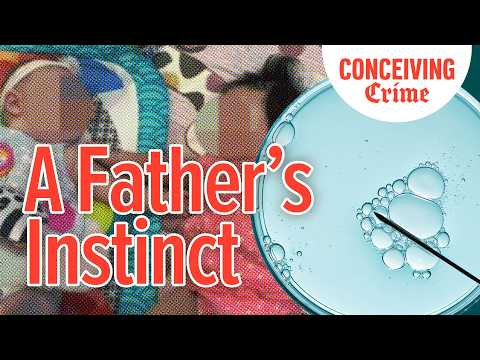
IVF is supposed to lead to the creation of life, and is therefore inaccurately deemed 'pro-life' by many people. However, IVF can lead to abortions if the baby isn't the baby that the adults wanted.
In fact, the families and babies whose lives were rocked by error in the above stories were the lucky ones. The babies were born alive, and, in the Cardinale's case, their biological daughter wasn't missing in a lab somewhere; she was born and placed in their care.
Some adults in similar situations are so self-involved that a child is actually put to death for the lab's error.
Healthy baby aborted at six months
One couple who underwent IVF learned through DNA testing that the baby they were expecting was not biologically related to them. Rather than give birth to the baby and place her with her biological family or fight for custody, they aborted a healthy baby at six months. They intentionally killed the baby they claimed to love because they "could not imagine carrying a stranger's baby to term, only to potentially lose her in later legal battles," according to their lawyer.
Their legal complaint states that the woman suffered a large amount of bleeding from the abortion, as well as sleepless nights, the inability to leave the house, and phantom kicking of the baby she aborted.
She and her husband also said they have been robbed of the ability to have their own child and don’t know what happened to their embryos or whether another couple got them. They worry they have a child out in the world being raised by strangers.
It raises the question: how might they feel if they knew a couple had accidentally received their biological child and then chose to abort him or her rather than allow that child a chance at life.
But they did not consider the child's life or the trauma they inflicted on that child's biological parents, which is unimaginable.
This is not the only case in which an innocent child, created through IVF because he or she was so "wanted," was aborted.
Surrogate ordered to abort at 20 weeks
One couple told their surrogate to have an abortion at 20 weeks after she supposedly drank an alcoholic beverage. “It was all going fine with our surrogate pregnancy until Melinda saw that Instagram,” the father, Marty Rangers, said, adding:
“It was a complete shock for us and when we confronted her about it, she said it was water that she was drinking but there was something about her reaction that left me unconvinced. After much deliberation, we decided the best thing to do would be to terminate our baby at 20 weeks. It was a very tough decision, but the trust had been broken and we were unsure what else this woman was capable of.”
Surrogate aborted baby while claiming to miscarry
"Jane" and "John" were left devastated after their surrogate, who was a friend, aborted their child because she was suffering from what her husband called "prenatal depression." But they lied and told Jane and John that she had miscarried. While the surrogate woman's husband claimed "Jane and John do not really know the whole situation," this was their child who was killed after they entrusted a friend with their baby's well-being.
Surrogates who fought for life
In other cases, it is the surrogate who is fighting for a child's life when the intended parents want the baby or babies aborted:
Melissa Cook went public about the pressure she was receiving to abort one of the three triplets she was carrying for a man.
Brittneyrose Torres refused the biological parents’ demand that she abort one of the three triplets — the girl — that she was carrying for them.
Stephanie Levesque Murphy was told to abort the baby she was carrying after the intended parents decided they didn't want to have him because he had been diagnosed with hypoplastic left heart syndrome. She refused and gave birth to him but has no idea if he is alive today.
McKenna West also ignored orders to abort the baby she was carrying after he was diagnosed with hypoplastic left heart syndrome. She gave birth, and the baby received at least one of the surgeries he needed.
While progressive views of these artificial reproductive technologies classify them as a way of controlling pregnancy and thereby giving women more autonomy, they are part of a societal trend that views children as accessories rather than human beings.
Means of artificial reproductive technology may look like medical advancements, but rather than treating infertility, these procedures turn children into commodities that can be created, stored, discarded, or even killed based on the desires of adults. And in the process, mistakes can happen that will cause devastating heartbreak and confusion among the very children created to meet adult expectations.
Live Action News is pro-life news and commentary from a pro-life perspective.
Our work is possible because of our donors. Please consider giving to further our work of changing hearts and minds on issues of life and human dignity.
Contact editor@liveaction.org for questions, corrections, or if you are seeking permission to reprint any Live Action News content.
Guest Articles: To submit a guest article to Live Action News, email editor@liveaction.org with an attached Word document of 800-1000 words. Please also attach any photos relevant to your submission if applicable. If your submission is accepted for publication, you will be notified within three weeks. Guest articles are not compensated (see our Open License Agreement). Thank you for your interest in Live Action News!
Cassy Cooke
·
Issues
Joanna Calhoun
·
Issues
Bridget Sielicki
·
Issues
Anne Marie Williams, RN, BSN
·
Issues
Bernadette Pate
·
Issues
Bridget Sielicki
·
Politics
Nancy Flanders
·
Investigative
Nancy Flanders
·
Abortion Pill
Nancy Flanders
·
Abortion Pill
Nancy Flanders
·
Analysis
Nancy Flanders
·IVF gone wrong: Swapped sperm, embryo mix-ups, and forced abortions
As in vitro fertilization (IVF) rates rise along with the use of surrogates to carry babies for "intended parents," the media is full of stories of accidental and intentional sperm swapping and embryo mix-ups. As is true with all forms of artificial reproductive technology, the children are the ones who ultimately suffer.
The fertility industry is full of stories of sperm swapping, embryo mix-ups, and abortions on children once deemed "wanted."
Human error in a lab, whether 40 years ago or last year, causes lasting emotional damage to the families involved, especially the children.
Some families have learned that the wrong sperm was used — both intentionally and accidentally — while others have learned of a complete embryo mix-up that sent them to the 'wrong' family.
In at least one embryo mix-up, a healthy six-month-old preborn baby was aborted because the woman carrying her didn't want to give birth to a stranger's baby and have to give her to her biological parents.
Many surrogates have been ordered to have abortions for various reasons.
There are multiple moving parts in the IVF process — egg harvesting, sperm collecting, embryo creation — sometimes carried out at different labs and handled by different employees. All it takes is one moment of human error, and the children the parents think they are creating aren't the children to whom they give birth.
There are known cases of sperm swapping that have happened in IVF and likely many more that remain unknown. Sometimes it's caused by a lab error, but other times the wrong sperm has been used intentionally by a doctor with bad intentions.
Donna and Vanner Johnson used IVF to have their second son due to damage done to Vanner's vas deferens during surgery. They underwent the process, had their son, Tim, and lived a good life with their two boys for 12 years before the truth came out. After they purchased DNA kits to do as a family, Vanner's results changed the course of their lives. While he was listed as the father of their older son, the father of their second son was marked as "unknown."
“I looked at my son’s results and it said that he had a half-brother through me, and it all came crashing down,” said Donna. “I knew something was wrong.” She recalled that when they were at the IVF clinic years earlier they were told a “carrier” would be bringing Vanner’s sperm to the lab. They concluded that another man’s sperm had been mixed up with Vanner’s.
After doing some digging, they found their son's biological father, Devin McNeil, who is married with three children. The families have become friends, but knowing that it was an error that led to Tim's creation is a heavy load to carry.
McNeil's wife called it "a horrible mistake and something that shouldn't have happened."
Donna noted, “Obviously we wouldn’t want our son any different — he is who he is and we love him. Every bit of him. So there is that gratitude,” she said. “But there is that frustration, that disappointment. No one should have to face this because of a lab mistake.”
Tim still views Vanner as his father, but to know your existence is considered "a horrible mistake" by some people can cause emotional trauma. Whether mistake or accident, Tim's life has purpose.
Natalie and Josh Strong learned in 2025 that the daughter they had just welcomed didn't have either of their blood types. A DNA test revealed that Josh was not her biological father.
“We are devastated. I mean, this is gonna affect us for the rest of our lives. We gotta figure out how we’re gonna tell [our child] one day, and it took away the euphoria of having a baby,” Natalie said.
Josh said that while he has "sadness and anger," they "love [their daughter] very much."
“The emotional consequences are almost impossible to describe,” the couple’s attorney, Benjamin Ikuta of Fertility Law Group, told PEOPLE.
“Joshua was deprived of the biological fatherhood he endured surgery [for] and paid the clinic to achieve. Natalie has had to confront the fact that an unknown man’s genetic material was used to create a pregnancy inside her body without her knowledge or consent. ...These are permanent injuries that no apology or accounting adjustment can undo,” Ikuta noted.
Additional cases of sperm swaps exist, and each time one is discovered, it rips apart a person's identity and causes deep pain for everyone involved. But sometimes it isn't an error; sometimes it's done on purpose.
For decades, some fertility doctors have tricked patients, telling them that they are using donated sperm (often from a medical student) to impregnate them, but they are actually using their own sperm. Here are just some of the stories:
Dr. Charles Peete, a fertility doctor at Duke University Hospital used his own sperm to impregnate his patient, Laurie Kruppa, three times.
Dr. David R. Claypool used his own sperm instead of a donor's to impregnate his patient Sharon Hayes, despite her paying for the donor sperm. She gave birth to a daughter who "went through an identity crisis." She was so traumatized when they learned her true parentage that she quit her job, ended an engagement, and found herself in the emergency room from stress.
Alexander Schmoutziguer impregnated patients using his own sperm and fathered at least 16 children while working at Elisabeth Gasthuis Hospital (now Rjinstate Hospital).
Dr. Joseph Plautz used his own sperm to inseminate patient Gayle Fedele, who gave birth to twins.
Dr. John Boyd Coates III said he would use a medical student's sperm to impregnate Cheryl Rousseau. She and her husband welcomed a daughter, Barbara, but 40 years later, Barbara learned that her biological father was actually the fertility doctor himself — and she wasn't the only child he fathered. When the lawsuit ended, Rousseau received millions in financial compensation, but Barbara was left with an identity crisis.
Mix-ups can also happen after embryos are created as well.
Sasha Szafranski was researching her paternal heritage when she accidentally discovered a fertility industry mistake that would change her family forever. In 1995, Penny Szafranski and her then-husband decided to try one more time to have a baby using in vitro fertilization (IVF). They had been through IVF before, but it hadn't worked, and Penny had all but "given up."
When Penny became pregnant with twin girls, she was thrilled. But Sasha said she grew up feeling out of place in her family. At the age of 30, she figured out why. She took a DNA test through Ancestry.com, and it showed strangers as her family members.
She and her twin soon learned they were not related to either of their parents.
Penny was devastated. The truth was that Sasha and her twin had been transferred to Penny in a 24-hour window after another woman's embryos had been created. That woman and her husband were their biological parents — and the twins had another sister.
Both families have hired lawyers to investigate the situation, with little progress. Penny has no idea what happened to her embryos, or if they were ever born.
"I wonder all the time, like, how did this happen? Was I put in the wrong room?" she said. "I am assuming [my embryos] went to the other couple... I just don't know."
Lawyers have been hired to investigate, but Sasha has left the litigation because it caused her too much pain and stress. She felt as though her life was being diminished. She said:
"Just getting reduced again to being the consequence of the error, reduced to being the embryo, it held too much moral injury for me. I just felt bad all of the time."
This is not the only case of an embryo mixup.
Tiffany Score and Steven Mills welcomed a baby girl in December 2025, but she was a different ethnicity than they are. They filed an emergency lawsuit, found her biological parents, and ultimately were able to gain custody of the baby girl. Her biological parents remain anonymous but will be a part of the baby girl's life.
A woman in Israel gave birth to a baby girl dubbed "Baby Sophie," but it was discovered that the girl had no biological connection to her or her partner. As Sophie was awaiting transfer to her mother's uterus, another woman was called back from the waiting room, and Sophie was implanted in her instead. A custody battle ensued, with the Israeli Central District Court ultimately ruling that the birth mother and her partner, not the biological parents, will retain custody of Sophie.
Krystena Murray gave birth in December 2023, after undergoing an IVF procedure with Coastal Fertility Specialists. She used a sperm donor of her same race, but she ultimately gave birth to a baby of a different ethnicity. An at-home DNA test confirmed she was not the baby's mother. The biological parents sued for custody, but Murray decided to give up custody when the baby was five months old because she didn't think she would win the battle. “To carry a baby, fall in love with him, deliver him, and build the uniquely special bond between mother and baby, all to have him taken away. I’ll never fully recover from this,” she said, noting that she was "turned into an unwitting surrogate," and was "violated" and "emotionally and physically broken."
A woman in New York was implanted with two girl embryos whom she believed were hers and her husband's. But a sonogram revealed they were actually boys. When the babies were born, they were not Asian like the couple. The baby boys were not biologically related to the couple or to each other. The couple had to give them to their biological parents, separating the twins from each other and the only parents they had ever known.
Two California couples gave birth to each other's daughters in 2019. Alexander and his wife Daphna Cardinale knew that something was off and took a DNA test. Their "world fell apart" when they learned their baby girl wasn't biologically theirs. The couple was able to find her biological parents and learned that that couple had welcomed a daughter who was biologically the Cardinale's baby. After months of caring for each other's babies, they switched the children back, which has caused lasting harm to the Cardinale's older daughter. The families remain friends.
IVF is supposed to lead to the creation of life, and is therefore inaccurately deemed 'pro-life' by many people. However, IVF can lead to abortions if the baby isn't the baby that the adults wanted.
In fact, the families and babies whose lives were rocked by error in the above stories were the lucky ones. The babies were born alive, and, in the Cardinale's case, their biological daughter wasn't missing in a lab somewhere; she was born and placed in their care.
Some adults in similar situations are so self-involved that a child is actually put to death for the lab's error.
Healthy baby aborted at six months
One couple who underwent IVF learned through DNA testing that the baby they were expecting was not biologically related to them. Rather than give birth to the baby and place her with her biological family or fight for custody, they aborted a healthy baby at six months. They intentionally killed the baby they claimed to love because they "could not imagine carrying a stranger's baby to term, only to potentially lose her in later legal battles," according to their lawyer.
Their legal complaint states that the woman suffered a large amount of bleeding from the abortion, as well as sleepless nights, the inability to leave the house, and phantom kicking of the baby she aborted.
She and her husband also said they have been robbed of the ability to have their own child and don’t know what happened to their embryos or whether another couple got them. They worry they have a child out in the world being raised by strangers.
It raises the question: how might they feel if they knew a couple had accidentally received their biological child and then chose to abort him or her rather than allow that child a chance at life.
But they did not consider the child's life or the trauma they inflicted on that child's biological parents, which is unimaginable.
This is not the only case in which an innocent child, created through IVF because he or she was so "wanted," was aborted.
Surrogate ordered to abort at 20 weeks
One couple told their surrogate to have an abortion at 20 weeks after she supposedly drank an alcoholic beverage. “It was all going fine with our surrogate pregnancy until Melinda saw that Instagram,” the father, Marty Rangers, said, adding:
“It was a complete shock for us and when we confronted her about it, she said it was water that she was drinking but there was something about her reaction that left me unconvinced. After much deliberation, we decided the best thing to do would be to terminate our baby at 20 weeks. It was a very tough decision, but the trust had been broken and we were unsure what else this woman was capable of.”
Surrogate aborted baby while claiming to miscarry
"Jane" and "John" were left devastated after their surrogate, who was a friend, aborted their child because she was suffering from what her husband called "prenatal depression." But they lied and told Jane and John that she had miscarried. While the surrogate woman's husband claimed "Jane and John do not really know the whole situation," this was their child who was killed after they entrusted a friend with their baby's well-being.
Surrogates who fought for life
In other cases, it is the surrogate who is fighting for a child's life when the intended parents want the baby or babies aborted:
Melissa Cook went public about the pressure she was receiving to abort one of the three triplets she was carrying for a man.
Brittneyrose Torres refused the biological parents’ demand that she abort one of the three triplets — the girl — that she was carrying for them.
Stephanie Levesque Murphy was told to abort the baby she was carrying after the intended parents decided they didn't want to have him because he had been diagnosed with hypoplastic left heart syndrome. She refused and gave birth to him but has no idea if he is alive today.
McKenna West also ignored orders to abort the baby she was carrying after he was diagnosed with hypoplastic left heart syndrome. She gave birth, and the baby received at least one of the surgeries he needed.
While progressive views of these artificial reproductive technologies classify them as a way of controlling pregnancy and thereby giving women more autonomy, they are part of a societal trend that views children as accessories rather than human beings.
Means of artificial reproductive technology may look like medical advancements, but rather than treating infertility, these procedures turn children into commodities that can be created, stored, discarded, or even killed based on the desires of adults. And in the process, mistakes can happen that will cause devastating heartbreak and confusion among the very children created to meet adult expectations.
Live Action News is pro-life news and commentary from a pro-life perspective.
Our work is possible because of our donors. Please consider giving to further our work of changing hearts and minds on issues of life and human dignity.
Contact editor@liveaction.org for questions, corrections, or if you are seeking permission to reprint any Live Action News content.
Guest Articles: To submit a guest article to Live Action News, email editor@liveaction.org with an attached Word document of 800-1000 words. Please also attach any photos relevant to your submission if applicable. If your submission is accepted for publication, you will be notified within three weeks. Guest articles are not compensated (see our Open License Agreement). Thank you for your interest in Live Action News!
Cassy Cooke
·Issues
Joanna Calhoun
·Issues
Bridget Sielicki
·Issues
Anne Marie Williams, RN, BSN
·Issues
Bernadette Pate
·Issues
Bridget Sielicki
·Politics
Nancy Flanders
·Investigative
Nancy Flanders
·Abortion Pill
Nancy Flanders
·Abortion Pill
Nancy Flanders
·Analysis
Nancy Flanders
·