 Analysis
Read Next
Politics
Court expands protection for Catholic healthcare entities from Illinois assisted suicide law
Nancy Flanders
·

TRAGIC: Couple claims they 'had no choice' but to abort baby with genetic condition
A couple recently shared that they aborted their second child after learning the baby would live with, and likely die from, the same health condition that their toddler has.
Angus and Emily Forrester's two-year-old daughter was diagnosed with Sanfilippo syndrome. Two weeks after the diagnosis, they learned they were expecting their second child.
Three months into the pregnancy, they were able to test the preborn baby for Sanfilippo syndrome, and the test was positive.
The couple aborted their baby, saying that "there was no choice."
There is currently no cure for Sanfilippo syndrome, but a potential treatment is on the horizon, and the Forresters have raised £360,000 to help their born daughter and other children receive the treatment.
Emily and Angus Forrester recently told the Daily Mail about their decision to abort their second child, who was diagnosed with the same rare health condition as their two-year-old daughter, Leni.
The couple was enjoying life with Leni when Emily's sister shared that genetic testing had revealed she carried a recessive gene that can cause Sanfilippo syndrome, a rare genetic disorder related to a deficiency of one of four enzymes that break down heparan sulfate. If her sister was a carrier, there was a 50% chance Emily was, too.
There is no cure for Sanfilippo syndrome, and the buildup of heparan sulfate causes a variety of cognitive, behavioral, and physical symptoms that progressively worsen over time and steal their skills from them.
Children with the condition have certain physical traits, including thick eyebrows and coarse hair. Early symptoms of the condition include fast breathing at birth, large head size, excessive body hair, and sleep issues. People with the condition often die in their teenage years.
If just one of them were a carrier, Angus and Emily's children would not have Sanfilippo, but could be carriers. If both parents were carriers, there was a 25% chance that each child they conceived would have Sanfilippo syndrome. If neither were carriers, then their children would not be affected by Sanfilippo in any way.
Although they were told it was unlikely that Leni had Sanfilippo, the couple researched Sanfilippo and felt she had some of the facial features associated with the condition. Yet, that wasn't enough for a diagnosis.
Doctors tested both Angus and Emily for gene mutations, and they had to wait 12 weeks for the results. They stopped trying for another baby and decided to test Angus through a private testing company to get the results faster. That test found that Angus was not a carrier, and therefore, their children could not inherit the condition. But these results were incorrect, and they later learned he is a carrier of the condition.
"He is a carrier, but for what they call a variant of unknown significance which means that never before in the global database has the gene that he carries been known to cause a child affected with Sanfilippo," said Emily. "So he just carries a very, very rare variant. So it wasn't logged, which is why the private test came back as negative."
This is common with genetic conditions caused by mutations on a certain gene. Sanfilippo syndrome can be caused by more than 480 different mutations. Not all screenings are equal. Some only test for the most common mutations. It's unclear if the couple was made aware of this, but ultimately, it was confirmed that both Angus and Emily are carriers of a gene mutation that causes Sanfilippo.
Leni was officially diagnosed with the condition in October 2025, and they were told there was "no treatment, no cure." Untreated, she was expected to lose her ability to walk, talk, laugh, or eat, and die before adulthood.
Unwilling to do nothing as their daughter's health declined, they did their own research and learned of two potentially life-saving experimental treatments:
One completely stopped symptoms in children using a weekly enzyme replacement therapy delivered through a port in the brain.
The other is a gene replacement therapy that has been considered a cure for people with similar conditions.
The first trial ran out of funding, and the children who had access to the treatment have since begun to decline without it. Emily and Angus began to fight and fundraise for access to these therapies for Leni.
However, two weeks after Leni's official diagnosis, the Forresters learned they were pregnant. There was a 25% chance this baby had Sanfilippo syndrome, too.
"We knew this pregnancy would either be the very best or very worst possible news," said Emily. "Navigating the heartbreak of Leni's diagnosis and our new world as parents to a child with very complex medical needs, as well as facing all the challenges any parent faces of having a toddler and trying to give her the best life possible."
At three months of pregnancy, they tested their preborn baby, likely using chorionic villus sampling.
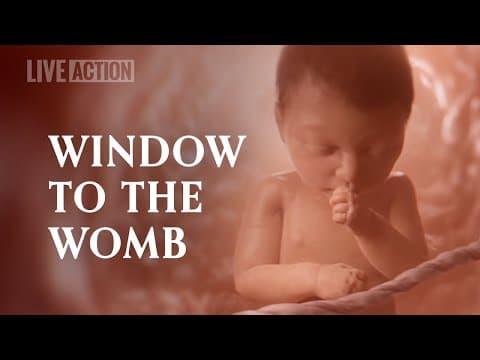
"We tried to detach from the pregnancy and not get our hopes up," she said, "but as there was a 75 percent chance that the baby would be unaffected, we couldn't help but cling on to that hope. We desperately wanted to grow our family and want our future children to know Leni as she is today, and for her to know them."
Testing showed that the preborn baby also had Sanfilippo syndrome — and Emily underwent an abortion that she didn't seem to want. She said:
"With no treatment options, no cure, a catastrophic prognosis and poor quality of life - how could we knowingly bring another child into the world with Sanfilippo syndrome? We made the impossible decision to end the pregnancy, and I had a surgical termination a few days before Christmas.
It was the most heartbreaking and difficult decision we have ever had to make. But we knew deep down there was no choice. Unless you have received a catastrophic diagnosis like this for your child you cannot imagine the heartbreak and the devastation we felt in this moment. I now truly know what it feels like for your heart to be ripped out of your chest."
However, while there is currently no cure, there is hope through the treatments the couple found, and a clinical trial is expected to begin in the United States this year.
The Forresters are urging the United Kingdom (UK) government to help fund a similar trial in the UK. The treatment delivers the missing gene into the bloodstream via stem cells and could potentially cure Leni and others like her.
"The difference between her getting access to this treatment now and in a years time could be the difference between a potentially near-normal life and a significantly shortened life with the most severe mental and physical disabilities you can imagine," said Emily. "I cannot imagine a more cruel, catastrophic condition with a worse impact on the child or the families and friends who love them."
She added, "This is her only hope." It could have been that hope for Leni's younger sibling, too.
Leni's parents describe her as "a bundle of energy" and said, "[E]veryone that meets her agrees that she is pure sunshine."
They "make the most" of their time with Leni. They "travel, go on adventures and make memories as a family that we can treasure for life." The devastation they felt at her diagnosis is clear and understandable — and as someone who has received a rare genetic diagnosis for her own child, I understand. It's incredibly painful and gut-wrenching to be told you will watch your child suffer and that you may outlive them.
Emily and Angus felt that pain again when their second child was diagnosed.
Prenatal testing should not be used to target children and their parents for abortion. It should be used to help parents prepare to care for their children. But legalized abortion has made ending the lives of preborn children with health conditions and disabilities not only acceptable but expected.
Parents who learn their baby has a diagnosis like Sanfilippo are told that it would be the compassionate choice to have an abortion. They are told that it would be selfish to have a baby with a health condition. They are told that having a child with health conditions will ruin their finances and marriage and cause emotional harm to their already born children. They are made to feel guilty for wanting their child to live. It's unacceptable.
Because of this discriminatory societal outlook that even plagues so-called pro-life individuals, Emily and Angus' second child was denied the opportunity to "make memories" and "go on adventures," and the chance to live and be loved by his or her family. He or she would also have been a light in their lives like Leni, and deserved to be treated as such.
Abortion is never a valid choice, but when it feels like the "only choice," it's not a choice at all; it's coercion.
And it's unfair. Emily and Angus should never have been put in this position, and their baby shouldn't have been either.
Ending a child's life in the womb because of a prenatal diagnosis, even one as difficult as Sanfilippo syndrome, is morally equivalent to prematurely ending a born child's life because of a diagnosis. The child who died was Leni's sibling — her sister or brother — not a "potential" life.
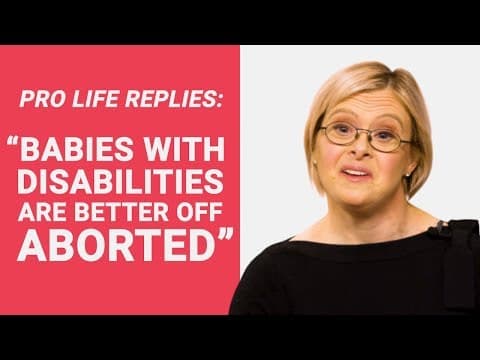
Leni's parents likely felt that pressure, along with guilt, that they had created children who had a life-limiting and life-threatening health condition.
It's a heavy emotional cross to carry. I've carried it, I've put it down, and some days I pick it back up. I had to consider whether or not to give my child siblings who might have the same diagnosis she did. I had to look at the moral aspects of such a situation from all perspectives, and it was emotionally draining, especially with pressure from outside sources. When I did conceive more children, I was told I was wrong to do so. But ultimately, I don't have the right to determine that someone else's life is not worth living.
No one does.
Regardless of whether the Forresters would have intentionally had more children once they learned of Leni's diagnosis, their second child was already conceived, already alive.
Aborting Leni's sibling deprived Emily, Angus, and Leni of the joy of knowing that child. And ultimately, it deprived their second child of his or her opportunity to experience the love of his or her family.
Live Action News is pro-life news and commentary from a pro-life perspective.
Our work is possible because of our donors. Please consider giving to further our work of changing hearts and minds on issues of life and human dignity.
Contact editor@liveaction.org for questions, corrections, or if you are seeking permission to reprint any Live Action News content.
Guest Articles: To submit a guest article to Live Action News, email editor@liveaction.org with an attached Word document of 800-1000 words. Please also attach any photos relevant to your submission if applicable. If your submission is accepted for publication, you will be notified within three weeks. Guest articles are not compensated (see our Open License Agreement). Thank you for your interest in Live Action News!
Nancy Flanders
·
Analysis
Bridget Sielicki
·
Analysis
Cassy Cooke
·
Analysis
Cassy Cooke
·
Opinion
Cassy Cooke
·
Analysis
Cassy Cooke
·TRAGIC: Couple claims they 'had no choice' but to abort baby with genetic condition
A couple recently shared that they aborted their second child after learning the baby would live with, and likely die from, the same health condition that their toddler has.
Angus and Emily Forrester's two-year-old daughter was diagnosed with Sanfilippo syndrome. Two weeks after the diagnosis, they learned they were expecting their second child.
Three months into the pregnancy, they were able to test the preborn baby for Sanfilippo syndrome, and the test was positive.
The couple aborted their baby, saying that "there was no choice."
There is currently no cure for Sanfilippo syndrome, but a potential treatment is on the horizon, and the Forresters have raised £360,000 to help their born daughter and other children receive the treatment.
Emily and Angus Forrester recently told the Daily Mail about their decision to abort their second child, who was diagnosed with the same rare health condition as their two-year-old daughter, Leni.
The couple was enjoying life with Leni when Emily's sister shared that genetic testing had revealed she carried a recessive gene that can cause Sanfilippo syndrome, a rare genetic disorder related to a deficiency of one of four enzymes that break down heparan sulfate. If her sister was a carrier, there was a 50% chance Emily was, too.
There is no cure for Sanfilippo syndrome, and the buildup of heparan sulfate causes a variety of cognitive, behavioral, and physical symptoms that progressively worsen over time and steal their skills from them.
Children with the condition have certain physical traits, including thick eyebrows and coarse hair. Early symptoms of the condition include fast breathing at birth, large head size, excessive body hair, and sleep issues. People with the condition often die in their teenage years.
If just one of them were a carrier, Angus and Emily's children would not have Sanfilippo, but could be carriers. If both parents were carriers, there was a 25% chance that each child they conceived would have Sanfilippo syndrome. If neither were carriers, then their children would not be affected by Sanfilippo in any way.
Although they were told it was unlikely that Leni had Sanfilippo, the couple researched Sanfilippo and felt she had some of the facial features associated with the condition. Yet, that wasn't enough for a diagnosis.
Doctors tested both Angus and Emily for gene mutations, and they had to wait 12 weeks for the results. They stopped trying for another baby and decided to test Angus through a private testing company to get the results faster. That test found that Angus was not a carrier, and therefore, their children could not inherit the condition. But these results were incorrect, and they later learned he is a carrier of the condition.
"He is a carrier, but for what they call a variant of unknown significance which means that never before in the global database has the gene that he carries been known to cause a child affected with Sanfilippo," said Emily. "So he just carries a very, very rare variant. So it wasn't logged, which is why the private test came back as negative."
This is common with genetic conditions caused by mutations on a certain gene. Sanfilippo syndrome can be caused by more than 480 different mutations. Not all screenings are equal. Some only test for the most common mutations. It's unclear if the couple was made aware of this, but ultimately, it was confirmed that both Angus and Emily are carriers of a gene mutation that causes Sanfilippo.
Leni was officially diagnosed with the condition in October 2025, and they were told there was "no treatment, no cure." Untreated, she was expected to lose her ability to walk, talk, laugh, or eat, and die before adulthood.
Unwilling to do nothing as their daughter's health declined, they did their own research and learned of two potentially life-saving experimental treatments:
One completely stopped symptoms in children using a weekly enzyme replacement therapy delivered through a port in the brain.
The other is a gene replacement therapy that has been considered a cure for people with similar conditions.
The first trial ran out of funding, and the children who had access to the treatment have since begun to decline without it. Emily and Angus began to fight and fundraise for access to these therapies for Leni.
However, two weeks after Leni's official diagnosis, the Forresters learned they were pregnant. There was a 25% chance this baby had Sanfilippo syndrome, too.
"We knew this pregnancy would either be the very best or very worst possible news," said Emily. "Navigating the heartbreak of Leni's diagnosis and our new world as parents to a child with very complex medical needs, as well as facing all the challenges any parent faces of having a toddler and trying to give her the best life possible."
At three months of pregnancy, they tested their preborn baby, likely using chorionic villus sampling.
"We tried to detach from the pregnancy and not get our hopes up," she said, "but as there was a 75 percent chance that the baby would be unaffected, we couldn't help but cling on to that hope. We desperately wanted to grow our family and want our future children to know Leni as she is today, and for her to know them."
Testing showed that the preborn baby also had Sanfilippo syndrome — and Emily underwent an abortion that she didn't seem to want. She said:
"With no treatment options, no cure, a catastrophic prognosis and poor quality of life - how could we knowingly bring another child into the world with Sanfilippo syndrome? We made the impossible decision to end the pregnancy, and I had a surgical termination a few days before Christmas.
It was the most heartbreaking and difficult decision we have ever had to make. But we knew deep down there was no choice. Unless you have received a catastrophic diagnosis like this for your child you cannot imagine the heartbreak and the devastation we felt in this moment. I now truly know what it feels like for your heart to be ripped out of your chest."
However, while there is currently no cure, there is hope through the treatments the couple found, and a clinical trial is expected to begin in the United States this year.
The Forresters are urging the United Kingdom (UK) government to help fund a similar trial in the UK. The treatment delivers the missing gene into the bloodstream via stem cells and could potentially cure Leni and others like her.
"The difference between her getting access to this treatment now and in a years time could be the difference between a potentially near-normal life and a significantly shortened life with the most severe mental and physical disabilities you can imagine," said Emily. "I cannot imagine a more cruel, catastrophic condition with a worse impact on the child or the families and friends who love them."
She added, "This is her only hope." It could have been that hope for Leni's younger sibling, too.
Leni's parents describe her as "a bundle of energy" and said, "[E]veryone that meets her agrees that she is pure sunshine."
They "make the most" of their time with Leni. They "travel, go on adventures and make memories as a family that we can treasure for life." The devastation they felt at her diagnosis is clear and understandable — and as someone who has received a rare genetic diagnosis for her own child, I understand. It's incredibly painful and gut-wrenching to be told you will watch your child suffer and that you may outlive them.
Emily and Angus felt that pain again when their second child was diagnosed.
Prenatal testing should not be used to target children and their parents for abortion. It should be used to help parents prepare to care for their children. But legalized abortion has made ending the lives of preborn children with health conditions and disabilities not only acceptable but expected.
Parents who learn their baby has a diagnosis like Sanfilippo are told that it would be the compassionate choice to have an abortion. They are told that it would be selfish to have a baby with a health condition. They are told that having a child with health conditions will ruin their finances and marriage and cause emotional harm to their already born children. They are made to feel guilty for wanting their child to live. It's unacceptable.
Because of this discriminatory societal outlook that even plagues so-called pro-life individuals, Emily and Angus' second child was denied the opportunity to "make memories" and "go on adventures," and the chance to live and be loved by his or her family. He or she would also have been a light in their lives like Leni, and deserved to be treated as such.
Abortion is never a valid choice, but when it feels like the "only choice," it's not a choice at all; it's coercion.
And it's unfair. Emily and Angus should never have been put in this position, and their baby shouldn't have been either.
Ending a child's life in the womb because of a prenatal diagnosis, even one as difficult as Sanfilippo syndrome, is morally equivalent to prematurely ending a born child's life because of a diagnosis. The child who died was Leni's sibling — her sister or brother — not a "potential" life.
Leni's parents likely felt that pressure, along with guilt, that they had created children who had a life-limiting and life-threatening health condition.
It's a heavy emotional cross to carry. I've carried it, I've put it down, and some days I pick it back up. I had to consider whether or not to give my child siblings who might have the same diagnosis she did. I had to look at the moral aspects of such a situation from all perspectives, and it was emotionally draining, especially with pressure from outside sources. When I did conceive more children, I was told I was wrong to do so. But ultimately, I don't have the right to determine that someone else's life is not worth living.
No one does.
Regardless of whether the Forresters would have intentionally had more children once they learned of Leni's diagnosis, their second child was already conceived, already alive.
Aborting Leni's sibling deprived Emily, Angus, and Leni of the joy of knowing that child. And ultimately, it deprived their second child of his or her opportunity to experience the love of his or her family.
Live Action News is pro-life news and commentary from a pro-life perspective.
Our work is possible because of our donors. Please consider giving to further our work of changing hearts and minds on issues of life and human dignity.
Contact editor@liveaction.org for questions, corrections, or if you are seeking permission to reprint any Live Action News content.
Guest Articles: To submit a guest article to Live Action News, email editor@liveaction.org with an attached Word document of 800-1000 words. Please also attach any photos relevant to your submission if applicable. If your submission is accepted for publication, you will be notified within three weeks. Guest articles are not compensated (see our Open License Agreement). Thank you for your interest in Live Action News!
Nancy Flanders
·Analysis
Bridget Sielicki
·Analysis
Cassy Cooke
·Analysis
Cassy Cooke
·Opinion
Cassy Cooke
·Analysis
Cassy Cooke
·
