Read Next
Guest Column
GUEST ARTICLE: Miscarried in the second trimester, Lily Noelle was 'perfectly formed'
Melissa Bowcutt
·

 Abortion Pill·By Carole Novielli
7 things everyone should know about the abortion pill
The abortion pill is the most common method of abortion in the United States today, with an estimated 65% of abortions now done through use of this drug — which means that it's important for every American to know what this drug regimen is, how 'safe' it actually is, and what it truly does to preborn children and the women who take it.
The abortion pill isn't as safe as it's claimed to be.
The abortion pill's safety system was set up because women died.
Abortion pill prescribers are ignoring safety protocols.
The prescribers putting women at risk are allowed to stay in business.
Most physicians don't prescribe the abortion pill.
Illegal abortion drugs are flooding into pro-life states.
A drug that has intentionally killed millions can't be considered 'safe.'
While mifepristone (200mg)/Mifeprex was approved in 2000, the way it is dispensed has changed significantly over the years. Most recently, in 2023, the Biden FDA loosened the drug's REMS safety requirements to allow it to be dispensed in pharmacies and by mail.
Here are 7 things to know about the abortion pill:
The abortion pill has a black box warning for sepsis and hemorrhaging, along with infection, which is rarely discussed (if at all) by mainstream media. Instead, abortion proponents claim the abortion pill is as "safe as Tylenol" — a claim that has been debunked, and which not even abortion industry experts have been able to verify.

The FDA’s 2023 mifepristone label acknowledged that 2.9 to 4.6% of women who take the drug require emergency care, and six percent (6%) who took the abortion pill in a telehealth study required emergency care.
The manufacturer’s medication guide notes that up to seven percent (7%) of women will “need a surgical procedure” to complete the abortion.
A more recent analysis, “The Abortion Pill Harms Women,” published by the Ethics and Public Policy Center (EPPC), found that nearly 11% of women (10.93%) experience sepsis, infection, hemorrhaging, or other serious or life-threatening adverse events following a mifepristone abortion.
Estimated impact on women:
21.3K to 44K likely present to ERs annually after taking abortion pills.
15K to 51.4K abortions by pill likely fail each year, resulting in follow-up surgical procedures or additional drugs to complete the abortions.

Shanyce Thomas testified that after she was sold the abortion pill, she suffered severe complications, including septic shock:
The cramps were unbearable. It felt like somebody was stabbing me in my stomach. Planned Parenthood told me I was fine, but I still had fetal remains inside me. I had to undergo multiple surgeries and a partial hysterectomy.
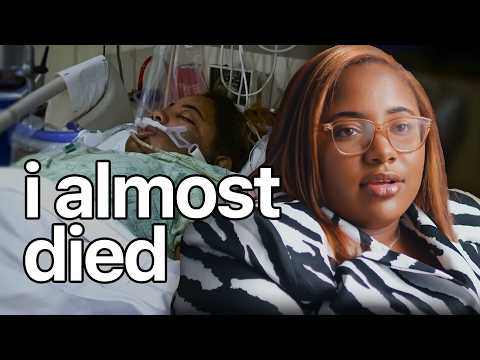
Multiple deaths have also been associated with the deadly drug.
Women have testified to the trauma of seeing their dead aborted children in the shower or toilet, and some have sent graphic ‘proof of death’ images to providers.
Following multiple deaths, the FDA issued warnings and required abortion pill manufacturer Danco Laboratories to issue letters to healthcare providers. The drug was then placed under a safety system for monitoring, called REMS.
2002: "We have received... reports of ruptured ectopic pregnancies (including one death from hemorrhage due to a ruptured ectopic pregnancy)...Because ectopic pregnancy may be present despite your best efforts to rule it out before starting Mifeprex treatment, you should be mindful of the possibility of an ectopic pregnancy throughout the treatment period and have a plan for its management."
2004: "Danco Laboratories is providing this information to assist you in taking care of patients who may present in an emergency room setting following treatment with Mifeprex® (mifepristone) and misoprostol. In particular, you should be aware of the rare events – serious infection, prolonged heavy bleeding and ruptured ectopic pregnancy."
2005: "The Food and Drug Administration (FDA) is aware of four cases of septic deaths in the United States."
2006: "The Food and Drug Administration has been informed of two additional deaths following medical abortion with mifepristone (Mifeprex)."

Despite the concerns, the FDA was pressured to loosen those requirements.
REMS initially required the pill's manufacturers to report all adverse events — but in 2016, Big Abortion schemed to get this changed to report fatalities only, and urged clients to lie about complications (attributing them to natural miscarriage).
Predictably, fewer adverse event reports began to show up.
Despite its current lax safety protocols, the Food and Drug Administration (FDA) was expected to update a federal judge in Louisiana on the status of its ongoing abortion pill review. The agency told the court that FDA doesn't plan to complete the review until March of 2027.
Abortion pill prescribers regularly violate the REMS safety protocols by failing to:
Rule out ectopic pregnancies
Verify pregnancy/gestational age
Handle complications or refer to someone who can
Instead, they prescribe the drug past FDA-approved limits, without a confirmed pregnancy, and advise women to lie to medical personnel if they experience complications.
Prescribers are also required under the FDA's REMS to have the “[a]bility to assess the duration of pregnancy accurately” and the “[a]bility to diagnose ectopic pregnancies.” However...
The abortion industry admits it does not rule out an ectopic pregnancy for every abortion pill client, placing women at risk.
Even pro-abortion emergency room physicians have warned that they are seeing more women presenting to ERs with undiagnosed ectopic pregnancies after taking the abortion pill.
Abortion pill prescribers fail to properly date pregnancies, spend less than five minutes with clients in telehealth appointments, and do little to no follow-up, while prescribing the drug much later than the approved gestational limits.

Profitable abortion pill manufacturers are contractually required under REMS to decertify prescribers who are out of compliance, but these manufacturers admitted to the Senate HELP Committee that they have not decertified a single one, despite their disregard for the safety rules.
So far, the FDA appears to have done little in response to this.
Despite the fact that the drug manufacturers are obligated to ensure that the rules are followed, it appears they have washed their hands of any involvement. This means that no one is ensuring that safety rules are being followed — and if rules are broken, no one is being decertified.
An August 2026 report, led by Senator Bill Cassidy for the U.S. Senate Health, Education, Labor, and Pensions (HELP) Committee, said, "the lack of guardrails ensuring a sufficient provider-patient relationship creates accountability gaps for a product that carries risks of significant adverse health outcomes."
The Committee's investigation found "a consistent pattern of a lack of transparency regarding the operations of mifepristone sponsors," raising "critical questions about the effectiveness of their oversight... to ensure compliance with REMSrequirements."
The only thing the abortion pill (200 mg mifepristone) is FDA-approved for is the termination of pregnancy — the killing of a living preborn child.
Live Action News previously documented that historically, physicians spurned the abortion pill.
We found that less than one percent of licensed physicians are certified prescribers of the abortion pill, and potentially just 23% of licensed OBGYNs prescribe the drug — despite fearmongering that the drug needs to be available for other indications.
Abortion drugs illegally flood into pro-life states due to pro-abortion "shield" laws passed by pro-abortion states.
These laws do not protect women who take abortion drugs or who are coerced by others who order the drugs online without their knowledge, and they don't protect women who are injured or die due to reckless prescribers seeking profit.
Shield laws protect the abortion industry.
Alabama, Arkansas, and Louisiana have filed a lawsuit with the U.S. Supreme Court challenging the “shield laws” in New York, California, and Massachusetts, calling them "swords disguised as shields and driven into pro-life states."
The laws were put in place by extremely pro-abortion lawmakers shortly after the Dobbs Supreme Court decision overturned Roe v. Wade, as explained in the court document filed by pro-life Plaintiff states.
A separate lawsuit filed against the individuals and groups shipping the drugs into pro-life states contends that these states are also suffering harm because they cannot enforce the laws of their own states due to pro-abortion shield laws.
The FDA reports that 7.5 million women used the abortion pill between 2000 and 2024.
In June, the pro-abortion Guttmacher Institute updated its national abortion estimates for 2025, increasing estimated abortion pill totals to 734,435. This equates to...
61,203 abortions by pill per month
2,012 per day
84 per hour
One abortion pill abortion every 43 seconds
These are real human beings whose lives are being ended.

"Without Guardrails" series:
'Without Guardrails': Abortion pill manufacturer refuses to disclose revenue
'Without Guardrails': Are abortion pill companies putting profit over safety rules?
'Without Guardrails': Report shows most physicians don't prescribe abortion pills
'Without Guardrails': Abortion pill report exposes stunning lack of accountability
"Dear FDA" series:
Live Action News is pro-life news and commentary from a pro-life perspective.
Our work is possible because of our donors. Please consider giving to further our work of changing hearts and minds on issues of life and human dignity.
Contact editor@liveaction.org for questions, corrections, or if you are seeking permission to reprint any Live Action News content.
Guest Articles: To submit a guest article to Live Action News, email editor@liveaction.org with an attached Word document of 800-1000 words. Please also attach any photos relevant to your submission if applicable. If your submission is accepted for publication, you will be notified within three weeks. Guest articles are not compensated (see our Open License Agreement). Thank you for your interest in Live Action News!
Melissa Bowcutt
·
Abortion Pill
Carole Novielli
·
Abortion Pill
Bridget Sielicki
·
Abortion Pill
Newsroom
·
Abortion Pill
Carole Novielli
·
Abortion Pill
Cassy Cooke
·Abortion Pill
Carole Novielli
·
Investigative
Carole Novielli
·Abortion Pill
Carole Novielli
·
Abortion Pill
Carole Novielli
·
Investigative
Carole Novielli
·Abortion Pill·By Carole Novielli
7 things everyone should know about the abortion pill
The abortion pill is the most common method of abortion in the United States today, with an estimated 65% of abortions now done through use of this drug — which means that it's important for every American to know what this drug regimen is, how 'safe' it actually is, and what it truly does to preborn children and the women who take it.
The abortion pill isn't as safe as it's claimed to be.
The abortion pill's safety system was set up because women died.
Abortion pill prescribers are ignoring safety protocols.
The prescribers putting women at risk are allowed to stay in business.
Most physicians don't prescribe the abortion pill.
Illegal abortion drugs are flooding into pro-life states.
A drug that has intentionally killed millions can't be considered 'safe.'
While mifepristone (200mg)/Mifeprex was approved in 2000, the way it is dispensed has changed significantly over the years. Most recently, in 2023, the Biden FDA loosened the drug's REMS safety requirements to allow it to be dispensed in pharmacies and by mail.
Here are 7 things to know about the abortion pill:
The abortion pill has a black box warning for sepsis and hemorrhaging, along with infection, which is rarely discussed (if at all) by mainstream media. Instead, abortion proponents claim the abortion pill is as "safe as Tylenol" — a claim that has been debunked, and which not even abortion industry experts have been able to verify.
The FDA’s 2023 mifepristone label acknowledged that 2.9 to 4.6% of women who take the drug require emergency care, and six percent (6%) who took the abortion pill in a telehealth study required emergency care.
The manufacturer’s medication guide notes that up to seven percent (7%) of women will “need a surgical procedure” to complete the abortion.
A more recent analysis, “The Abortion Pill Harms Women,” published by the Ethics and Public Policy Center (EPPC), found that nearly 11% of women (10.93%) experience sepsis, infection, hemorrhaging, or other serious or life-threatening adverse events following a mifepristone abortion.
Estimated impact on women:
21.3K to 44K likely present to ERs annually after taking abortion pills.
15K to 51.4K abortions by pill likely fail each year, resulting in follow-up surgical procedures or additional drugs to complete the abortions.
Shanyce Thomas testified that after she was sold the abortion pill, she suffered severe complications, including septic shock:
The cramps were unbearable. It felt like somebody was stabbing me in my stomach. Planned Parenthood told me I was fine, but I still had fetal remains inside me. I had to undergo multiple surgeries and a partial hysterectomy.
Multiple deaths have also been associated with the deadly drug.
Women have testified to the trauma of seeing their dead aborted children in the shower or toilet, and some have sent graphic ‘proof of death’ images to providers.
Following multiple deaths, the FDA issued warnings and required abortion pill manufacturer Danco Laboratories to issue letters to healthcare providers. The drug was then placed under a safety system for monitoring, called REMS.
2002: "We have received... reports of ruptured ectopic pregnancies (including one death from hemorrhage due to a ruptured ectopic pregnancy)...Because ectopic pregnancy may be present despite your best efforts to rule it out before starting Mifeprex treatment, you should be mindful of the possibility of an ectopic pregnancy throughout the treatment period and have a plan for its management."
2004: "Danco Laboratories is providing this information to assist you in taking care of patients who may present in an emergency room setting following treatment with Mifeprex® (mifepristone) and misoprostol. In particular, you should be aware of the rare events – serious infection, prolonged heavy bleeding and ruptured ectopic pregnancy."
2005: "The Food and Drug Administration (FDA) is aware of four cases of septic deaths in the United States."
2006: "The Food and Drug Administration has been informed of two additional deaths following medical abortion with mifepristone (Mifeprex)."
Despite the concerns, the FDA was pressured to loosen those requirements.
REMS initially required the pill's manufacturers to report all adverse events — but in 2016, Big Abortion schemed to get this changed to report fatalities only, and urged clients to lie about complications (attributing them to natural miscarriage).
Predictably, fewer adverse event reports began to show up.
Despite its current lax safety protocols, the Food and Drug Administration (FDA) was expected to update a federal judge in Louisiana on the status of its ongoing abortion pill review. The agency told the court that FDA doesn't plan to complete the review until March of 2027.
Abortion pill prescribers regularly violate the REMS safety protocols by failing to:
Rule out ectopic pregnancies
Verify pregnancy/gestational age
Handle complications or refer to someone who can
Instead, they prescribe the drug past FDA-approved limits, without a confirmed pregnancy, and advise women to lie to medical personnel if they experience complications.
Prescribers are also required under the FDA's REMS to have the “[a]bility to assess the duration of pregnancy accurately” and the “[a]bility to diagnose ectopic pregnancies.” However...
The abortion industry admits it does not rule out an ectopic pregnancy for every abortion pill client, placing women at risk.
Even pro-abortion emergency room physicians have warned that they are seeing more women presenting to ERs with undiagnosed ectopic pregnancies after taking the abortion pill.
Abortion pill prescribers fail to properly date pregnancies, spend less than five minutes with clients in telehealth appointments, and do little to no follow-up, while prescribing the drug much later than the approved gestational limits.
Profitable abortion pill manufacturers are contractually required under REMS to decertify prescribers who are out of compliance, but these manufacturers admitted to the Senate HELP Committee that they have not decertified a single one, despite their disregard for the safety rules.
So far, the FDA appears to have done little in response to this.
Despite the fact that the drug manufacturers are obligated to ensure that the rules are followed, it appears they have washed their hands of any involvement. This means that no one is ensuring that safety rules are being followed — and if rules are broken, no one is being decertified.
An August 2026 report, led by Senator Bill Cassidy for the U.S. Senate Health, Education, Labor, and Pensions (HELP) Committee, said, "the lack of guardrails ensuring a sufficient provider-patient relationship creates accountability gaps for a product that carries risks of significant adverse health outcomes."
The Committee's investigation found "a consistent pattern of a lack of transparency regarding the operations of mifepristone sponsors," raising "critical questions about the effectiveness of their oversight... to ensure compliance with REMSrequirements."
The only thing the abortion pill (200 mg mifepristone) is FDA-approved for is the termination of pregnancy — the killing of a living preborn child.
Live Action News previously documented that historically, physicians spurned the abortion pill.
We found that less than one percent of licensed physicians are certified prescribers of the abortion pill, and potentially just 23% of licensed OBGYNs prescribe the drug — despite fearmongering that the drug needs to be available for other indications.
Abortion drugs illegally flood into pro-life states due to pro-abortion "shield" laws passed by pro-abortion states.
These laws do not protect women who take abortion drugs or who are coerced by others who order the drugs online without their knowledge, and they don't protect women who are injured or die due to reckless prescribers seeking profit.
Shield laws protect the abortion industry.
Alabama, Arkansas, and Louisiana have filed a lawsuit with the U.S. Supreme Court challenging the “shield laws” in New York, California, and Massachusetts, calling them "swords disguised as shields and driven into pro-life states."
The laws were put in place by extremely pro-abortion lawmakers shortly after the Dobbs Supreme Court decision overturned Roe v. Wade, as explained in the court document filed by pro-life Plaintiff states.
A separate lawsuit filed against the individuals and groups shipping the drugs into pro-life states contends that these states are also suffering harm because they cannot enforce the laws of their own states due to pro-abortion shield laws.
The FDA reports that 7.5 million women used the abortion pill between 2000 and 2024.
In June, the pro-abortion Guttmacher Institute updated its national abortion estimates for 2025, increasing estimated abortion pill totals to 734,435. This equates to...
61,203 abortions by pill per month
2,012 per day
84 per hour
One abortion pill abortion every 43 seconds
These are real human beings whose lives are being ended.
"Without Guardrails" series:
'Without Guardrails': Abortion pill manufacturer refuses to disclose revenue
'Without Guardrails': Are abortion pill companies putting profit over safety rules?
'Without Guardrails': Report shows most physicians don't prescribe abortion pills
'Without Guardrails': Abortion pill report exposes stunning lack of accountability
"Dear FDA" series:
Live Action News is pro-life news and commentary from a pro-life perspective.
Our work is possible because of our donors. Please consider giving to further our work of changing hearts and minds on issues of life and human dignity.
Contact editor@liveaction.org for questions, corrections, or if you are seeking permission to reprint any Live Action News content.
Guest Articles: To submit a guest article to Live Action News, email editor@liveaction.org with an attached Word document of 800-1000 words. Please also attach any photos relevant to your submission if applicable. If your submission is accepted for publication, you will be notified within three weeks. Guest articles are not compensated (see our Open License Agreement). Thank you for your interest in Live Action News!
Melissa Bowcutt
·Abortion Pill
Carole Novielli
·Abortion Pill
Bridget Sielicki
·Abortion Pill
Newsroom
·Abortion Pill
Carole Novielli
·Abortion Pill
Cassy Cooke
·Abortion Pill
Carole Novielli
·Investigative
Carole Novielli
·Abortion Pill
Carole Novielli
·Abortion Pill
Carole Novielli
·Investigative
Carole Novielli
·The @FDA needs to pull the abortion pill (thread) top reasons and interesting facts.....
As FDA's abortion pill review gets pushed off to after the elections into March 2027, preborn babies keep dying, the drug's manufacturers fail to decertify prescribers that flout FDA's own safety rules. This is unacceptable!

Abortion Pill Review: FDA informs the court they are “conducting a study to assess the safety of mifepristone…using a variety of data sources contained within Sentinel, a distributed database, to conduct the study. Sentinel datasets reside with the individual data partners."