Read Next
Guest Column
Hyde Amendment's 50th: Renewing the commitment to end taxpayer-funded abortion
Rep. Chris Smith
·

 Human Interest·By Nancy Flanders
New video highlights families who said no to abortion following fetal diagnosis
A new compilation video from Live Action showcases the stories of two families who refused to abort their children following heartbreaking diagnoses.
Two couples who each received a prenatal diagnosis of anencephaly for their preborn daughters shared their stories with Live Action.
Despite the option to abort their babies, and the knowledge that their daughters wouldn't live long after birth, the couples both chose life.
They spent the remainder of their pregnancies making memories with their babies and cherishing every moment.
After birth, they were able to hold and love their children, helping to bring them all closure as they and their babies were able to bond.
Research shows it is beneficial to a mother's mental health to carry to term after a life-limiting diagnosis.
The video, When A Preborn Baby Has a Terminal Diagnosis, features Joe and Ann Baker as well as Andy and Stephanie Schoonover, two couples who each lost a daughter to anencephaly.
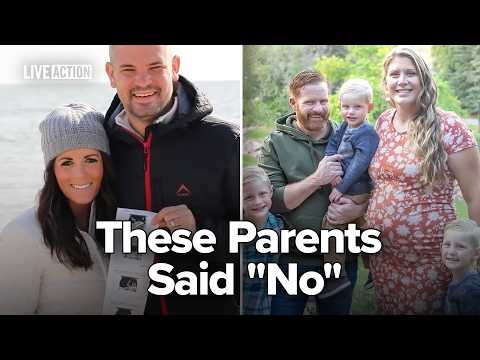
The Bakers were so excited to be expecting a daughter after having three sons. Then, at the 12-week ultrasound, they learned heartbreaking news. Ann explained:
She said, 'You know, we reviewed the ultrasound, and it's just so clear that your baby has what's called anencephaly.' She started to talk to me about it because I didn't know what it was. Like, I didn't know if she was talking 'bad news' like your baby's gonna be disabled. The more she talked, she was just like, 'It's 100% fatal. It's just this rare, rare birth defect that happens, and your baby will not survive longer than, probably, a few hours.
Joe thought it must be a mistake. He didn't want to believe that there was nothing they could do to save their baby. They wondered how they can move forward and what their options were.
"Suddenly, the only option that's given — in the nicest way of terms, 'We're gonna be talking about terminating your pregnancy.' And that is the most bizarre thing in the world because that's the whole point of going to the doctor, like, the doctor is there to save our little baby," said Joe.
As a part of the pro-life community, Joe couldn't believe he was being given this 'option.' But it was never a consideration for them.
Right away, Ann knew she had all of these places that she wanted to take her daughter, Ember, to, so they began a journey and spent the rest of the pregnancy traveling and making memories at their favorite places. They invited people to send them artwork for Ember's delivery room to make it vibrant for her.
Ember lived for one hour after birth, which Ann called "the most sacred, special hour" of her life.
The Schoonovers were thrilled to be having their first child, but at the 12-week ultrasound, the technician saw a concern. The doctor told them their baby had anencephaly, explaining that the condition was considered "not compatible with life."
"It was almost an out-of-body experience," said Stephanie. "Because here I'm lying on that table and I'm looking at my daughter's silhouette, and she looked perfect to me. And everything that he was describing went against what I felt that I was seeing. There was no cure. There was no surgery. There was nothing other than carrying this pregnancy out or to terminate it."
"We saw five fingers and five toes and a beating heart and these lips moving as if they were inhaling air or blowing us kisses," said Andy. "And we looked and said this looks like a baby to us.... And so we wanted to give that baby life in whatever way that God intended that life to look."
Stephanie said they now understood the fragility of that life and now wanted to make the most of it. They wanted to be intentional about the memories they were going to make with baby Grace. Andy played with Grace by pressing on Stephanie's stomach as Grace kicked him back.
Grace was born at 39 weeks, and to everyone's surprise, she came out crying. Hearing her voice was an amazing gift. Andy read two books to her, a chaplain baptized her, and she settled in peacefully on Stephanie's chest. That's where she stayed, alive, for 10 and a half hours.
"It was a joyful time to be able to experience her life... We know for certain that she felt love," said Stephanie.
These couples are not braver than other parents facing such a diagnosis; they just loved their daughters amid their own fear and sadness.
Unfortunately, many parents are pressured into abortions, with doctors and society telling them that aborting a baby with a life-limiting diagnosis is the more compassionate act to take. But abortion only serves to bring more trauma to the family and treats the baby as less valuable or less human than a 'healthy' child.
Carrying to term after such a diagnosis and having moments like the ones Grace's and Ember's parents had with them treats the baby with human dignity, and research shows it is actually beneficial to the mother to carry her baby to term following a prenatal diagnosis.
In a study of 267 parents who lost a child due to a diagnosis of anencephaly, women who had abortions reported significantly more despair and depression than women who carried to term. Additional research on infant loss found that while any prenatal or infant loss is traumatic, “[r]isk of complicated grief was found to be especially high after termination of a pregnancy due to fetal abnormality.”
In a study of 405 parents who carried to term following the prenatal diagnosis of a life-limiting condition, 97.5% of participants reported an absence of regret in carrying to term. Another study determined that “[c]ouples experienced selective termination as traumatic … [T]he women ultimately felt as if they were betraying themselves and their babies.”
Live Action News is pro-life news and commentary from a pro-life perspective.
Our work is possible because of our donors. Please consider giving to further our work of changing hearts and minds on issues of life and human dignity.
Contact editor@liveaction.org for questions, corrections, or if you are seeking permission to reprint any Live Action News content.
Guest Articles: To submit a guest article to Live Action News, email editor@liveaction.org with an attached Word document of 800-1000 words. Please also attach any photos relevant to your submission if applicable. If your submission is accepted for publication, you will be notified within three weeks. Guest articles are not compensated (see our Open License Agreement). Thank you for your interest in Live Action News!
Rep. Chris Smith
·
Human Interest
Anne Marie Williams, RN, BSN
·
Human Interest
Right to Life UK
·
Issues
Isabella Childs
·
Human Interest
Isabella Childs
·
Human Interest
Angeline Tan
·
Abortion Pill
Nancy Flanders
·
Issues
Nancy Flanders
·
Analysis
Nancy Flanders
·
Opinion
Nancy Flanders
·
Abortion Pill
Nancy Flanders
·Human Interest·By Nancy Flanders
New video highlights families who said no to abortion following fetal diagnosis
A new compilation video from Live Action showcases the stories of two families who refused to abort their children following heartbreaking diagnoses.
Two couples who each received a prenatal diagnosis of anencephaly for their preborn daughters shared their stories with Live Action.
Despite the option to abort their babies, and the knowledge that their daughters wouldn't live long after birth, the couples both chose life.
They spent the remainder of their pregnancies making memories with their babies and cherishing every moment.
After birth, they were able to hold and love their children, helping to bring them all closure as they and their babies were able to bond.
Research shows it is beneficial to a mother's mental health to carry to term after a life-limiting diagnosis.
The video, When A Preborn Baby Has a Terminal Diagnosis, features Joe and Ann Baker as well as Andy and Stephanie Schoonover, two couples who each lost a daughter to anencephaly.
The Bakers were so excited to be expecting a daughter after having three sons. Then, at the 12-week ultrasound, they learned heartbreaking news. Ann explained:
She said, 'You know, we reviewed the ultrasound, and it's just so clear that your baby has what's called anencephaly.' She started to talk to me about it because I didn't know what it was. Like, I didn't know if she was talking 'bad news' like your baby's gonna be disabled. The more she talked, she was just like, 'It's 100% fatal. It's just this rare, rare birth defect that happens, and your baby will not survive longer than, probably, a few hours.
Joe thought it must be a mistake. He didn't want to believe that there was nothing they could do to save their baby. They wondered how they can move forward and what their options were.
"Suddenly, the only option that's given — in the nicest way of terms, 'We're gonna be talking about terminating your pregnancy.' And that is the most bizarre thing in the world because that's the whole point of going to the doctor, like, the doctor is there to save our little baby," said Joe.
As a part of the pro-life community, Joe couldn't believe he was being given this 'option.' But it was never a consideration for them.
Right away, Ann knew she had all of these places that she wanted to take her daughter, Ember, to, so they began a journey and spent the rest of the pregnancy traveling and making memories at their favorite places. They invited people to send them artwork for Ember's delivery room to make it vibrant for her.
Ember lived for one hour after birth, which Ann called "the most sacred, special hour" of her life.
The Schoonovers were thrilled to be having their first child, but at the 12-week ultrasound, the technician saw a concern. The doctor told them their baby had anencephaly, explaining that the condition was considered "not compatible with life."
"It was almost an out-of-body experience," said Stephanie. "Because here I'm lying on that table and I'm looking at my daughter's silhouette, and she looked perfect to me. And everything that he was describing went against what I felt that I was seeing. There was no cure. There was no surgery. There was nothing other than carrying this pregnancy out or to terminate it."
"We saw five fingers and five toes and a beating heart and these lips moving as if they were inhaling air or blowing us kisses," said Andy. "And we looked and said this looks like a baby to us.... And so we wanted to give that baby life in whatever way that God intended that life to look."
Stephanie said they now understood the fragility of that life and now wanted to make the most of it. They wanted to be intentional about the memories they were going to make with baby Grace. Andy played with Grace by pressing on Stephanie's stomach as Grace kicked him back.
Grace was born at 39 weeks, and to everyone's surprise, she came out crying. Hearing her voice was an amazing gift. Andy read two books to her, a chaplain baptized her, and she settled in peacefully on Stephanie's chest. That's where she stayed, alive, for 10 and a half hours.
"It was a joyful time to be able to experience her life... We know for certain that she felt love," said Stephanie.
These couples are not braver than other parents facing such a diagnosis; they just loved their daughters amid their own fear and sadness.
Unfortunately, many parents are pressured into abortions, with doctors and society telling them that aborting a baby with a life-limiting diagnosis is the more compassionate act to take. But abortion only serves to bring more trauma to the family and treats the baby as less valuable or less human than a 'healthy' child.
Carrying to term after such a diagnosis and having moments like the ones Grace's and Ember's parents had with them treats the baby with human dignity, and research shows it is actually beneficial to the mother to carry her baby to term following a prenatal diagnosis.
In a study of 267 parents who lost a child due to a diagnosis of anencephaly, women who had abortions reported significantly more despair and depression than women who carried to term. Additional research on infant loss found that while any prenatal or infant loss is traumatic, “[r]isk of complicated grief was found to be especially high after termination of a pregnancy due to fetal abnormality.”
In a study of 405 parents who carried to term following the prenatal diagnosis of a life-limiting condition, 97.5% of participants reported an absence of regret in carrying to term. Another study determined that “[c]ouples experienced selective termination as traumatic … [T]he women ultimately felt as if they were betraying themselves and their babies.”
Live Action News is pro-life news and commentary from a pro-life perspective.
Our work is possible because of our donors. Please consider giving to further our work of changing hearts and minds on issues of life and human dignity.
Contact editor@liveaction.org for questions, corrections, or if you are seeking permission to reprint any Live Action News content.
Guest Articles: To submit a guest article to Live Action News, email editor@liveaction.org with an attached Word document of 800-1000 words. Please also attach any photos relevant to your submission if applicable. If your submission is accepted for publication, you will be notified within three weeks. Guest articles are not compensated (see our Open License Agreement). Thank you for your interest in Live Action News!
Rep. Chris Smith
·Human Interest
Anne Marie Williams, RN, BSN
·Human Interest
Right to Life UK
·Issues
Isabella Childs
·Human Interest
Isabella Childs
·Human Interest
Angeline Tan
·Abortion Pill
Nancy Flanders
·Issues
Nancy Flanders
·Analysis
Nancy Flanders
·Opinion
Nancy Flanders
·Abortion Pill
Nancy Flanders
·