Read Next
Investigative
Nevada woman sentenced for attempted murder of newborn left in trash
Nancy Flanders
·

 Abortion Pill·By Carole Novielli
University of Oregon to dispense abortion pill to students
The University of Oregon (UO) will become the second college in the state to offer the abortion pill to students on campus, starting in the fall of 2026.
The University of Oregon will begin dispensing the abortion pill (mifepristone and misoprostol) to students starting in fall 2026.
The abortion pill will be free to students who have Oregon insurance providers, but funding is being sought for students from out of state.
The abortion pill kills preborn human beings and carries significant risks, including hemorrhage, incomplete abortion, infection, and sepsis.
The abortion pill can also cause trauma for women who take it, especially if they see the bodies of their aborted children.
The school's health services department was wary of dispensing the abortion pill because it is not equipped to handle complications, but based on the wishes of the students, it decided to move forward.
The student government president called on-campus access to the abortion pill a "huge win for student power."
Beginning in the fall semester of 2026, UO University Health Services (UHS) will begin supplying students with the abortion pill (mifepristone and misoprostol), allowing women to undergo abortions in their dorm rooms. As reported by The Register-Guard, in fall 2025, student groups including the Young Democratic Socialists of America, Students for Choice, Blossom Empowerment Project, and the on-campus student government Associated Students of UO (ASUO) formed a pro-abortion coalition to push for on-campus access to the abortion pill.
"The University of Oregon is the second university in Oregon to offer this service, trailing Portland State University. Nationally, the service was primarily implemented in California, as required under the state’s Senate Bill 24," DailyEmerald.com (DE) reported.
Sarah Schram, a physician at UHS, and Anna Hejinian, medical director at UHS, will oversee the abortion pill program.
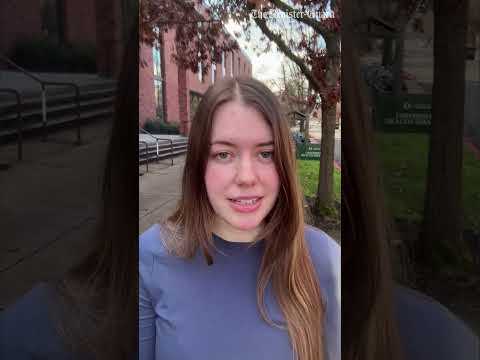
UHS Director Margaret Trout had been "open to finding ways" to bring the abortion pill to campus since she took the job in 2025. Trout previously served as Executive Director of Health and Wellness for UC Davis (which hosts a Ryan Residency abortion training program) as well as Director of the Health and Counseling Center at the University of Portland. Daily Emerald reported:
Hired in January 2025, Trout met with the Young Democratic Socialists of America, one of the student groups heavily involved with campaigns in favor of medication abortion, a few weeks into the job. The push to implement the service at UO lingered in the back of her mind ever since.
...Medication abortions were at the forefront of ASUO President Prissila Moreno’s campaign in the spring. “Every campaign has its ambitions and it’s easy to lose sense of those promises,” Moreno said. However, Moreno and the coalition kept pushing forward, unfazed by a failed 2024 effort. The campaign fell through ... as the pro-Palestine encampment during spring 2024 took priority.
Not all campus groups supported the implementation of the service. Students for Life of America, a pro-life organization active on 1,607 college campuses nationwide, including UO, criticized the decision.
In an interview with Moreno, Trout said that initially, UHS didn't want to carry the abortion pill because it was not equipped to carry out a surgical abortion when the abortion pill failed. But the pro-abortion student groups met with UHS and insisted they would rather get the abortion pill from the school clinic than Planned Parenthood, which is where students are currently being referred for abortions.
Medical staff at UHS decided to fulfill the students' wish despite knowing the staff is not prepared to handle complications. Moreno called having the abortion pill on campus a "huge win for student power."
It is indeed an act of power (though not a moral one) to directly and intentionally kill someone who is completely defenseless and more vulnerable than oneself: the preborn child.
Trout told Moreno that the abortion pill will be free for students with Oregon health insurance providers because, under the state's Reproductive Health Equity Act, Oregon mandates health insurance companies to cover abortion at 100% — likely the final blow for many students scared of being pregnant or parenting in college and worried about the costs associated with motherhood.
Already facing financial and educational pressures as well as potential pressure from parents or the baby's father, having the abortion 100% paid for adds an additional push to have an abortion that the student may not want. Trout said that students from other states may not have full insurance coverage for abortion, but she is working on securing funding to help them.
The University does offer support to student parents, including "reimbursing them for a portion of the costs associated with caring for their child or children." Eligibility is based on UO enrollment status and financial need. Academic accommodations can also be made for pregnant students for doctor's appointments, which is required by law, and on-campus daycare is available. While these supports are strong and include subsidies, they are not free.
“We’re proud to be at the forefront of healthcare. We want to be on the cutting edge, not at the tail end," Schram told the media.
While the media claims abortion pills on campus are necessary, UHS admits that it does not have the abortion "expertise" that abortionists have. In its current statement, it explained:
Abortion is legal in Oregon; it is your right. UHS is committed to keeping it that way. UHS is actively monitoring safe, accessible, trauma-informed abortion options in our community. If access becomes limited in Eugene, UHS is prepared to offer medication abortions at our clinic. However, at the current time, we are fortunate enough to be partnered with Planned Parenthood of Southwestern Oregon’s health center a mile from campus that provides this service with more expertise and accessibility than we can.
Live Action and Live Action News have continuously reported on the serious complications that occur with abortion pill use, including incomplete abortion, hemorrhaging, retained pregnancy tissue and body parts, infection, sepsis, and death. These are in addition to the emotional trauma of birthing a recognizable child in your dorm room or bathroom.
Live Action has been actively working to educate the Department of Health and Human Services and the Food and Drug Administration on why approval of the abortion pill should be suspended. KVAL.com reported:
[A]nti-abortion organization 'Live Action' held a press conference on Capitol Hill calling for HHS and the FDA to suspend approval for the abortion pill and tighten safety requirements. Live Action says the pills are being distributed recklessly online and harming women's mental and physical health, also citing cases of abusive partners giving women the pill without their consent.
"That's not a concern that I've heard...," Moreon told KVAL. "It's not a concern that I've heard from professionals in the healthcare field or students. I think if we did hear those concerns from students directly, that's something we would take into consideration."
Live Action's press conference included the testimony of a woman who suffered devastating complications after taking the abortion pill, and the organization introduced a comprehensive report, "The State of Chemical Abortion: A Mechanism of Death," which also detailed devastating potential risks of the drug.

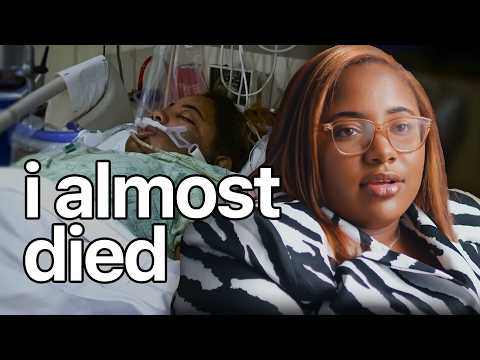
Shanyce Thomas was seriously injured after taking the abortion pill under pressure from her boyfriend. As Live Action News previously documented, Thomas shared at the press conference that the abortion pill "nearly cost me my life, and the consequences will stay with me forever." She obtained the drug regimen from Planned Parenthood; days after taking it, she had to be hospitalized due to a "severe infection... that became life-threatening." She was placed on an ECMO machine due to the critical nature of her condition and was in "a medically-induced coma for a month."
Thomas had numerous transfusions, and eventually, she said, "[D]octors had no choice but to perform a partial hysterectomy. In one moment, my ability to carry children in my future was taken from me, not by choice but by necessity to save my life."
Live Action also spoke about data from the Ethics and Public Policy Center (EPPC), whose analysis concluded that nearly 1 in 10 women who take the abortion pill experience serious adverse events such as severe hemorrhage, infection, and sepsis.
Perhaps this information would concern students if they were made aware.
The abortion pill is not 'safer than Tylenol' as abortion industry groups have claimed. Abortionists have spent years telling women to go to the emergency room when they experience complications, but to lie to doctors and say they are miscarrying naturally. This has heavily skewed the data on the safety of the abortion pill, since complications have been reported as miscarriage complications instead.
Students at UO may have complications from the abortion pill, and if they do, it will be at the hands of the people charged with taking care of them.
Live Action News is pro-life news and commentary from a pro-life perspective.
Our work is possible because of our donors. Please consider giving to further our work of changing hearts and minds on issues of life and human dignity.
Contact editor@liveaction.org for questions, corrections, or if you are seeking permission to reprint any Live Action News content.
Guest Articles: To submit a guest article to Live Action News, email editor@liveaction.org with an attached Word document of 800-1000 words. Please also attach any photos relevant to your submission if applicable. If your submission is accepted for publication, you will be notified within three weeks. Guest articles are not compensated (see our Open License Agreement). Thank you for your interest in Live Action News!
Nancy Flanders
·
Abortion Pill
Carole Novielli
·
Abortion Pill
Carole Novielli
·
Abortion Pill
Carole Novielli
·
Abortion Pill
Bridget Sielicki
·
Abortion Pill
Cassy Cooke
·Abortion Pill
Carole Novielli
·Abortion Pill
Carole Novielli
·Abortion Pill
Carole Novielli
·
Abortion Pill
Carole Novielli
·
Abortion Pill
Carole Novielli
·Abortion Pill·By Carole Novielli
University of Oregon to dispense abortion pill to students
The University of Oregon (UO) will become the second college in the state to offer the abortion pill to students on campus, starting in the fall of 2026.
The University of Oregon will begin dispensing the abortion pill (mifepristone and misoprostol) to students starting in fall 2026.
The abortion pill will be free to students who have Oregon insurance providers, but funding is being sought for students from out of state.
The abortion pill kills preborn human beings and carries significant risks, including hemorrhage, incomplete abortion, infection, and sepsis.
The abortion pill can also cause trauma for women who take it, especially if they see the bodies of their aborted children.
The school's health services department was wary of dispensing the abortion pill because it is not equipped to handle complications, but based on the wishes of the students, it decided to move forward.
The student government president called on-campus access to the abortion pill a "huge win for student power."
Beginning in the fall semester of 2026, UO University Health Services (UHS) will begin supplying students with the abortion pill (mifepristone and misoprostol), allowing women to undergo abortions in their dorm rooms. As reported by The Register-Guard, in fall 2025, student groups including the Young Democratic Socialists of America, Students for Choice, Blossom Empowerment Project, and the on-campus student government Associated Students of UO (ASUO) formed a pro-abortion coalition to push for on-campus access to the abortion pill.
"The University of Oregon is the second university in Oregon to offer this service, trailing Portland State University. Nationally, the service was primarily implemented in California, as required under the state’s Senate Bill 24," DailyEmerald.com (DE) reported.
Sarah Schram, a physician at UHS, and Anna Hejinian, medical director at UHS, will oversee the abortion pill program.
UHS Director Margaret Trout had been "open to finding ways" to bring the abortion pill to campus since she took the job in 2025. Trout previously served as Executive Director of Health and Wellness for UC Davis (which hosts a Ryan Residency abortion training program) as well as Director of the Health and Counseling Center at the University of Portland. Daily Emerald reported:
Hired in January 2025, Trout met with the Young Democratic Socialists of America, one of the student groups heavily involved with campaigns in favor of medication abortion, a few weeks into the job. The push to implement the service at UO lingered in the back of her mind ever since.
...Medication abortions were at the forefront of ASUO President Prissila Moreno’s campaign in the spring. “Every campaign has its ambitions and it’s easy to lose sense of those promises,” Moreno said. However, Moreno and the coalition kept pushing forward, unfazed by a failed 2024 effort. The campaign fell through ... as the pro-Palestine encampment during spring 2024 took priority.
Not all campus groups supported the implementation of the service. Students for Life of America, a pro-life organization active on 1,607 college campuses nationwide, including UO, criticized the decision.
In an interview with Moreno, Trout said that initially, UHS didn't want to carry the abortion pill because it was not equipped to carry out a surgical abortion when the abortion pill failed. But the pro-abortion student groups met with UHS and insisted they would rather get the abortion pill from the school clinic than Planned Parenthood, which is where students are currently being referred for abortions.
Medical staff at UHS decided to fulfill the students' wish despite knowing the staff is not prepared to handle complications. Moreno called having the abortion pill on campus a "huge win for student power."
It is indeed an act of power (though not a moral one) to directly and intentionally kill someone who is completely defenseless and more vulnerable than oneself: the preborn child.
Trout told Moreno that the abortion pill will be free for students with Oregon health insurance providers because, under the state's Reproductive Health Equity Act, Oregon mandates health insurance companies to cover abortion at 100% — likely the final blow for many students scared of being pregnant or parenting in college and worried about the costs associated with motherhood.
Already facing financial and educational pressures as well as potential pressure from parents or the baby's father, having the abortion 100% paid for adds an additional push to have an abortion that the student may not want. Trout said that students from other states may not have full insurance coverage for abortion, but she is working on securing funding to help them.
The University does offer support to student parents, including "reimbursing them for a portion of the costs associated with caring for their child or children." Eligibility is based on UO enrollment status and financial need. Academic accommodations can also be made for pregnant students for doctor's appointments, which is required by law, and on-campus daycare is available. While these supports are strong and include subsidies, they are not free.
“We’re proud to be at the forefront of healthcare. We want to be on the cutting edge, not at the tail end," Schram told the media.
While the media claims abortion pills on campus are necessary, UHS admits that it does not have the abortion "expertise" that abortionists have. In its current statement, it explained:
Abortion is legal in Oregon; it is your right. UHS is committed to keeping it that way. UHS is actively monitoring safe, accessible, trauma-informed abortion options in our community. If access becomes limited in Eugene, UHS is prepared to offer medication abortions at our clinic. However, at the current time, we are fortunate enough to be partnered with Planned Parenthood of Southwestern Oregon’s health center a mile from campus that provides this service with more expertise and accessibility than we can.
Live Action and Live Action News have continuously reported on the serious complications that occur with abortion pill use, including incomplete abortion, hemorrhaging, retained pregnancy tissue and body parts, infection, sepsis, and death. These are in addition to the emotional trauma of birthing a recognizable child in your dorm room or bathroom.
Live Action has been actively working to educate the Department of Health and Human Services and the Food and Drug Administration on why approval of the abortion pill should be suspended. KVAL.com reported:
[A]nti-abortion organization 'Live Action' held a press conference on Capitol Hill calling for HHS and the FDA to suspend approval for the abortion pill and tighten safety requirements. Live Action says the pills are being distributed recklessly online and harming women's mental and physical health, also citing cases of abusive partners giving women the pill without their consent.
"That's not a concern that I've heard...," Moreon told KVAL. "It's not a concern that I've heard from professionals in the healthcare field or students. I think if we did hear those concerns from students directly, that's something we would take into consideration."
Live Action's press conference included the testimony of a woman who suffered devastating complications after taking the abortion pill, and the organization introduced a comprehensive report, "The State of Chemical Abortion: A Mechanism of Death," which also detailed devastating potential risks of the drug.
Shanyce Thomas was seriously injured after taking the abortion pill under pressure from her boyfriend. As Live Action News previously documented, Thomas shared at the press conference that the abortion pill "nearly cost me my life, and the consequences will stay with me forever." She obtained the drug regimen from Planned Parenthood; days after taking it, she had to be hospitalized due to a "severe infection... that became life-threatening." She was placed on an ECMO machine due to the critical nature of her condition and was in "a medically-induced coma for a month."
Thomas had numerous transfusions, and eventually, she said, "[D]octors had no choice but to perform a partial hysterectomy. In one moment, my ability to carry children in my future was taken from me, not by choice but by necessity to save my life."
Live Action also spoke about data from the Ethics and Public Policy Center (EPPC), whose analysis concluded that nearly 1 in 10 women who take the abortion pill experience serious adverse events such as severe hemorrhage, infection, and sepsis.
Perhaps this information would concern students if they were made aware.
The abortion pill is not 'safer than Tylenol' as abortion industry groups have claimed. Abortionists have spent years telling women to go to the emergency room when they experience complications, but to lie to doctors and say they are miscarrying naturally. This has heavily skewed the data on the safety of the abortion pill, since complications have been reported as miscarriage complications instead.
Students at UO may have complications from the abortion pill, and if they do, it will be at the hands of the people charged with taking care of them.
Live Action News is pro-life news and commentary from a pro-life perspective.
Our work is possible because of our donors. Please consider giving to further our work of changing hearts and minds on issues of life and human dignity.
Contact editor@liveaction.org for questions, corrections, or if you are seeking permission to reprint any Live Action News content.
Guest Articles: To submit a guest article to Live Action News, email editor@liveaction.org with an attached Word document of 800-1000 words. Please also attach any photos relevant to your submission if applicable. If your submission is accepted for publication, you will be notified within three weeks. Guest articles are not compensated (see our Open License Agreement). Thank you for your interest in Live Action News!
Nancy Flanders
·Abortion Pill
Carole Novielli
·Abortion Pill
Carole Novielli
·Abortion Pill
Carole Novielli
·Abortion Pill
Bridget Sielicki
·Abortion Pill
Cassy Cooke
·Abortion Pill
Carole Novielli
·Abortion Pill
Carole Novielli
·Abortion Pill
Carole Novielli
·Abortion Pill
Carole Novielli
·Abortion Pill
Carole Novielli
·