 Analysis
Read Next
International
Report: 25% of Belgian euthanasia patients in 2025 were not terminally ill
Cassy Cooke
·

Preborn baby found in South Carolina water treatment plant
The body of a preborn baby believed to have been between 13 and 15 weeks gestation was found on February 13 by workers at a water treatment plant in Sumter County, South Carolina.
It is unknown if the baby was miscarried naturally or aborted by pill; however, tragedies like this seem to be on the rise following the removal of multiple safeguards on the abortion pill.
The body of a preborn baby who died between 13 and 15 weeks was discovered at a water treatment plant in South Carolina.
An autopsy was carried out, and as is required by law, a tissue sample was taken for a DNA test, which is also required when an unidentified body is found.
Both pro-abortion and pro-life organizations have expressed concern about an investigation since the autopsy found the baby died before birth. Pro-abortion activists argue that a human "fetus" is not a human being.
It appears to be state law to investigate when a body is found, including attempting to identify the person.
According to reports, a call came into police dispatch to the Sumter County Sheriff's Office with a report that workers had discovered a human baby at the water treatment plant. The baby was brought to the Medical University of South Carolina; an autopsy revealed there had been no trauma, and the death was ruled a stillbirth. The baby was a boy, and had not taken a breath.
“It was a small fetus. Probably not more than six inches long. It was somewhat developed,” Sumter County Coroner Robbie Baker told WIS. “That’s sad to think that you’re looking at a human life that’s no more than about six inches long in a sewer treatment plant. That’s sad. It breaks your heart.”
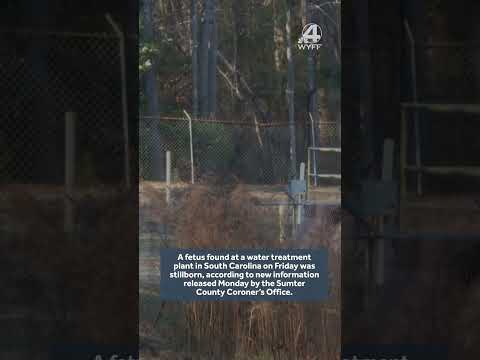
The South Carolina Law Enforcement Division (SLED), a specialized law enforcement agency, is currently testing tissue from the baby's body, which is causing concern among both pro-abortion activists and pro-life activists. This, however, appears to be standard protocol.
South Carolina protects preborn children from abortion, beginning when a heartbeat can be detected, typically at about six weeks post-fertilization (although the human heart first begins to beat about 22 days post-fertilization).
Many are assuming that this baby was miscarried; however, there is no way to know if the child died during a natural miscarriage or if he died as a result of the abortion pill. If this child died from the abortion pill, that abortion would have likely been illegal under state law; however, a woman cannot face prosecution for her own abortion. The person who gave her the drugs can be charged.
'Abortion, Every Day' activist Kylie Cheung had a lot to say about the case, including that she finds it "weird" that police would investigate when human fetal remains are discovered because they are only "pregnancy remains" — not people.
"Our immediate questions: Why are pregnancy remains being investigated by law enforcement at all? How can 14-week fetal remains be ruled a 'stillborn death'?" she wrote.
Cheung is so caught up in a routine of dehumanizing certain human beings that she doesn't seem to realize how hurtful such comments might be to women who have grieved their own miscarried and stillborn children.
Cheung went on to quote Pregnancy Justice's Karen Thompson, writing, "Thompson noted that South Carolina's laws include a 'viability' requirement, so criminal charges are altogether inapplicable to the situation. 'So what is the point of this investigation, beyond terrorizing women through control and surveillance of their bodies?' she says."
Thompson was likely referring to several South Carolina court cases regarding who can be included in a wrongful death lawsuit:
Hall v. Murphy (1960) determined that a viable fetus is a person under the wrongful death statute, allowing lawsuits for infants who are born alive but die due to prenatal injuries.
Fowler v. Woodward (1964) expanded this to include viable fetuses who were stillborn.
Crosby v. Glasscock Trucking Co. (2000) confirmed that fetuses who are considered nonviable do not qualify as "persons" for wrongful death lawsuits. Thus, this baby, at no more than 15 weeks, would not be considered a person under the wrongful death act.
But this baby's story has nothing to do with a wrongful death lawsuit, and there are a few reasons to carry out an investigation — the first being that a human body was found, and no one knows where the body came from.
This doesn't mean police are "hunting" for the mother, as at least one abortion supporter said, but that when human remains are found, there is protocol to be followed.
In South Carolina, the law states that police must be contacted when human remains are found, and the coroner's office is tasked with attempting to identify the person.
Section 17-7-25 of Title 17 of South Carolina Code of Laws (regarding autopsy on an unidentified body and the preservation of DNA samples) states:
A coroner performing an autopsy on an unidentified body must obtain tissue and fluid samples suitable for DNA identification, typing, and testing. The samples must be transmitted to the State Law Enforcement Division.
That seems to be what happened here.
In addition, it is unknown if the woman who either miscarried or aborted the baby is the one who disposed of the baby's body, or, if she had an abortion, it was of her own free will. For example, one woman whose child had been miscarried was devastated to learn the hospital had sent her baby's remains to a landfill, and she would do anything to get her baby's body back.
Another reason to investigate is to attempt to find the source of possible abortion drugs.
However, there is the very real possibility that the mother miscarried this baby naturally, didn't know what to do, and in her panicked state, flushed the toilet. This is not uncommon.
As Secular Pro-Life explained in a Facebook post:
Women miscarry into toilets all the time. In many cases they don't know in advance this will happen and have no resources or preparation for how to handle it. This is a huge societal gap in caring for people who go through pregnancy loss, one that we've been working to remedy...
Miscarrying into toilets is very common, and by itself is not a sign of foul play, or that anyone did anything illegal. Heartbreaking? Yes. Illegal or sinister? No.
Like 'Abortion, Every Day,' Secular Pro-Life has questions about why an investigation is being carried out, writing, "[I]t's not clear why the state performed an autopsy or, when the autopsy concluded this was not a live birth, why the state moved on to additional testing. What could additional testing show that would be legally relevant or actionable?"
Again, it seems to be state law and therefore, standard procedure for the coroner's office to collect DNA to potentially identify the remains of a person.
Other pro-life groups, such as Pro-life Greenville, are concerned with a dead body being in the water system.
The group said in a statement that the incident raises concerns about how a deceased baby could end up in the water system in the first place. It called on the South Carolina General Assembly to pass House Bill 5067 to "require the Department of Environmental Services to conduct testing for urinary metabolites in certain wastewater treatment facilities." It also supports House Bill 4760, which would place safety restrictions on the abortion pill to prevent the mailing and shipping of the drugs from out-of-state sources such as online websites or abortionists in pro-abortion states.
Secular Pro-Life, meanwhile, pointed women to a proposed hospital policy that would allow better and more compassionate care for women having miscarriages — including home recovery kits, which include a collection basin, disposable gloves, a small sieve, a biohazard bag, instructions for use and respectful disposition of the baby's body, and grief support resources.
"It'd be so helpful if society in general (and specifically law enforcement) better understood how common miscarriage is, and the common ways people experience it," said Secular Pro-Life. "Politicians and organizations opposed to abortion reassure the public that our opposition has nothing to do with miscarriage, but given widespread ignorance about miscarriage, the lines blur."
Understanding miscarriage is one step towards treating both the mothers and babies with respect. Education can go a long way to help women understand what to do when they experience miscarriage, and how to properly handle their baby's remains.
It will also do a lot of good if pro-abortion activists would stop dehumanizing preborn children out of their devotion to abortion, as it causes emotional harm to women who have miscarried beloved children.
"[T]he people making these comments are displaying another aspect of societal ignorance about miscarriage," wrote Secular Pro-Life. "They rarely seem to consider the millions of people who grieve their miscarried embryos and fetuses as their lost children, reading you going out of your way to diminish those lives. Statements like these are why parents who mourn their children lost through miscarriage get the added bonus of wondering if their grief is stupid."
Live Action News is pro-life news and commentary from a pro-life perspective.
Our work is possible because of our donors. Please consider giving to further our work of changing hearts and minds on issues of life and human dignity.
Contact editor@liveaction.org for questions, corrections, or if you are seeking permission to reprint any Live Action News content.
Guest Articles: To submit a guest article to Live Action News, email editor@liveaction.org with an attached Word document of 800-1000 words. Please also attach any photos relevant to your submission if applicable. If your submission is accepted for publication, you will be notified within three weeks. Guest articles are not compensated (see our Open License Agreement). Thank you for your interest in Live Action News!
Cassy Cooke
·
Analysis
Bridget Sielicki
·
Analysis
Cassy Cooke
·
Analysis
Cassy Cooke
·
Opinion
Cassy Cooke
·
Analysis
Cassy Cooke
·
Politics
Nancy Flanders
·
International
Nancy Flanders
·
Activism
Nancy Flanders
·
International
Nancy Flanders
·
Issues
Nancy Flanders
·Preborn baby found in South Carolina water treatment plant
The body of a preborn baby believed to have been between 13 and 15 weeks gestation was found on February 13 by workers at a water treatment plant in Sumter County, South Carolina.
It is unknown if the baby was miscarried naturally or aborted by pill; however, tragedies like this seem to be on the rise following the removal of multiple safeguards on the abortion pill.
The body of a preborn baby who died between 13 and 15 weeks was discovered at a water treatment plant in South Carolina.
An autopsy was carried out, and as is required by law, a tissue sample was taken for a DNA test, which is also required when an unidentified body is found.
Both pro-abortion and pro-life organizations have expressed concern about an investigation since the autopsy found the baby died before birth. Pro-abortion activists argue that a human "fetus" is not a human being.
It appears to be state law to investigate when a body is found, including attempting to identify the person.
According to reports, a call came into police dispatch to the Sumter County Sheriff's Office with a report that workers had discovered a human baby at the water treatment plant. The baby was brought to the Medical University of South Carolina; an autopsy revealed there had been no trauma, and the death was ruled a stillbirth. The baby was a boy, and had not taken a breath.
“It was a small fetus. Probably not more than six inches long. It was somewhat developed,” Sumter County Coroner Robbie Baker told WIS. “That’s sad to think that you’re looking at a human life that’s no more than about six inches long in a sewer treatment plant. That’s sad. It breaks your heart.”
The South Carolina Law Enforcement Division (SLED), a specialized law enforcement agency, is currently testing tissue from the baby's body, which is causing concern among both pro-abortion activists and pro-life activists. This, however, appears to be standard protocol.
South Carolina protects preborn children from abortion, beginning when a heartbeat can be detected, typically at about six weeks post-fertilization (although the human heart first begins to beat about 22 days post-fertilization).
Many are assuming that this baby was miscarried; however, there is no way to know if the child died during a natural miscarriage or if he died as a result of the abortion pill. If this child died from the abortion pill, that abortion would have likely been illegal under state law; however, a woman cannot face prosecution for her own abortion. The person who gave her the drugs can be charged.
'Abortion, Every Day' activist Kylie Cheung had a lot to say about the case, including that she finds it "weird" that police would investigate when human fetal remains are discovered because they are only "pregnancy remains" — not people.
"Our immediate questions: Why are pregnancy remains being investigated by law enforcement at all? How can 14-week fetal remains be ruled a 'stillborn death'?" she wrote.
Cheung is so caught up in a routine of dehumanizing certain human beings that she doesn't seem to realize how hurtful such comments might be to women who have grieved their own miscarried and stillborn children.
Cheung went on to quote Pregnancy Justice's Karen Thompson, writing, "Thompson noted that South Carolina's laws include a 'viability' requirement, so criminal charges are altogether inapplicable to the situation. 'So what is the point of this investigation, beyond terrorizing women through control and surveillance of their bodies?' she says."
Thompson was likely referring to several South Carolina court cases regarding who can be included in a wrongful death lawsuit:
Hall v. Murphy (1960) determined that a viable fetus is a person under the wrongful death statute, allowing lawsuits for infants who are born alive but die due to prenatal injuries.
Fowler v. Woodward (1964) expanded this to include viable fetuses who were stillborn.
Crosby v. Glasscock Trucking Co. (2000) confirmed that fetuses who are considered nonviable do not qualify as "persons" for wrongful death lawsuits. Thus, this baby, at no more than 15 weeks, would not be considered a person under the wrongful death act.
But this baby's story has nothing to do with a wrongful death lawsuit, and there are a few reasons to carry out an investigation — the first being that a human body was found, and no one knows where the body came from.
This doesn't mean police are "hunting" for the mother, as at least one abortion supporter said, but that when human remains are found, there is protocol to be followed.
In South Carolina, the law states that police must be contacted when human remains are found, and the coroner's office is tasked with attempting to identify the person.
Section 17-7-25 of Title 17 of South Carolina Code of Laws (regarding autopsy on an unidentified body and the preservation of DNA samples) states:
A coroner performing an autopsy on an unidentified body must obtain tissue and fluid samples suitable for DNA identification, typing, and testing. The samples must be transmitted to the State Law Enforcement Division.
That seems to be what happened here.
In addition, it is unknown if the woman who either miscarried or aborted the baby is the one who disposed of the baby's body, or, if she had an abortion, it was of her own free will. For example, one woman whose child had been miscarried was devastated to learn the hospital had sent her baby's remains to a landfill, and she would do anything to get her baby's body back.
Another reason to investigate is to attempt to find the source of possible abortion drugs.
However, there is the very real possibility that the mother miscarried this baby naturally, didn't know what to do, and in her panicked state, flushed the toilet. This is not uncommon.
As Secular Pro-Life explained in a Facebook post:
Women miscarry into toilets all the time. In many cases they don't know in advance this will happen and have no resources or preparation for how to handle it. This is a huge societal gap in caring for people who go through pregnancy loss, one that we've been working to remedy...
Miscarrying into toilets is very common, and by itself is not a sign of foul play, or that anyone did anything illegal. Heartbreaking? Yes. Illegal or sinister? No.
Like 'Abortion, Every Day,' Secular Pro-Life has questions about why an investigation is being carried out, writing, "[I]t's not clear why the state performed an autopsy or, when the autopsy concluded this was not a live birth, why the state moved on to additional testing. What could additional testing show that would be legally relevant or actionable?"
Again, it seems to be state law and therefore, standard procedure for the coroner's office to collect DNA to potentially identify the remains of a person.
Other pro-life groups, such as Pro-life Greenville, are concerned with a dead body being in the water system.
The group said in a statement that the incident raises concerns about how a deceased baby could end up in the water system in the first place. It called on the South Carolina General Assembly to pass House Bill 5067 to "require the Department of Environmental Services to conduct testing for urinary metabolites in certain wastewater treatment facilities." It also supports House Bill 4760, which would place safety restrictions on the abortion pill to prevent the mailing and shipping of the drugs from out-of-state sources such as online websites or abortionists in pro-abortion states.
Secular Pro-Life, meanwhile, pointed women to a proposed hospital policy that would allow better and more compassionate care for women having miscarriages — including home recovery kits, which include a collection basin, disposable gloves, a small sieve, a biohazard bag, instructions for use and respectful disposition of the baby's body, and grief support resources.
"It'd be so helpful if society in general (and specifically law enforcement) better understood how common miscarriage is, and the common ways people experience it," said Secular Pro-Life. "Politicians and organizations opposed to abortion reassure the public that our opposition has nothing to do with miscarriage, but given widespread ignorance about miscarriage, the lines blur."
Understanding miscarriage is one step towards treating both the mothers and babies with respect. Education can go a long way to help women understand what to do when they experience miscarriage, and how to properly handle their baby's remains.
It will also do a lot of good if pro-abortion activists would stop dehumanizing preborn children out of their devotion to abortion, as it causes emotional harm to women who have miscarried beloved children.
"[T]he people making these comments are displaying another aspect of societal ignorance about miscarriage," wrote Secular Pro-Life. "They rarely seem to consider the millions of people who grieve their miscarried embryos and fetuses as their lost children, reading you going out of your way to diminish those lives. Statements like these are why parents who mourn their children lost through miscarriage get the added bonus of wondering if their grief is stupid."
Live Action News is pro-life news and commentary from a pro-life perspective.
Our work is possible because of our donors. Please consider giving to further our work of changing hearts and minds on issues of life and human dignity.
Contact editor@liveaction.org for questions, corrections, or if you are seeking permission to reprint any Live Action News content.
Guest Articles: To submit a guest article to Live Action News, email editor@liveaction.org with an attached Word document of 800-1000 words. Please also attach any photos relevant to your submission if applicable. If your submission is accepted for publication, you will be notified within three weeks. Guest articles are not compensated (see our Open License Agreement). Thank you for your interest in Live Action News!
Cassy Cooke
·Analysis
Bridget Sielicki
·Analysis
Cassy Cooke
·Analysis
Cassy Cooke
·Opinion
Cassy Cooke
·Analysis
Cassy Cooke
·Politics
Nancy Flanders
·International
Nancy Flanders
·Activism
Nancy Flanders
·International
Nancy Flanders
·Issues
Nancy Flanders
·