Read Next
International
Political parties in Australian state promise voters 'free' abortions if they win
Bridget Sielicki
·

 International·By Anne Marie Williams, RN, BSN
British teen's family calls for more warnings on birth control after her death
A British teen has died due to a blood clot in the brain caused by her birth control. The millions of women still taking hormonal contraception deserve better care, education, and awareness of its risks.
19-year-old Áine Rose Hurst died in 2025 from a brain blood clot caused by her hormonal contraception after experiencing high blood pressure and stopping the contraception for a month.
Though the absolute risk of this occurring is one blood clot per 1,000 birth control pill users, this still equates to thousands of contraception-related blood clots every year, even in otherwise healthy young women.
The medical community seems to attempt to whitewash adverse reactions and deaths due to hormonal contraception, while also continuing to allow for online prescribing with little to no education on any risks.
Áine Rose Hurst was 19 at the time of her death in March of 2025. She had started taking the combination estrogen-progestin birth control pill Femodette four years prior; her general practitioner prescribed the hormonal contraceptive after 15-year-old Áine reported mood swings and heavy periods.
In an interview with UK-based SkyNews, Áine’s mother, Kerry Hurst, observed simply, “We went to the doctor and they suggested that she go on the combined pill at that time. We agreed to that and we felt like it was a safe option at the time.”
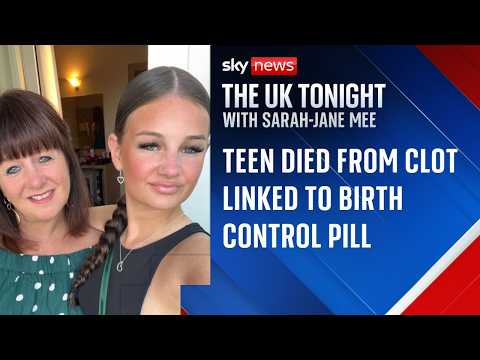
Several months before she died, Áine went in for a routine annual checkup with a nurse at her primary care doctor’s office. At that time, her blood pressure read high, 140/93, and the nurse advised Áine to stop the pill right away.
A month later, when she returned for a January 2025 visit with her primary care doctor, her blood pressure was rechecked. Her doctor told her her blood pressure was low enough to resume contraception, though it was only down to 130/90 (normal blood pressure is at or below 120/60), and sent her home with a new script for the same medicine.
On a Sunday morning in early March, Áine called her mother saying she was coming home because a hangover was causing a terrible headache. The headache persisted for several days, and early that Tuesday morning Kerry Hurst called the general practitioner’s office and then the UK version of 911.
While Kerry was on the phone with the dispatcher, Áine stopped responding, then her head rolled back and she began “foaming at the mouth,” as told by Kerry to SkyNews.
At the hospital, imaging revealed a blood clot in Áine’s brain. Several days later, her life support was removed and she died “within minutes.” Her death certificate listed her birth control as a contributing factor.
An inquest into her death found that Áine’s primary care doctor acted appropriately and adhered to the UK Medical Eligibility Criteria guidelines in placing her back on the same birth control with which she had experienced high blood pressure. Additionally, the SkyNews interviewer referenced a National Health Services statistic of one blood clot per 1,000 birth control pill users, which is an absolute risk of 0.001%. The implication? Áine’s case was a 'unicorn' — she just had bad luck.
But the numbers tell a different story.
Since 28% of British women use hormonal birth control pills for pregnancy prevention, this represents millions of women at risk. One of every 1,000 still represents thousands of birth control-related blood clots every year, even in otherwise healthy young women like Áine.
How many of these blood clots will prove fatal, we don’t know. But in December of 2023, Live Action News reported on another healthy British teen who died of a blood clot mere weeks after starting the birth control pill.
In the SkyNews interview and other interviews linked on the Facebook page for the Aine Rose Contraceptive Safety Foundation that was founded in her memory by her family, Hurst’s family advocates for more and clearer warnings on the packaging for birth control pills, including warning signs of a blood clot.
Áine’s aunt, Dawn Kidd, told SkyNews:
“I don’t think there’s a lot of awareness out there of the side effects and, like you say, in particular with Aine’s pill that she was on, inside that box was a 102-page leaflet which nobody reads. I know probably no- my God, we wouldn’t have read that, especially young girls.
There’s got to be clearer labeling on these packages. When people are looking to go on the pill, they need to be made aware of exactly what the side effects are, and family history of blood clots, and lots of things like that. There’s so much more that [could have been] done to have prevented this tragedy from happening.”
After the family interview portion of the SkyNews interview concluded, the newscaster spoke to a British-based primary care doctor, Dr. Nikita Kanani, about the case.
The pill=freedom?
After initially offering condolences, Kanani said, “Many women take the pill and it is a wonderful invention in many ways and has given women so much freedom; but, like any medication, it has side effects.”
This whitewashing of the pill’s complicated history and legacy – including its unquestionable role in the sexual revolution, which resulted in generations of preborn children lost to abortion and social chaos – is not uncommon. Nonetheless, it’s disappointing when coming from a healthcare professional.
Should the Medical Eligibility Criteria be revisited?
When asked whether, given Áine’s death, the Medical Eligibility Criteria for birth control prescribing might need revision, Kanani demurred.
“I think the guidelines are very clear and when you put them into practice, when you’re talking to your GP (general practitioner) as a patient, you’re going through the different kind of scenario that you might be in, most women are well protected by the pill that they’re on and the regime[n] that they’re on.”
Calling women ‘well-protected’ by the pill presumably refers to protection from pregnancy, but fails to address those who are not protected from physical or mental side effects, especially for young new users.
Kanani also stressed the importance of women feeling emboldened to ask questions about their birth control prescriptions.
But will women know the right questions to ask to elicit 102 pages’ worth of medical information?
The interviewer asked Kanani whether, in response to Áine’s death, curtailing online pharmacies dispensing oral contraceptives, especially for young users, would be appropriate. After all, Áine suffered a fatal blood clot even though she received an in-person script and scheduled annual health checkups.
How likely is a woman who is prescribed contraception by an online clinician — with whom she has no ongoing patient-doctor relationship — to seek follow-up care?
The interviewer opined, “All women want convenience, and it’s to be celebrated that we have access to women’s healthcare like this. But without the structures in place, it could potentially be dangerous.”
Kanani began her response by saying, “Improving access to contraception is really important, and the ability to obtain the pill through pharmacies and online providers clearly has clear benefits,” before adding:
“... but earlier access does have to be matched with really robust assessment, clear information, and reliable followup. When we have access without review or safety vetting, we risk missing changes in health or earlier warning signs that are just so important.”
Regrettably, Kanani made no mention of any specific changes or recommendations to increase women's safety regarding online prescriptions.
Absent concrete action or suggestions, her words ring hollow.
How many more women must be seriously injured or killed by hormonal birth control before we increase, rather than decrease, regulations around prescribing it to women, including education on its risks?
Given that Áine was taking contraception for mood swings and heavy periods, isn't it time for mainstream medical professionals to openly encourage and adopt restorative reproductive medicine practices that treat root causes and don’t put women at risk?
Tragically, it’s too late for Áine, but there are millions of other women who still have the chance to receive better care.
Live Action News is pro-life news and commentary from a pro-life perspective.
Our work is possible because of our donors. Please consider giving to further our work of changing hearts and minds on issues of life and human dignity.
Contact editor@liveaction.org for questions, corrections, or if you are seeking permission to reprint any Live Action News content.
Guest Articles: To submit a guest article to Live Action News, email editor@liveaction.org with an attached Word document of 800-1000 words. Please also attach any photos relevant to your submission if applicable. If your submission is accepted for publication, you will be notified within three weeks. Guest articles are not compensated (see our Open License Agreement). Thank you for your interest in Live Action News!
Bridget Sielicki
·
International
Bridget Sielicki
·
International
Bridget Sielicki
·
International
Bridget Sielicki
·
Guest Column
Right to Life UK
·
International
Cassy Cooke
·
Human Interest
Anne Marie Williams, RN, BSN
·
Issues
Anne Marie Williams, RN, BSN
·
Issues
Anne Marie Williams, RN, BSN
·
Issues
Anne Marie Williams, RN, BSN
·
Opinion
Anne Marie Williams, RN, BSN
·International·By Anne Marie Williams, RN, BSN
British teen's family calls for more warnings on birth control after her death
A British teen has died due to a blood clot in the brain caused by her birth control. The millions of women still taking hormonal contraception deserve better care, education, and awareness of its risks.
19-year-old Áine Rose Hurst died in 2025 from a brain blood clot caused by her hormonal contraception after experiencing high blood pressure and stopping the contraception for a month.
Though the absolute risk of this occurring is one blood clot per 1,000 birth control pill users, this still equates to thousands of contraception-related blood clots every year, even in otherwise healthy young women.
The medical community seems to attempt to whitewash adverse reactions and deaths due to hormonal contraception, while also continuing to allow for online prescribing with little to no education on any risks.
Áine Rose Hurst was 19 at the time of her death in March of 2025. She had started taking the combination estrogen-progestin birth control pill Femodette four years prior; her general practitioner prescribed the hormonal contraceptive after 15-year-old Áine reported mood swings and heavy periods.
In an interview with UK-based SkyNews, Áine’s mother, Kerry Hurst, observed simply, “We went to the doctor and they suggested that she go on the combined pill at that time. We agreed to that and we felt like it was a safe option at the time.”
Several months before she died, Áine went in for a routine annual checkup with a nurse at her primary care doctor’s office. At that time, her blood pressure read high, 140/93, and the nurse advised Áine to stop the pill right away.
A month later, when she returned for a January 2025 visit with her primary care doctor, her blood pressure was rechecked. Her doctor told her her blood pressure was low enough to resume contraception, though it was only down to 130/90 (normal blood pressure is at or below 120/60), and sent her home with a new script for the same medicine.
On a Sunday morning in early March, Áine called her mother saying she was coming home because a hangover was causing a terrible headache. The headache persisted for several days, and early that Tuesday morning Kerry Hurst called the general practitioner’s office and then the UK version of 911.
While Kerry was on the phone with the dispatcher, Áine stopped responding, then her head rolled back and she began “foaming at the mouth,” as told by Kerry to SkyNews.
At the hospital, imaging revealed a blood clot in Áine’s brain. Several days later, her life support was removed and she died “within minutes.” Her death certificate listed her birth control as a contributing factor.
An inquest into her death found that Áine’s primary care doctor acted appropriately and adhered to the UK Medical Eligibility Criteria guidelines in placing her back on the same birth control with which she had experienced high blood pressure. Additionally, the SkyNews interviewer referenced a National Health Services statistic of one blood clot per 1,000 birth control pill users, which is an absolute risk of 0.001%. The implication? Áine’s case was a 'unicorn' — she just had bad luck.
But the numbers tell a different story.
Since 28% of British women use hormonal birth control pills for pregnancy prevention, this represents millions of women at risk. One of every 1,000 still represents thousands of birth control-related blood clots every year, even in otherwise healthy young women like Áine.
How many of these blood clots will prove fatal, we don’t know. But in December of 2023, Live Action News reported on another healthy British teen who died of a blood clot mere weeks after starting the birth control pill.
In the SkyNews interview and other interviews linked on the Facebook page for the Aine Rose Contraceptive Safety Foundation that was founded in her memory by her family, Hurst’s family advocates for more and clearer warnings on the packaging for birth control pills, including warning signs of a blood clot.
Áine’s aunt, Dawn Kidd, told SkyNews:
“I don’t think there’s a lot of awareness out there of the side effects and, like you say, in particular with Aine’s pill that she was on, inside that box was a 102-page leaflet which nobody reads. I know probably no- my God, we wouldn’t have read that, especially young girls.
There’s got to be clearer labeling on these packages. When people are looking to go on the pill, they need to be made aware of exactly what the side effects are, and family history of blood clots, and lots of things like that. There’s so much more that [could have been] done to have prevented this tragedy from happening.”
After the family interview portion of the SkyNews interview concluded, the newscaster spoke to a British-based primary care doctor, Dr. Nikita Kanani, about the case.
The pill=freedom?
After initially offering condolences, Kanani said, “Many women take the pill and it is a wonderful invention in many ways and has given women so much freedom; but, like any medication, it has side effects.”
This whitewashing of the pill’s complicated history and legacy – including its unquestionable role in the sexual revolution, which resulted in generations of preborn children lost to abortion and social chaos – is not uncommon. Nonetheless, it’s disappointing when coming from a healthcare professional.
Should the Medical Eligibility Criteria be revisited?
When asked whether, given Áine’s death, the Medical Eligibility Criteria for birth control prescribing might need revision, Kanani demurred.
“I think the guidelines are very clear and when you put them into practice, when you’re talking to your GP (general practitioner) as a patient, you’re going through the different kind of scenario that you might be in, most women are well protected by the pill that they’re on and the regime[n] that they’re on.”
Calling women ‘well-protected’ by the pill presumably refers to protection from pregnancy, but fails to address those who are not protected from physical or mental side effects, especially for young new users.
Kanani also stressed the importance of women feeling emboldened to ask questions about their birth control prescriptions.
But will women know the right questions to ask to elicit 102 pages’ worth of medical information?
The interviewer asked Kanani whether, in response to Áine’s death, curtailing online pharmacies dispensing oral contraceptives, especially for young users, would be appropriate. After all, Áine suffered a fatal blood clot even though she received an in-person script and scheduled annual health checkups.
How likely is a woman who is prescribed contraception by an online clinician — with whom she has no ongoing patient-doctor relationship — to seek follow-up care?
The interviewer opined, “All women want convenience, and it’s to be celebrated that we have access to women’s healthcare like this. But without the structures in place, it could potentially be dangerous.”
Kanani began her response by saying, “Improving access to contraception is really important, and the ability to obtain the pill through pharmacies and online providers clearly has clear benefits,” before adding:
“... but earlier access does have to be matched with really robust assessment, clear information, and reliable followup. When we have access without review or safety vetting, we risk missing changes in health or earlier warning signs that are just so important.”
Regrettably, Kanani made no mention of any specific changes or recommendations to increase women's safety regarding online prescriptions.
Absent concrete action or suggestions, her words ring hollow.
How many more women must be seriously injured or killed by hormonal birth control before we increase, rather than decrease, regulations around prescribing it to women, including education on its risks?
Given that Áine was taking contraception for mood swings and heavy periods, isn't it time for mainstream medical professionals to openly encourage and adopt restorative reproductive medicine practices that treat root causes and don’t put women at risk?
Tragically, it’s too late for Áine, but there are millions of other women who still have the chance to receive better care.
Live Action News is pro-life news and commentary from a pro-life perspective.
Our work is possible because of our donors. Please consider giving to further our work of changing hearts and minds on issues of life and human dignity.
Contact editor@liveaction.org for questions, corrections, or if you are seeking permission to reprint any Live Action News content.
Guest Articles: To submit a guest article to Live Action News, email editor@liveaction.org with an attached Word document of 800-1000 words. Please also attach any photos relevant to your submission if applicable. If your submission is accepted for publication, you will be notified within three weeks. Guest articles are not compensated (see our Open License Agreement). Thank you for your interest in Live Action News!
Bridget Sielicki
·International
Bridget Sielicki
·International
Bridget Sielicki
·International
Bridget Sielicki
·Guest Column
Right to Life UK
·International
Cassy Cooke
·Human Interest
Anne Marie Williams, RN, BSN
·Issues
Anne Marie Williams, RN, BSN
·Issues
Anne Marie Williams, RN, BSN
·Issues
Anne Marie Williams, RN, BSN
·Opinion
Anne Marie Williams, RN, BSN
·