 Guest Column
Read Next
Investigative
Nevada woman sentenced for attempted murder of newborn left in trash
Nancy Flanders
·

GUEST OPINION: I had PPROM during pregnancy, and the experience made me pro-life
Disclaimer: Opinions expressed in this guest post are solely those of the author.
My water broke when I was just shy of 22 weeks pregnant with my oldest son.
It wasn’t dramatic like movies had primed me to expect. I simply woke up in a wet bed. I called my OB’s nursing line and was told that I had likely just “had an accident” but to come in to get checked out just in case. I felt embarrassed and foolish, but somewhat reassured.
My OB delivered out of a small regional hospital 30 minutes across town, so we made our way there, trying not to be too anxious. I wasn’t actively leaking, as far as I could tell, so perhaps the nurse was right.
This pregnancy had already been one complication after another, with early bleeding suggesting a blighted ovum that turned out to be a disappearing twin. Unfortunately, the bleeding didn’t stop there, and we later discovered a blood clot behind my surviving twin’s placenta.
I’d bled so heavily, in fact, that I’d had to take a leave of absence from school. I should mention now that my husband and I had gotten married as college students. We were trying to balance work, school, and running me to the ER every few weeks.
But, as of late, things had calmed down somewhat and we were hopeful that the worst of the complications were behind us. Then, I woke up in that wet bed.
We made it to the hospital and I was immediately taken up the Labor and Delivery now that I was over the 20 week line. The first test was hopeful. They used a pH strip to measure whatever discharge was currently present, and that came back negative. We were prepping to be sent home when I had another huge gush as I was standing up to go the bathroom.
They tested again, and that time it was unmistakable. I was leaking amniotic fluid.
At that point, everything happened very quickly. My doctor came into the room and explained that yes, my water had broken, but that they might be able to save my baby.
She told me that my options were to do nothing and deliver here, knowing that my son would not survive, or to transfer to a hospital with a higher level NICU where they would attempt to keep me pregnant as long as possible.
I remember thinking, “Why even offer the first option?” and told her that I’d like to be transferred. She told me she’d get it all set up and that my care would be coordinated with the Maternal Fetal Health doctor that I’d only seen once before.
My contractions started as they loaded me into the ambulance for the transfer.
I learned on that drive that ambulances do not have great rear suspensions as I bounced through every single contraction. By the time we made it to the larger hospital, I was in active labor. I learned that I was 4 cm dilated. The plan was to do what they could to stop the contractions long enough to get steroids onboard for my son.
They loaded me up with magnesium sulfate and muscle relaxers and I passed out before they were able to complete the ultrasound to tell me if my son was even alive.
I woke up to the good news that they had successfully stopped labor, that my son looked stable, and that they were going to start treatment to keep me pregnant as long as possible.
They also told me that there were three things that would trigger immediate delivery: Infection, Cord Prolapse, or Placental Abruptia. To reduce the risk of any of those things, I would be receiving IV antibiotics, and remain on full bed rest.
I’d have agreed to anything to save my son.
I spent the first few days on complete bed rest at Baylor All Saints Hospital in Forth Worth, Texas, not even able to get up to go to the bathroom. Once they felt comfortable that steroids were fully in place and that my contractions were being held in check by the muscle relaxers, they allowed me to start taking showers and using the bathroom. After a few weeks, we even graduated to once a week wheelchair trips down to the chapel and coffee shop.
They also took me on a field trip to the NICU so that I could get an idea of what to expect with a micro-preemie. It was there that I saw a little girl who had been born at 25 weeks gestation. She was incredibly tiny, but also perfectly formed.
It was at that moment that I became actively pro-life. How in the world could we advocate killing children just like her? It also made me reassured that whenever my son was born, he would be well taken care of in this hospital.
In the end, I spent seven weeks in the perinatal unit. My incredible MFH doctors visited every single day and did everything in their power to save us both. As we got closer to delivery, they had to make some changes. I lost my wheelchair privileges and spent more and more time on the monitor. The week before I delivered they told me that we were probably within a few days of delivering based on how my son was looking on the monitor.
They thought that the placenta was failing.
That failure finally happened late one night.
I had been feeling off all day, and by dinner time was running a low grade fever. My doctor came in to talk to me and said that even though one low fever might not trigger instant delivery in all cases, the fact that my son was also having heart decelerations made her think that we were dealing with the beginnings of infection, and that given that he was now 29 weeks gestation, we were going to do the c-section that night.
Once again, I’d been loaded up with drugs, so I have very little memory of that delivery. I fully believed that the nurse who held me steady during my epidural placement was my husband!
I stayed barely conscious long enough to hear my son cry, and then passed out. When I came to, I learned that he had been born grey with an apgar of 1.
They’d resuscitated him easily, though, and his second was a healthy 9. Somehow, his lungs were more developed than they’d feared and he was nearly on room air! However, they said that the placenta was “the worst they’d ever seen with a live birth” and that he was very small. They also let me know that we both were experiencing an amniotic infection and so we’d both need iv antibiotics for several days.
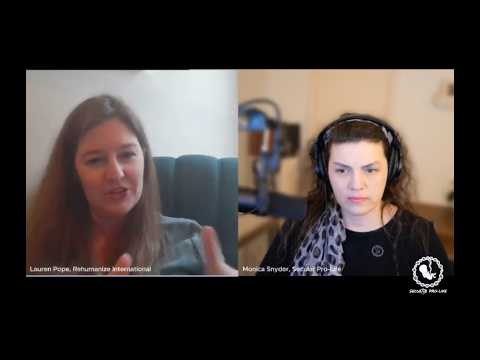
(Watch Lauren's interview with Secular Pro-Life's Monica Snyder below.)
But he was alive! Alive and, apparently, thriving far beyond their expectations!
He was small, yes. Would need lots of time to grow, yes. But he was not the sickest baby in the NICU as they feared he would be.

He also didn’t have Down syndrome which they had feared might be an issue because of some limb shortness that had been identified after my rupture.
Because of the care that I received, both at the small regional hospital, and later the main campus, my son and I were both expected to live.
And live, he did.

He is now a grown man, with almost no negative impact from his premature birth. We learned later on that he has a completely unrelated growth disorder (that was what caused those short limbs in the womb) but he doesn’t even have asthma!

But I learned after his birth that our experience was far from universal. I joined many peer support groups for mothers who’ve experienced PPROM, and tragically some find us only after their doctors had told them that the had to immediately deliver.
Their babies died, and THEN they found out that a different doctor might have been able to save them.

But now, after Dobbs, we’re seeing another tragic outcome.
Doctors who previously would have just delivered immediately — who are untrained or uninformed about proper expectant management procedures — are sending women home without so much as antibiotics, falsely believing that the law prevents any other kinds of care.
This has resulted in cases where both the mother and child have died, which was completely avoidable!
While it is true that not every pregnancy can be extended following a PPROM, it is also true that no woman should ever be sent home without care following a rupture.
No pro-life law asks this, and no pro-life doctor would ever do this.
I am calling for better training for all OBGYNs relating to PPROM. It is unacceptable that women and babies are turning septic because of improper care. My son and I are alive because our doctors were well trained and well informed. Women shouldn’t have to rely on the luck of the draw to receive that standard of care.
Unfortunately, instead of demanding this training, people are politicizing these deaths and blaming pro-life laws for these outcomes. That couldn’t be further from the truth.
No pro-life law in the country prohibits doctors from inducing or allowing natural labor to continue after PPROM.
That said, not enough doctors know how to attempt to continue pregnancy if the woman so desires. Better training addresses both of those issues.
We must not allow ignorance and fear to kill women and babies.
Author Bio: Lauren Pope is the executive director of Rehumanize International.
Live Action News is pro-life news and commentary from a pro-life perspective.
Our work is possible because of our donors. Please consider giving to further our work of changing hearts and minds on issues of life and human dignity.
Contact editor@liveaction.org for questions, corrections, or if you are seeking permission to reprint any Live Action News content.
Guest Articles: To submit a guest article to Live Action News, email editor@liveaction.org with an attached Word document of 800-1000 words. Please also attach any photos relevant to your submission if applicable. If your submission is accepted for publication, you will be notified within three weeks. Guest articles are not compensated (see our Open License Agreement). Thank you for your interest in Live Action News!
Nancy Flanders
·
Guest Column
Mark Lee Dickson
·
Guest Column
Valerie Abraham
·
Guest Column
Right to Life UK
·
Guest Column
Liberty Counsel
·
Guest Column
Kim Hayes
·GUEST OPINION: I had PPROM during pregnancy, and the experience made me pro-life
Disclaimer: Opinions expressed in this guest post are solely those of the author.
My water broke when I was just shy of 22 weeks pregnant with my oldest son.
It wasn’t dramatic like movies had primed me to expect. I simply woke up in a wet bed. I called my OB’s nursing line and was told that I had likely just “had an accident” but to come in to get checked out just in case. I felt embarrassed and foolish, but somewhat reassured.
My OB delivered out of a small regional hospital 30 minutes across town, so we made our way there, trying not to be too anxious. I wasn’t actively leaking, as far as I could tell, so perhaps the nurse was right.
This pregnancy had already been one complication after another, with early bleeding suggesting a blighted ovum that turned out to be a disappearing twin. Unfortunately, the bleeding didn’t stop there, and we later discovered a blood clot behind my surviving twin’s placenta.
I’d bled so heavily, in fact, that I’d had to take a leave of absence from school. I should mention now that my husband and I had gotten married as college students. We were trying to balance work, school, and running me to the ER every few weeks.
But, as of late, things had calmed down somewhat and we were hopeful that the worst of the complications were behind us. Then, I woke up in that wet bed.
We made it to the hospital and I was immediately taken up the Labor and Delivery now that I was over the 20 week line. The first test was hopeful. They used a pH strip to measure whatever discharge was currently present, and that came back negative. We were prepping to be sent home when I had another huge gush as I was standing up to go the bathroom.
They tested again, and that time it was unmistakable. I was leaking amniotic fluid.
At that point, everything happened very quickly. My doctor came into the room and explained that yes, my water had broken, but that they might be able to save my baby.
She told me that my options were to do nothing and deliver here, knowing that my son would not survive, or to transfer to a hospital with a higher level NICU where they would attempt to keep me pregnant as long as possible.
I remember thinking, “Why even offer the first option?” and told her that I’d like to be transferred. She told me she’d get it all set up and that my care would be coordinated with the Maternal Fetal Health doctor that I’d only seen once before.
My contractions started as they loaded me into the ambulance for the transfer.
I learned on that drive that ambulances do not have great rear suspensions as I bounced through every single contraction. By the time we made it to the larger hospital, I was in active labor. I learned that I was 4 cm dilated. The plan was to do what they could to stop the contractions long enough to get steroids onboard for my son.
They loaded me up with magnesium sulfate and muscle relaxers and I passed out before they were able to complete the ultrasound to tell me if my son was even alive.
I woke up to the good news that they had successfully stopped labor, that my son looked stable, and that they were going to start treatment to keep me pregnant as long as possible.
They also told me that there were three things that would trigger immediate delivery: Infection, Cord Prolapse, or Placental Abruptia. To reduce the risk of any of those things, I would be receiving IV antibiotics, and remain on full bed rest.
I’d have agreed to anything to save my son.
I spent the first few days on complete bed rest at Baylor All Saints Hospital in Forth Worth, Texas, not even able to get up to go to the bathroom. Once they felt comfortable that steroids were fully in place and that my contractions were being held in check by the muscle relaxers, they allowed me to start taking showers and using the bathroom. After a few weeks, we even graduated to once a week wheelchair trips down to the chapel and coffee shop.
They also took me on a field trip to the NICU so that I could get an idea of what to expect with a micro-preemie. It was there that I saw a little girl who had been born at 25 weeks gestation. She was incredibly tiny, but also perfectly formed.
It was at that moment that I became actively pro-life. How in the world could we advocate killing children just like her? It also made me reassured that whenever my son was born, he would be well taken care of in this hospital.
In the end, I spent seven weeks in the perinatal unit. My incredible MFH doctors visited every single day and did everything in their power to save us both. As we got closer to delivery, they had to make some changes. I lost my wheelchair privileges and spent more and more time on the monitor. The week before I delivered they told me that we were probably within a few days of delivering based on how my son was looking on the monitor.
They thought that the placenta was failing.
That failure finally happened late one night.
I had been feeling off all day, and by dinner time was running a low grade fever. My doctor came in to talk to me and said that even though one low fever might not trigger instant delivery in all cases, the fact that my son was also having heart decelerations made her think that we were dealing with the beginnings of infection, and that given that he was now 29 weeks gestation, we were going to do the c-section that night.
Once again, I’d been loaded up with drugs, so I have very little memory of that delivery. I fully believed that the nurse who held me steady during my epidural placement was my husband!
I stayed barely conscious long enough to hear my son cry, and then passed out. When I came to, I learned that he had been born grey with an apgar of 1.
They’d resuscitated him easily, though, and his second was a healthy 9. Somehow, his lungs were more developed than they’d feared and he was nearly on room air! However, they said that the placenta was “the worst they’d ever seen with a live birth” and that he was very small. They also let me know that we both were experiencing an amniotic infection and so we’d both need iv antibiotics for several days.
(Watch Lauren's interview with Secular Pro-Life's Monica Snyder below.)
But he was alive! Alive and, apparently, thriving far beyond their expectations!
He was small, yes. Would need lots of time to grow, yes. But he was not the sickest baby in the NICU as they feared he would be.
He also didn’t have Down syndrome which they had feared might be an issue because of some limb shortness that had been identified after my rupture.
Because of the care that I received, both at the small regional hospital, and later the main campus, my son and I were both expected to live.
And live, he did.
He is now a grown man, with almost no negative impact from his premature birth. We learned later on that he has a completely unrelated growth disorder (that was what caused those short limbs in the womb) but he doesn’t even have asthma!
But I learned after his birth that our experience was far from universal. I joined many peer support groups for mothers who’ve experienced PPROM, and tragically some find us only after their doctors had told them that the had to immediately deliver.
Their babies died, and THEN they found out that a different doctor might have been able to save them.
But now, after Dobbs, we’re seeing another tragic outcome.
Doctors who previously would have just delivered immediately — who are untrained or uninformed about proper expectant management procedures — are sending women home without so much as antibiotics, falsely believing that the law prevents any other kinds of care.
This has resulted in cases where both the mother and child have died, which was completely avoidable!
While it is true that not every pregnancy can be extended following a PPROM, it is also true that no woman should ever be sent home without care following a rupture.
No pro-life law asks this, and no pro-life doctor would ever do this.
I am calling for better training for all OBGYNs relating to PPROM. It is unacceptable that women and babies are turning septic because of improper care. My son and I are alive because our doctors were well trained and well informed. Women shouldn’t have to rely on the luck of the draw to receive that standard of care.
Unfortunately, instead of demanding this training, people are politicizing these deaths and blaming pro-life laws for these outcomes. That couldn’t be further from the truth.
No pro-life law in the country prohibits doctors from inducing or allowing natural labor to continue after PPROM.
That said, not enough doctors know how to attempt to continue pregnancy if the woman so desires. Better training addresses both of those issues.
We must not allow ignorance and fear to kill women and babies.
Author Bio: Lauren Pope is the executive director of Rehumanize International.
Live Action News is pro-life news and commentary from a pro-life perspective.
Our work is possible because of our donors. Please consider giving to further our work of changing hearts and minds on issues of life and human dignity.
Contact editor@liveaction.org for questions, corrections, or if you are seeking permission to reprint any Live Action News content.
Guest Articles: To submit a guest article to Live Action News, email editor@liveaction.org with an attached Word document of 800-1000 words. Please also attach any photos relevant to your submission if applicable. If your submission is accepted for publication, you will be notified within three weeks. Guest articles are not compensated (see our Open License Agreement). Thank you for your interest in Live Action News!
Nancy Flanders
·Guest Column
Mark Lee Dickson
·Guest Column
Valerie Abraham
·Guest Column
Right to Life UK
·Guest Column
Liberty Counsel
·Guest Column
Kim Hayes
·